
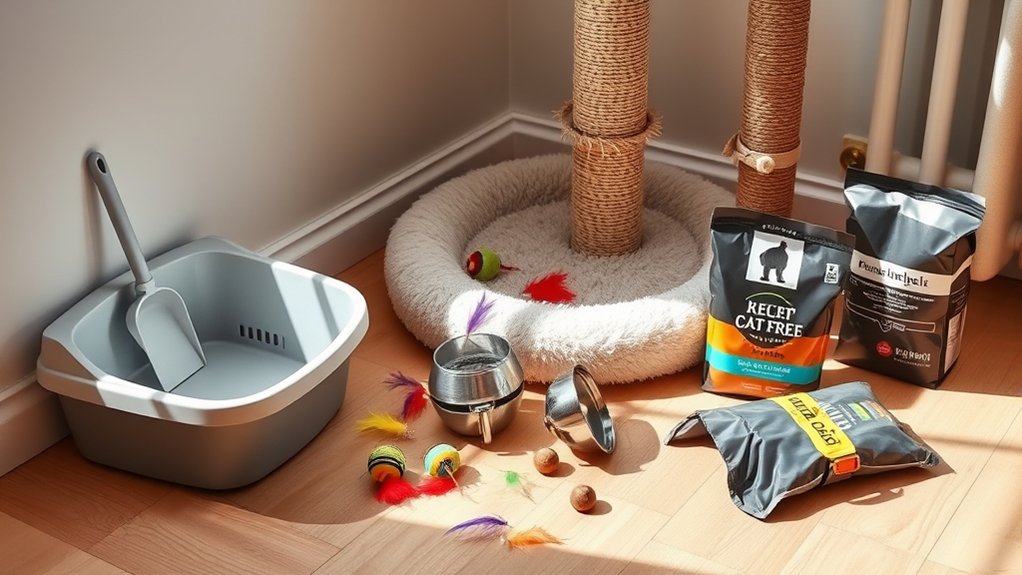
7 Essential Things to Buy for a Cat
Finding the right products for your cat can feel overwhelming, especially with so many options out there. You’re not alone—many cat owners struggle to choose essentials that keep their furry friends happy and healthy. That’s why we’ve put together a list of seven must-have items every cat owner should consider.
You’ll need seven essentials to keep your cat happy and your home intact. Start with high-quality cat food and appropriately sized bowls to guarantee good nutrition. Pick the right litter and a suitable box placed in a quiet spot.
Add cozy beds for comfort and a variety of toys to keep your cat active. Don’t forget grooming tools to maintain health and scratching posts to protect furniture. Keep exploring these basics to create the perfect cat-friendly space.
Key Takeaways
- Choose appropriate feeding bowls and high-protein cat food tailored to your cat’s age and health needs.
- Provide a suitable litter box with preferred litter type, placed in a quiet, accessible area.
- Invest in comfortable resting beds and interactive toys to encourage play and relaxation.
- Purchase essential grooming tools like brushes and nail clippers for regular maintenance.
- Get scratching posts or pads matching your cat’s style to protect furniture and satisfy scratching instincts.
Feeding Essentials: Cat Food and Bowls
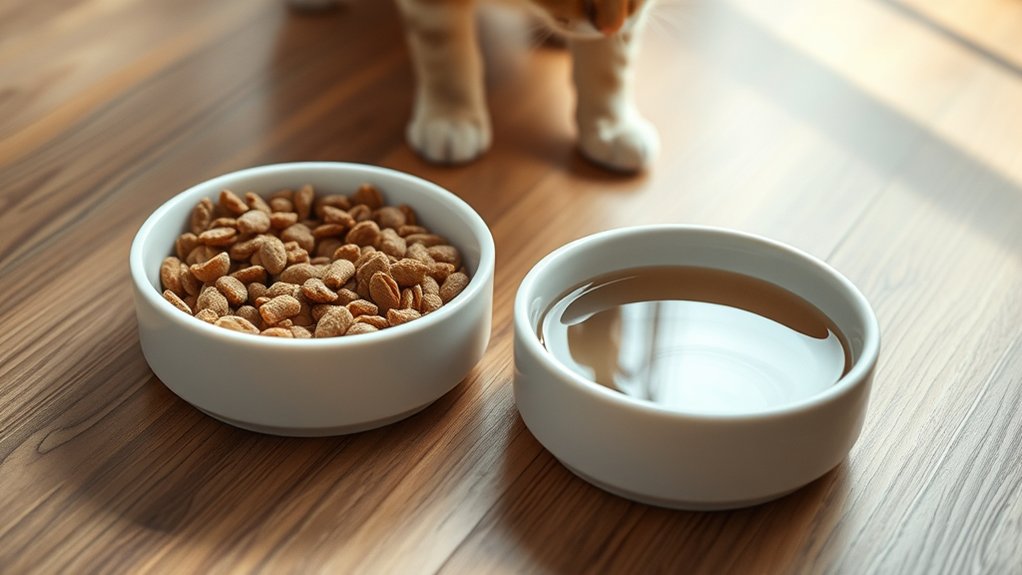
When setting up for your new cat, start with the right food and bowls to guarantee they eat comfortably and stay healthy. Choose bowls that are the right size and shape to prevent whisker fatigue, which can discourage your cat from eating.
Stainless steel or ceramic bowls are best since they’re easy to clean and don’t harbor bacteria like plastic can. Keep feeding areas tidy to support your cat’s overall well-being.
While food is essential, don’t forget about cat health supplements. They can boost your cat’s immune system and improve coat quality, complementing regular cat grooming routines.
Supplements rich in omega fatty acids help maintain a shiny coat and healthy skin, which is critical for grooming success. Establishing this feeding foundation aids digestion and nutrient absorption, making your cat feel their best.
Your cat’s health starts with these essentials, so investing in proper food, bowls, and supplements ensures a happy, thriving feline companion.
Choosing the Right Cat Food

Selecting the right cat food plays a vital role in keeping your feline healthy and energetic. You need to consider your cat’s dietary needs carefully, which vary by age, health, and activity level.
Cats require a diet high in protein and certain nutrients like taurine, so choose foods formulated specifically for felines. Whether you opt for wet, dry, or a mix, always check the ingredient list to ensure quality.
Feeding schedules also matter. Most adult cats do well with two meals a day, while kittens might need more frequent feeding.
Sticking to regular feeding times helps regulate their digestion and energy. Avoid overfeeding by measuring portions according to the package’s guidelines or your vet’s advice.
Adjust the diet if you notice weight changes or health issues. By selecting appropriate food and maintaining consistent feeding schedules, you’ll support your cat’s overall well-being effectively.
Cat Litter and Litter Box Setup
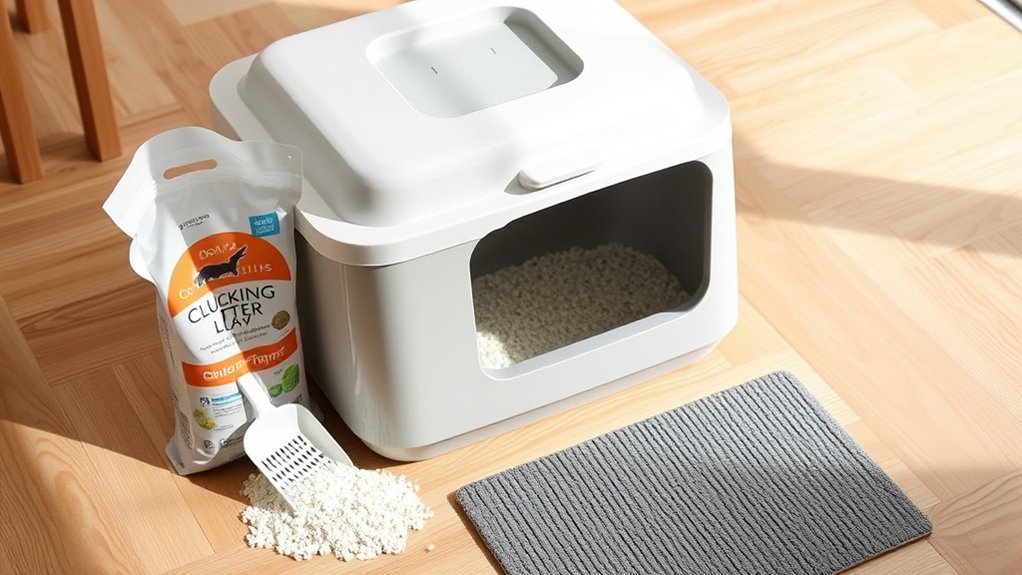
You’ll want to pick the right type of litter that suits both you and your cat’s preferences. It’s all about finding what works best for both of you. Choosing the right litter box is important too, and placing it in a quiet, accessible spot can really make a difference. Let’s take a closer look at the options to keep your cat comfortable and your home clean.
Choosing The Right Litter
How do you find the perfect litter for your cat’s needs? Start by debunking litter box myths, like all cats prefer clay litter or that scented litters are better. Your cat’s preference and health come first.
Consider eco friendly litters made from biodegradable materials. They’re safe, reduce waste, and often control odor well.
Check this quick guide:
| Litter Type | Odor Control | Eco Friendly |
|---|---|---|
| Clay | High | No |
| Clumping Corn | Moderate | Yes |
| Pine | Moderate | Yes |
| Wheat | Good | Yes |
| Silica Gel | Excellent | No |
Try different types to see what your cat prefers. Choosing right means a happy cat and less mess for you.
Types Of Litter Boxes
Several types of litter boxes can fit your cat’s preferences and your space. You can choose from basic open boxes, which are easy to clean and allow plenty of ventilation, or covered ones that offer privacy and help contain odors.
If convenience is a priority, consider automated litter boxes with self-cleaning options. These smart boxes scoop waste automatically, saving you time and reducing odor buildup. Some models even monitor your cat’s usage, alerting you to potential health concerns.
While automated options may cost more upfront, they’re worth it if you want to minimize daily maintenance. Ultimately, picking the right litter box means balancing your cat’s comfort with your lifestyle. Try different types if needed, and you’ll find one that works well for both of you.
Placement Tips For Boxes
Although choosing the right litter box is important, where you place it can make just as much difference in your cat’s comfort and cleanliness. You’ll want a quiet, low-traffic spot to help your cat feel safe. Avoid placing the box near your cat’s food or water, and keep it away from indoor plants, which might confuse your cat or get dirty.
Proper placement also helps control litter box odor.
| Tip | Why It Matters |
|---|---|
| Quiet location | Reduces stress for your cat |
| Away from food/water | Prevents contamination |
| Ventilated area | Controls litter box odor |
| Easy access | Encourages consistent use |
Following these tips guarantees your cat uses the box comfortably and keeps your home fresh.
Cozy Cat Beds and Resting Spots
Where does your cat feel safest and most comfortable? Creating cozy cat beds and resting spots is key to making your feline friend feel at home. Cats love cozy hideouts that offer warmth and security, so choose beds with soft fabrics and enclosed designs.
Placing these beds in quiet corners or near windows adds extra appeal, letting your cat watch outside while relaxing. Incorporate catnip toys nearby to entice your cat to investigate and settle into these spaces.
These toys not only attract your cat but also provide a sense of familiarity and comfort around their resting spots. Avoid areas with heavy foot traffic to keep your cat’s retreat peaceful.
Toys and Enrichment to Keep Cats Active
Creating cozy resting spots gives your cat a safe place to relax, but keeping them active is just as important. Toys and enrichment items help you engage your cat’s natural curiosity and hunting instincts. Choose toys that encourage interactive play, like wand toys or laser pointers, so you can bond while helping your cat burn energy.
Puzzle feeders also stimulate your cat’s mind, providing sensory stimulation that keeps boredom at bay. Don’t forget to rotate toys regularly to maintain your cat’s interest. Scratching posts with attached toys or treat dispensers add variety and challenge.
Catnip-infused toys can offer extra excitement, but some cats respond better to different scents or textures. By providing a range of toys and enrichment opportunities, you’ll support your cat’s physical and mental health, preventing destructive behavior caused by inactivity. Keeping your feline friend active makes for a happier, healthier companion.
Must-Have Grooming Tools for Cats
To keep your cat looking and feeling their best, you’ll need the right grooming tools. Establishing consistent grooming routines not only keeps your cat clean but also strengthens your bond. When comparing grooming tools, focus on quality and comfort for your pet.
Consistent grooming with quality tools keeps your cat healthy and deepens your connection.
Here are four must-have grooming tools:
- Slicker Brush – Perfect for removing loose fur and preventing mats, especially in long-haired cats.
- Deshedding Tool – Helps reduce shedding significantly by reaching the undercoat.
- Nail Clippers – Essential for trimming nails safely to avoid scratches and overgrowth.
- Comb – Great for detangling fur and checking for fleas or debris.
With these tools, you’ll streamline your grooming routines and keep your cat comfortable. Choosing the right tools based on grooming tools comparison ensures both you and your cat enjoy the process.
Scratching Posts and Pads to Protect Furniture
You’ll want to pick scratching posts or pads that match your cat’s style—some prefer vertical ones, while others like horizontal options. It’s a good idea to place them near your cat’s favorite scratching spots. That way, you can protect your furniture from getting scratched. Let’s take a look at the best types and where to put them to keep your home safe.
Types of Scratching Posts
Several types of scratching posts can help keep your cat entertained while protecting your furniture from claws. Choosing the right one depends on your cat’s preferences and your space. Here are four popular options to evaluate:
1. Vertical Posts
Classic and sturdy, perfect for cats who like to stretch while scratching.
2. Cat Tree Options
Combine scratching surfaces with climbing and lounging areas, offering multi-functional fun.
3. Wall Mounted Scratchers
Save floor space and give your cat a vertical challenge right on your wall.
4. Scratching Pads
Portable and simple, these flat surfaces, often made of cardboard, are great for cats who prefer horizontal scratching.
Placement Tips for Protection
Choosing the right scratching post or pad is only part of the solution. Where you place it can make all the difference in keeping your furniture safe. Position scratching posts near your cat’s favorite lounging spots or next to furniture they tend to scratch. This encourages them to use the post instead of your sofa or curtains.
For indoor safety, avoid placing posts in high-traffic areas where your cat might feel vulnerable. Instead, choose quiet, comfortable corners that invite use. If your cat enjoys outdoor time, consider sturdy outdoor protection posts near entryways or patios to redirect scratching behavior outside.
Regularly inspect and move the posts if needed to keep them appealing. With thoughtful placement, you protect both your home and your cat’s natural instincts effectively.
Frequently Asked Questions
How Often Should I Take My Cat to the Vet?
You should take your cat to the vet at least once a year for a wellness exam. Regular visits help monitor feline nutrition and catch any health issues early.
If your cat has specific concerns or is older, more frequent check-ups might be needed. During visits, discuss cat grooming tips and dietary needs to keep your feline friend healthy and happy.
Don’t wait. Regular vet care is key to your cat’s well-being.
What Vaccinations Does My Cat Need?
Wondering what vaccinations your cat really needs? Your cat vaccination schedule should include essential feline vaccines like rabies, feline distemper (panleukopenia), calicivirus, and herpesvirus. These protect against serious diseases.
Kittens usually start vaccinations at six to eight weeks old, with boosters every three to four weeks until about 16 weeks. Don’t skip annual boosters after that, keeping up with the schedule guarantees your loyal companion stays healthy and happy.
How Can I Safely Introduce a New Cat to My Home?
To safely introduce a new cat, start by keeping them in a separate room with their own litter box placed away from the other cat’s area. This helps reduce stress and territorial disputes. Gradually swap bedding to share scents.
When they meet, supervise playtime and use cat toy safety by offering safe, non-toxic toys to distract and bond. Patience and slow introductions make the changeover smoother for both cats.
Are There Any Toxic Plants I Should Avoid?
You should definitely avoid toxic plants, as over 700 plant species can harm cats if ingested. Common toxic plants include lilies, poinsettias, and philodendrons, which can cause severe reactions.
Instead, opt for safe foliage like spider plants, bamboo, or cat grass to keep your feline friend happy and healthy. Always double-check plants before bringing them home so you don’t accidentally expose your cat to harmful toxins.
What Signs Indicate My Cat Is Stressed or Unhappy?
You’ll notice your cat is stressed or unhappy by recognizing behavioral changes like excessive grooming, hiding, aggression, or loss of appetite. Addressing feline anxiety early helps prevent further issues.
Cats might also vocalize more or scratch furniture. When you spot these signs, create a calm environment and consider calming products or vet advice.
Paying attention to these cues ensures your cat feels safe and loved.
Conclusion
Just like a captain needs a sturdy ship, your cat needs the right essentials to navigate their daily adventures. By choosing quality food, comfy beds, engaging toys, and proper grooming tools, you’re setting the stage for a happy, healthy companion.
Think of these must-haves as the treasure map guiding you both to a harmonious life together. Equip your feline friend well, and watch your bond grow stronger with every purr and playful leap. Remember, buying the right things for a cat is the key to a joyful and thriving pet.