
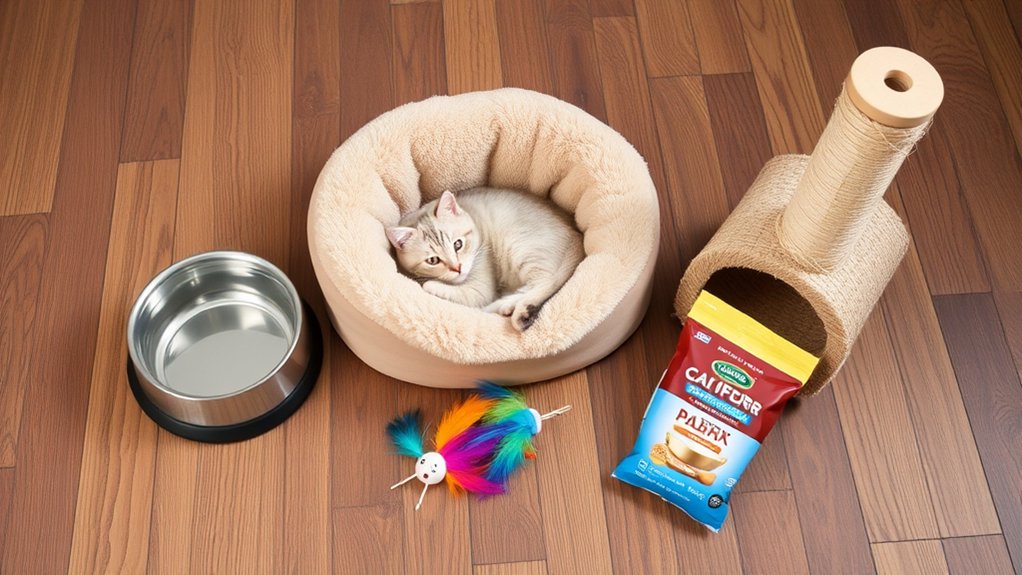
5 Essential Things You Need for Your Cat
If you’re a cat owner, you know how challenging it can be to keep your feline friend healthy and happy. You’re not alone—many people struggle with finding the right products that truly meet their cat’s needs. From nutrition to comfort, choosing the essentials can feel overwhelming, but getting it right makes all the difference in your cat’s well-being.
You need five essential things to keep your cat healthy and happy. Choose high-protein food with necessary nutrients like taurine, avoiding artificial additives.
Create a cozy, quiet sleeping spot with soft bedding, away from drafts and noise.
Pick a litter box that fits your cat comfortably, placed in a private area and kept clean.
Keep your cat entertained with toys and climbing options.
Finally, groom regularly using the right tools to maintain their coat and health. Learn how to make each of these essentials work best for your cat.
Key Takeaways
- Provide a high-protein, nutrient-rich diet tailored to your cat’s needs, avoiding fillers and artificial additives.
- Create a cozy, quiet sleeping area with soft, washable bedding away from drafts and loud noises.
- Choose an appropriately sized litter box in a private, low-traffic spot, and maintain cleanliness for odor control.
- Offer a variety of interactive toys and climbing structures to encourage physical and mental stimulation.
- Establish a regular grooming routine using essential tools to reduce shedding and monitor your cat’s health.
Choose the Right Food for Your Cat

Although it might seem simple, choosing the right food for your cat takes careful consideration. You need to understand your cat’s nutritional requirements to guarantee they stay healthy and energetic.
Cats are obligate carnivores, so their diet must be rich in protein and certain essential nutrients like taurine, which you won’t find in plant-based foods. Pay attention to any dietary restrictions your cat may have, such as allergies or sensitivities to specific ingredients.
Always check labels for artificial additives or fillers that could upset their stomach or cause long-term health issues. If your cat has a medical condition, consult your vet to find a specialized diet that meets both their nutritional needs and dietary restrictions.
Create a Cozy and Safe Sleeping Area

When you create a cozy and safe sleeping area for your cat, you help them feel secure and relaxed. This is essential for their well-being. Choosing the right cat bedding options and guaranteeing sleeping area safety are key.
Pick a quiet spot away from heavy foot traffic or loud noises. Soft, washable bedding makes naps comfortable and hygienic. Also, avoid spaces near heaters or drafty windows to maintain a stable temperature.
Here’s a quick guide to help you set up the perfect sleeping spot:
| Cat Bedding Options | Sleeping Area Safety Tips |
|---|---|
| Plush beds | Place in quiet, low-traffic areas |
| Heated pads | Avoid drafts and direct heat |
| Covered hideaways | Check for loose wires or hazards |
| Washable blankets | Clean bedding regularly |
| Elevated beds | Ensure stable, sturdy placement |
Pick the Best Litter Box for Your Cat

Choosing the right litter box can make a big difference in your cat’s comfort and your home’s cleanliness. Start by selecting a box that’s large enough for your cat to move around easily. Covered boxes help contain messes, but some cats prefer an open design.
Selecting a spacious litter box enhances your cat’s comfort and keeps your home cleaner.
When deciding on litter box placement, pick a quiet, low-traffic spot that’s easily accessible but offers privacy. Avoid placing it near your cat’s food or water bowls.
To keep odors at bay, use effective odor control techniques like clumping litter and scoop the box daily. Adding baking soda can also help absorb smells.
Make sure to clean the box thoroughly with mild soap weekly to prevent buildup. By choosing the right litter box and placing it thoughtfully, you’ll create a comfortable, odor-free space that your cat will appreciate and you will enjoy.
Keep Your Cat Happy With Toys and Activities
To keep your cat mentally and physically stimulated, provide a variety of toys and activities that match their natural instincts. Cats love to hunt, pounce, and explore, so choose toys that encourage these behaviors. Interactive play with wand toys, laser pointers, or motorized mice keeps your cat engaged and strengthens your bond. Rotate toys regularly to maintain their interest and prevent boredom.
Offering puzzle feeders or treat-dispensing toys adds mental stimulation, challenging your cat to think and problem-solve. You can also create climbing opportunities with cat trees or shelves, allowing your feline friend to exercise and satisfy their curiosity. Don’t forget to set aside daily playtime to keep your cat active and happy.
Groom Your Cat With Essential Tools
Keeping your cat active and entertained also means paying attention to their coat and skin health. Grooming your cat regularly helps prevent mats and reduces shedding. So understanding proper grooming techniques and maintaining a consistent grooming frequency is key.
You don’t need fancy tools, just the essentials to keep your feline friend looking and feeling great. Here are the must-have grooming tools for every cat owner:
- Slicker brush: removes loose fur and detangles
- Comb: smooths out knots and helps with sensitive areas
- Nail clippers: trim claws safely to avoid scratches
- Grooming wipes: clean and freshen your cat between baths
- Deshedding tool: reduces excessive shedding, especially in long-haired cats
Stick to a grooming routine that suits your cat’s coat type and personality. Regular grooming not only keeps your cat clean but also strengthens your bond and lets you spot any skin issues early.
Frequently Asked Questions
How Often Should I Take My Cat to the Vet?
You should take your cat to the vet at least once a year for a routine checkup. If your cat is older or has health issues, more frequent visits might be needed.
Regular vet visits help monitor cat nutrition and catch any problems early. Plus, your vet can advise on pet grooming to keep your cat healthy and comfortable.
Don’t wait for symptoms. Prevention is key to your cat’s well-being.
What Vaccinations Does My Cat Need?
Wondering which vaccinations your cat truly needs? Your cat’s vaccination schedule typically includes core shots like feline distemper, calicivirus, and rabies. These protect against serious diseases and play a big role in cat health prevention.
Kittens start vaccines early, with boosters following as they grow. Your vet tailors the schedule based on your cat’s lifestyle and risk factors. Staying on track with vaccinations keeps your feline companion safe and healthy.
How Can I Tell if My Cat Is Overweight?
You can tell if your cat is overweight by feeling their ribs. If you can’t easily feel them, they might be carrying extra weight. Also, look for a lack of a defined waist when viewed from above and a sagging belly.
For weight management, you’ll want to make dietary adjustments like feeding measured portions and choosing a balanced cat food with fewer calories. Regular playtime helps too, keeping your cat active and healthy.
What Should I Do if My Cat Has Fleas?
Imagine your cat constantly scratching and restless because of fleas. First, you’ll want to treat them with flea prevention products recommended by your vet.
You can also try natural remedies like diluted apple cider vinegar sprays to soothe their skin. Don’t forget to wash their bedding and vacuum your home thoroughly to remove eggs.
Consistent care keeps fleas away and your cat comfortable.
How Do I Introduce a New Cat to My Home?
When introducing a new cat to your home, start by introducing gradual contact. Keep the new cat in a separate room with familiar scents, like a blanket or toy from your current cat, to ease the adaptation.
Swap bedding between cats to help them get used to each other’s scent. Gradually allow supervised meetings, watching their behavior closely. Patience and gradual exposure will help both cats adjust and build a peaceful relationship.
Conclusion
When you choose the right food, create a cozy space, pick the best litter box, keep your cat entertained, and groom them regularly, you’re not just meeting their needs—you’re building trust and happiness. It’s funny how these simple essentials, which might seem separate, all come together to create a loving bond.
By caring for your cat thoughtfully, you’ll find that their comfort and your joy grow hand in paw, making every moment together even more special. Remember, these 5 essential things you need for your cat are the foundation for a happy, healthy relationship.