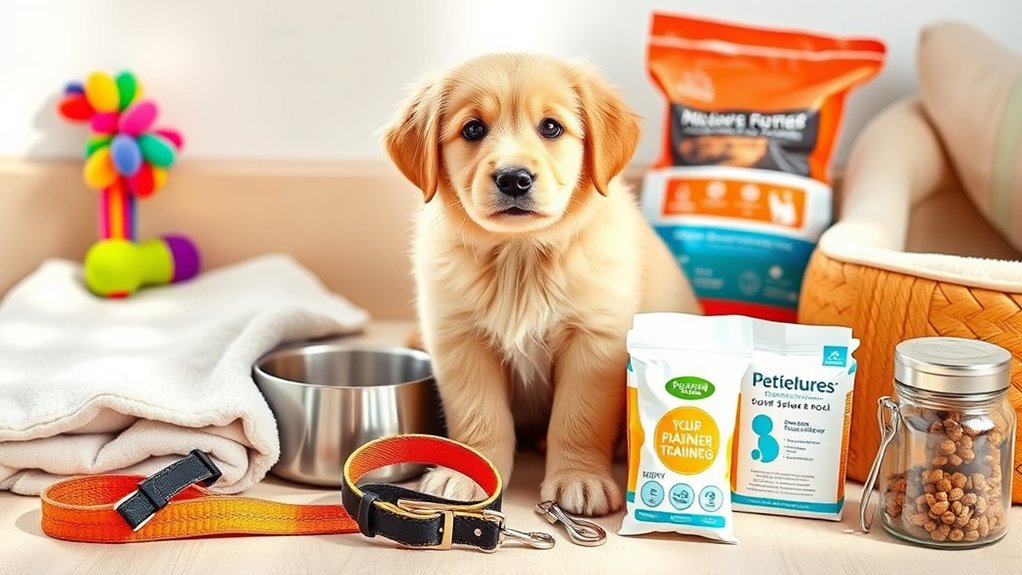
10 Essentials You Need for a Puppy
Bringing home a new puppy is exciting but can also feel overwhelming. You’re not alone if you’re wondering exactly what essentials you need to get started. Many new puppy owners struggle with figuring out the right supplies to keep their furry friend happy and healthy.
You’ll want a cozy bed and a sturdy crate to keep your puppy safe and comfortable. Stock up on nutritious food, durable bowls, and potty training supplies like pads and enzymatic cleaners.
Don’t forget a well-fitting collar with ID tags and a reliable leash.
Gather grooming tools and engaging toys to support their health and happiness.
Prepare training aids and schedule a vet visit to cover essential health needs.
Keep going to learn how to create the perfect puppy setup.
Key Takeaways
- Provide a comfortable, safe bed and a sturdy crate placed in a quiet, draft-free area for restful sleep and security.
- Use nutritious, age-appropriate puppy food with durable, non-slip feeding bowls for healthy growth and easy mealtime.
- Gather potty training supplies like absorbent puppy pads, enzymatic cleaners, and gloves for effective hygiene management.
- Equip your puppy with a comfortable collar, secure leash, and ID tags to ensure safety and quick identification.
- Prepare training tools such as a clicker, treat pouch, and leash, and schedule vet visits for vaccinations and health care.
Choose a Cozy Puppy Bed for Comfort and Security
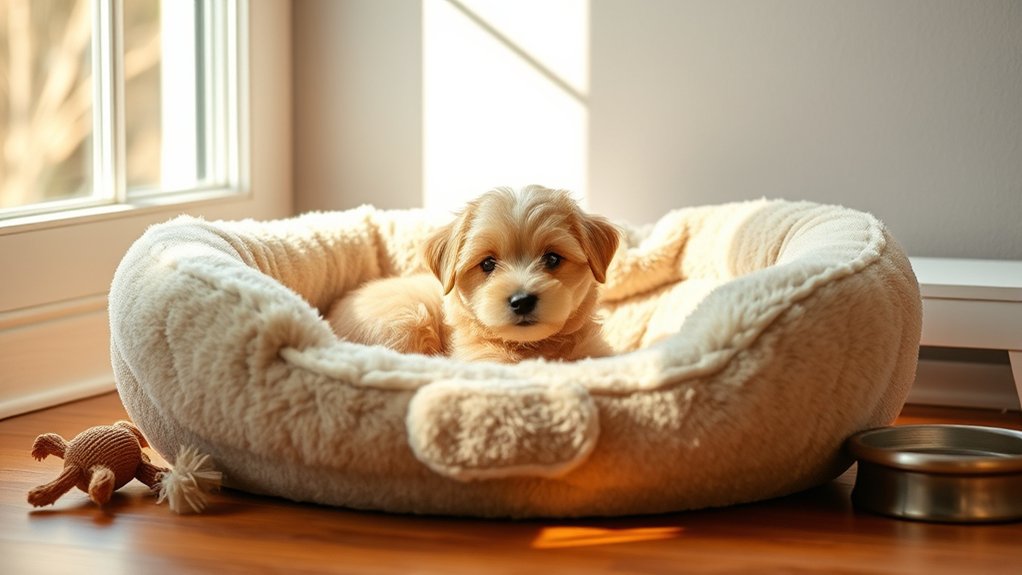
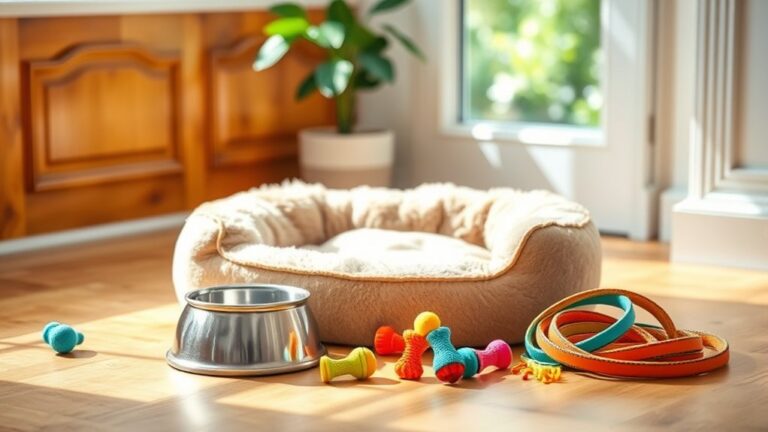
When you bring your puppy home, choosing a cozy bed helps them feel safe and comfortable in their new space. Puppy sleep is crucial for their growth and development, so providing a soft, warm bed encourages restful naps and nighttime sleep. Look for a bed with supportive cushioning and easy-to-clean materials to keep your puppy comfortable and healthy.
Bed placement matters just as much as the bed itself. Place the bed in a quiet, draft-free corner where your puppy won’t be disturbed by heavy foot traffic or loud noises. This spot should also allow you to keep an eye on your puppy without overwhelming them, so they feel secure yet not isolated. Avoid placing the bed near heaters or cold windows to maintain a consistent temperature. With the right bed and thoughtful bed placement, you’ll help your puppy settle in confidently and rest well during those important early days.
Pick a Safe, Sturdy Crate for Training
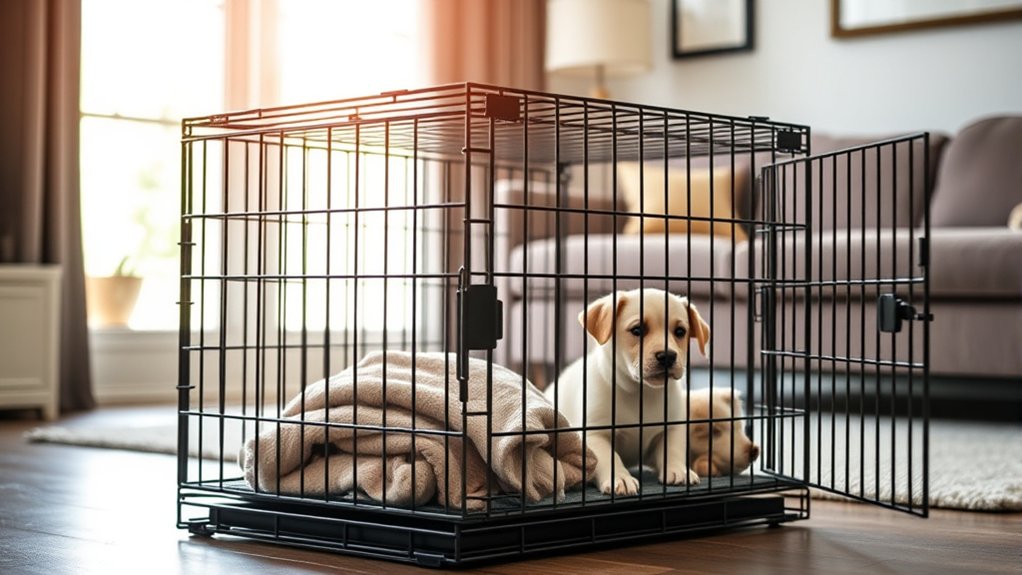
You’ll want to pick a crate that’s the right size—big enough for your puppy to stand up and turn around comfortably. But it shouldn’t be so large that it feels unsafe. Look for durable materials like metal or heavy-duty plastic because these can handle chewing and accidents. A sturdy crate really sets the foundation for effective training and keeps your puppy secure.
Crate Size Matters
Choosing the right crate size plays a crucial role in your puppy’s training and comfort. Your puppy needs enough room to stand, turn around, and lie down comfortably without excess space that encourages soiling.
Proper crate ventilation is essential to keep your puppy cool and comfortable, so select a crate with ample airflow. When considering crate placement, pick a quiet, low-traffic area in your home where your puppy feels secure but isn’t isolated. This helps them adjust and reduces anxiety.
Avoid placing the crate in direct sunlight or near heaters to prevent overheating. By choosing the correct size and thoughtful placement, you’ll create a safe, cozy space that supports effective training and helps your puppy feel at ease.
Durable Material Options
Although puppies can be curious and energetic, selecting a crate made from durable materials guarantees it withstands their chewing and scratching. When choosing a crate, focus on material durability to assure it lasts through your puppy’s teething phase.
Metal crates offer excellent chew resistance and sturdy construction, making them a reliable choice. Plastic crates are lightweight but may not hold up as well if your puppy is a determined chewer.
Look for crates with reinforced corners and secure latches to prevent escapes. Avoid flimsy wire or fabric crates that don’t offer enough protection.
Stock Up on Quality Puppy Food and Bowls
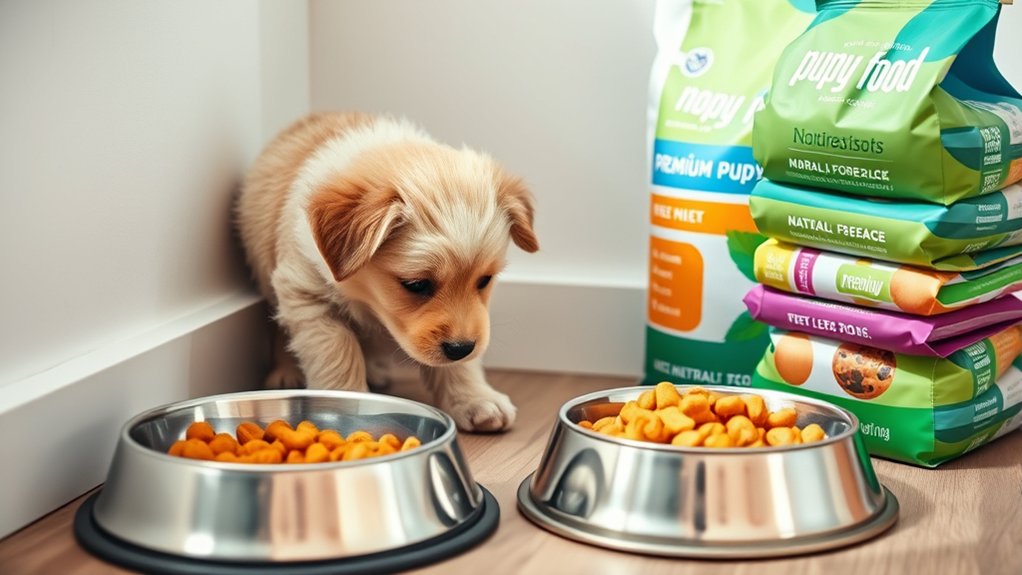
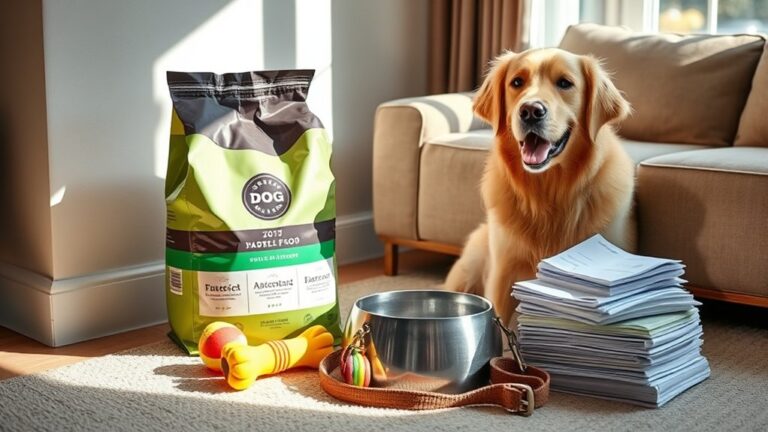
You’ll want to pick a nutritious puppy food that supports healthy growth and energy. It’s important to go for options that give your little one all the nutrients they need. Also, make sure to choose durable bowls that won’t tip over or break easily. That way, mealtime stays mess-free and stress-free. Having the right food and bowls really sets your puppy up for a strong start.
Choosing Nutritious Puppy Food
Finding the right nutritious puppy food sets the foundation for your pup’s growth and health. You’ll want to choose foods rich in essential nutrients like protein, vitamins, and minerals that support development. Stick to feeding schedules recommended by your vet to maintain consistent energy levels and aid digestion.
Proper nutrition also plays a role in puppy socialization. Well-fed puppies are more alert and ready to engage during training and playtime. Avoid foods with fillers or artificial additives, as they can cause allergies or digestive issues.
Always check the packaging for age-appropriate formulas designed specifically for puppies. By prioritizing quality nutrition and adhering to regular feeding schedules, you’ll help your new companion thrive during these vital early months.
Selecting Durable Food Bowls
When selecting food bowls for your puppy, durability should be your top priority to withstand daily use and energetic play. Choose bowls made from stainless steel or heavy-duty ceramic, as they resist chewing and are easy to clean.
Avoid plastic bowls, which can harbor bacteria and may cause allergies. Durable bowls complement your puppy’s diet plans by ensuring their food stays fresh and uncontaminated.
Regular vet checkups can help you adjust diet plans, so having reliable bowls supports consistent feeding routines. Also, consider non-slip bases to prevent spills during mealtime.
Gather Puppy Pads and Cleaning Supplies for Potty Training
Since puppies need frequent bathroom breaks, gathering puppy pads and cleaning supplies early on makes potty training much smoother. Puppy potty accidents are inevitable, but being prepared helps you manage messes without stress.
Stock up on quality puppy pads that absorb moisture well and resist leaks. Also, choose cleaning supplies that effectively eliminate odors to prevent repeat accidents in the same spot.
Here’s what you should have ready:
- Puppy pads with high absorbency and leak-proof backing.
- Enzymatic cleaners designed for pet stains to remove odors completely.
- Disposable gloves to keep your hands clean during cleanup.
- Paper towels or microfiber cloths for quick drying and wiping.
Having these essentials on hand ensures you can handle puppy potty moments quickly and hygienically. This preparation supports consistent training and keeps your home fresh, making the transition easier for both you and your puppy.
Select a Collar, Leash, and ID Tags for Safety
You’ll want to pick a collar that fits your puppy comfortably and won’t irritate their skin. It’s important they feel good wearing it all day. When it comes to the leash, go for one made from durable materials—that way, your walks stay safe and secure without any surprises. And don’t forget the ID tags! They’re super important because if your puppy ever gets lost, those tags can help bring them back home quickly.
Choosing The Right Collar
Selecting the right collar is a crucial step in keeping your puppy safe and comfortable. You’ll want to take into account both collar styles and collar materials to find the best fit for your pup. Here’s how to choose wisely:
- Comfort: Pick a collar with soft, breathable materials to avoid irritation.
- Adjustability: Make sure the collar can grow with your puppy by choosing adjustable styles.
- Safety: Opt for quick-release or breakaway collars to prevent accidents.
- Durability: Select materials that withstand chewing and daily wear, like nylon or leather.
Durable Leash Materials
When you choose a leash, durability should be at the top of your list to guarantee your puppy stays secure during every walk. Nylon leashes offer a strong, lightweight option that resists wear and tear, making them perfect for active pups.
They’re also easy to clean, which is a big plus after muddy adventures. If you prefer something with a classic feel, leather harnesses paired with leather leashes provide excellent strength and comfort. Leather ages well and can handle your puppy’s pulls without fraying or breaking.
Whichever material you select, make sure the leash has sturdy hardware and secure stitching. Investing in durable leashes ensures your puppy’s safety and gives you peace of mind during every outing.
Importance Of ID Tags
Why is an ID tag essential for your puppy’s collar? The ID tag importance lies in providing quick safety identification if your puppy ever gets lost. It’s a simple yet crucial tool that can reunite you with your companion faster.
Here’s why you shouldn’t skip an ID tag:
- Immediate contact info: Anyone who finds your puppy can reach you right away.
- Prevents prolonged stress: Your puppy’s safety depends on timely identification.
- Legal requirements: Some areas mandate ID tags on pets for safety.
- Peace of mind: You’ll feel confident knowing your puppy has a reliable ID.
Always choose durable, clear tags that fit securely on the collar to maximize your puppy’s safety identification.
Find Durable Puppy Toys to Keep Them Engaged
Although puppies are naturally curious and playful, providing durable toys helps channel their energy into safe, constructive play. When selecting toys, focus on interactive chew toys designed to withstand your puppy’s strong jaws and reduce destructive chewing on your belongings. These toys also keep your pup mentally engaged, preventing boredom.
In addition to chew toys, sensory stimulation games are excellent for keeping your puppy’s mind sharp and senses alert. Toys that challenge their problem-solving skills or introduce new textures and sounds will keep them entertained longer. Rotating toys regularly maintains their interest and encourages exploration.
Choosing safe, high-quality materials is vital to avoid choking hazards or toxic substances. Durable toys designed for puppies not only withstand rough play but also support healthy teething. By investing in the right toys, you’ll foster positive habits and create a happy, engaged puppy.
Get Puppy Training Tools to Encourage Good Behavior
Equipping yourself with the right puppy training tools makes teaching good behavior much easier and more effective. When you focus on puppy socialization and behavioral reinforcement, having the proper tools guarantees consistent, positive results.
Here are four essentials you’ll want:
- Clicker A clicker marks the exact moment your puppy performs a desired behavior, making reinforcement clear.
- Treat pouch Keep tasty rewards handy to reinforce good behavior immediately.
- Leash and harness These help you guide your puppy during socialization outings and prevent bad habits.
- Training pads Useful for housebreaking and teaching boundaries indoors.
Using these tools consistently will speed up learning and build a strong foundation for good manners. Remember, positive reinforcement paired with proper socialization sets your puppy up for success, making training enjoyable for both of you.
Collect Grooming Supplies for Healthy Care
Training tools help shape your puppy’s behavior, but keeping your pup clean and comfortable requires a different set of items. Collect grooming tools like a soft-bristle brush, nail clippers, and a comb suited to your puppy’s coat type. These essentials help remove dirt, prevent matting, and keep your puppy’s fur healthy.
Don’t forget bathing supplies. Choose a gentle puppy shampoo and a non-slip mat for bath time safety. Regular baths keep your puppy fresh and reduce odors. You’ll also want a towel or pet dryer to dry your pup thoroughly, which helps prevent chills.
Furthermore, consider ear cleaners and toothbrushes designed for dogs to support overall hygiene. By assembling these grooming tools and bathing supplies, you’ll create a routine that promotes health and comfort. Your puppy will feel better, and you’ll strengthen your bond through regular care sessions.
Offer Healthy Puppy Treats for Training and Bonding
Since positive reinforcement shapes your puppy’s behavior, offering healthy treats during training sessions is essential. Healthy treats not only motivate your puppy but also strengthen your bond through enjoyable bonding activities. Choosing the right treats guarantees your puppy stays happy and healthy while learning.
Here are four key tips for using healthy treats effectively:
- Pick low-calorie treats made specifically for puppies to avoid weight gain.
- Use small, soft treats for quick chewing during training to keep sessions smooth.
- Incorporate treats as rewards for desired behaviors immediately to reinforce learning.
- Combine treats with verbal praise and petting to deepen your connection and trust.
Schedule a Vet Visit and Prepare Health Essentials
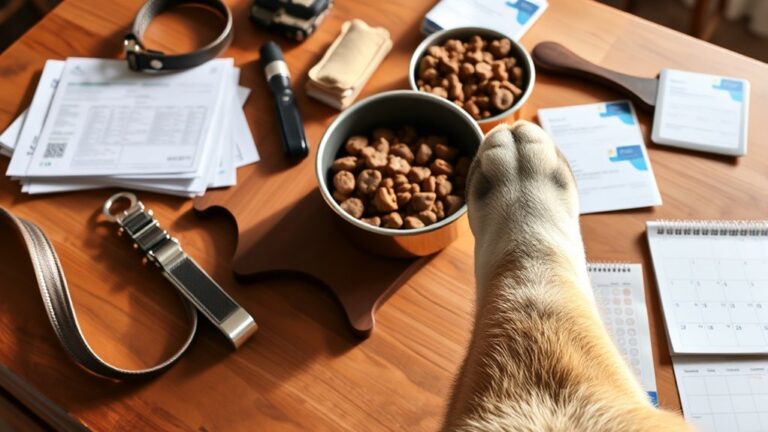
Before bringing your puppy home, make sure to schedule a vet visit to establish a health baseline and start necessary vaccinations. This initial appointment is vital for your puppy’s wellbeing and sets the stage for ongoing health monitoring.
Prepare a vet checklist to cover vaccinations, deworming, flea prevention, and general health assessments. Don’t forget to discuss microchipping and spaying or neutering if appropriate.
During the visit, your vet will examine your puppy thoroughly and answer any questions you have about nutrition, behavior, and care. Keep all vaccination records and vet advice organized for easy reference.
Regular follow-ups based on your vet’s recommendations will help you catch any health issues early. By prioritizing this visit and preparing health essentials in advance, you’ll guarantee your puppy gets a strong start towards a long, healthy life.
Frequently Asked Questions
How Often Should I Feed My Puppy Daily?
You should feed your puppy three to four times a day to support proper puppy nutrition and growth. Establishing a consistent feeding schedule helps regulate their digestion and energy levels.
As your puppy grows, you can gradually reduce feedings to twice daily. Make certain to provide balanced, age-appropriate meals and monitor their weight.
Sticking to a regular feeding schedule guarantees your puppy stays healthy and happy during this vital development stage.
When Can Puppies Start Learning Basic Commands?
You can start puppy training as early as 7 to 8 weeks old. Research shows puppies retain new commands best at this age.
Command timing is essential. Short, consistent sessions help your puppy grasp basics like sit and stay quickly.
Puppies soak up training like little sponges, so starting early sets a strong foundation. Keep sessions fun and positive, and you’ll see fast progress in your pup’s obedience and confidence.
What Vaccinations Are Essential for a New Puppy?
You’ll want to follow a vaccination schedule starting at 6-8 weeks, covering distemper, parvovirus, and adenovirus. These vaccines protect your puppy from serious diseases early on.
Keep in mind, a balanced puppy diet supports their immune system, helping vaccines work effectively. Your vet will guide you through boosters and additional shots like rabies, ensuring your puppy stays healthy as they grow.
Stay consistent with appointments!
How Do I Socialize My Puppy With Other Dogs?
Imagine your puppy as a young traveler discovering a new world. You guide them through puppy playdates where they meet fellow adventurers, other dogs. Use socialization techniques like gentle introductions and positive reinforcement to build confidence.
Keep experiences short and fun, letting your puppy learn friendly manners and body language. This way, you’re not just socializing your pup; you’re helping them become a well-rounded explorer in their canine community.
When Is the Best Time to Start Crate Training?
You should start crate training as soon as you bring your puppy home, usually around 8 weeks old. Early crate training techniques help your puppy feel secure and comfortable.
Keep feeding times consistent, as puppy nutrition plays a role in establishing routines. Use positive reinforcement to make the crate a safe space, and gradually increase crate time.
This approach helps your puppy adjust smoothly and supports housebreaking efforts effectively.
Conclusion
Starting life with a puppy means juggling excitement and responsibility. While the soft bed and tasty treats bring comfort and joy, the crate and training tools demand patience and commitment.
Balancing these essentials guarantees your puppy feels safe and loved, while you build a foundation for a well-behaved companion. By preparing thoughtfully, you turn the chaos of puppyhood into a rewarding journey filled with trust, growth, and endless tail wags.
Remember, having the right 10 essentials you need for a puppy makes all the difference in creating a happy and healthy start for your new furry friend.