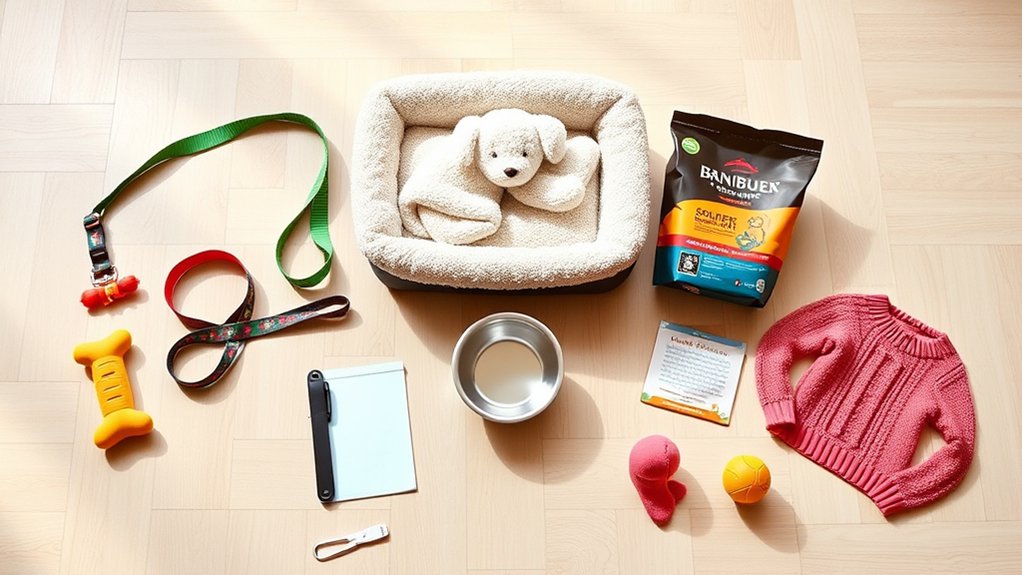
10 Things Needed for a Puppy
Bringing home a new puppy is exciting but can also feel overwhelming. You want to make sure you have everything your furry friend needs to feel safe and happy, but where do you even start? You’re not alone—many new puppy parents struggle with figuring out the essentials to prepare their home and care properly for their pup.
To welcome a puppy, start by puppy-proofing a safe space with gates and removing hazards. Choose balanced, age-appropriate food and sturdy bowls for meals and water. Provide a cozy bed and a variety of safe toys for comfort and play.
Gather grooming supplies like brushes and nail clippers, and set up training pads or outdoor potty spots. Find a trusted vet for checkups, and keep tasty treats handy for training success.
Keep going to investigate all essentials for your new friend.
Key Takeaways
- Create a safe, puppy-proof space with clear hazards and comfortable bedding to support routine and socialization. This helps your puppy feel secure and settle in quickly.
- Provide balanced puppy food and fresh water using durable, appropriately sized bowls for feeding and hydration. Keeping these accessible encourages healthy eating habits.
- Supply cozy beds and a variety of safe toys to encourage comfort, play, and mental enrichment. Toys keep your puppy engaged and happy throughout the day.
- Use grooming tools like brushes and nail clippers regularly, and set up designated potty training areas for hygiene. Consistent care helps your puppy stay clean and comfortable.
- Schedule veterinary checkups, use proper collars and leashes, and offer healthy treats for training and positive reinforcement. These essentials keep your puppy healthy and well-behaved.
Prepare a Safe, Puppy-Proof Space for Your New Friend
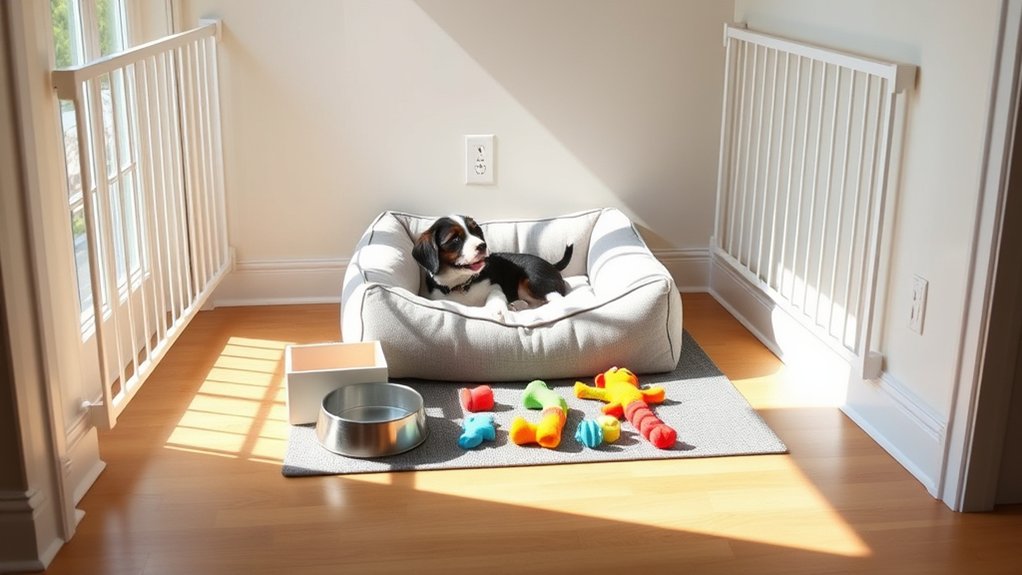
Before bringing your new puppy home, create a safe, puppy-proof space where they can investigate without danger. Clear the area of small objects, toxic plants, and loose wires to prevent chewing hazards. This space will become your puppy’s first classroom for house training, so make it easy to clean and comfortable. Use baby gates or playpens to limit their roaming, helping you monitor accidents and reinforce good habits quickly.
Early puppy socialization starts here, too. Introduce your puppy gently to different sounds, sights, and safe people within this space to build confidence. A secure environment reduces stress and encourages positive interactions. Keep their bed, toys, and water accessible, creating a routine that supports training and social growth.
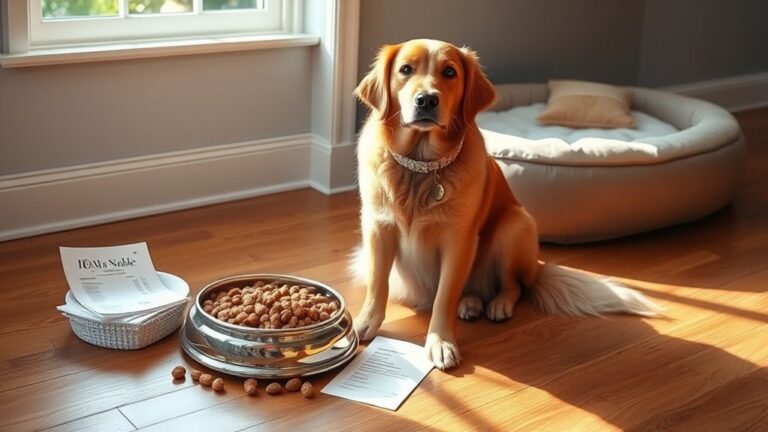
Choose the Right Puppy Food for Healthy Growth

You’ll want to focus on your puppy’s nutritional needs to support healthy growth and development. Choosing food designed specifically for puppies is the best way to make sure they get the right balance of proteins, fats, and vitamins. It’s always a good idea to pick age-appropriate options so their changing requirements are met as they grow.
Nutritional Requirements Overview
Choosing the right puppy food plays a crucial role in supporting your pup’s healthy growth and development. Understanding dog nutrition helps you provide balanced meals packed with essential proteins, fats, vitamins, and minerals. These nutrients fuel energy, support brain development, and strengthen the immune system.
Maintaining a consistent feeding schedule is just as important. Puppies thrive on routine, so offering meals at regular times helps regulate digestion and prevents overeating. Typically, feeding your puppy three to four times daily ensures steady nutrient absorption.
Selecting Age-Appropriate Food
Providing meals that match your puppy’s age guarantees they get the right nutrients at each stage of growth. When selecting age-appropriate food, focus on formulas designed specifically for puppies. These contain higher protein, fat, and essential vitamins to support development.
Avoid adult dog food, as it won’t meet their unique needs. Establishing a consistent feeding schedule helps regulate their digestion and energy levels. Typically, young puppies eat three to four times daily, gradually reducing meals as they grow.
Always check labels for puppy nutrition standards, and consult your vet to tailor feeding amounts and timing based on your pup’s breed and size. Choosing the right food and sticking to a proper feeding schedule will set your puppy up for healthy growth and lifelong wellness.
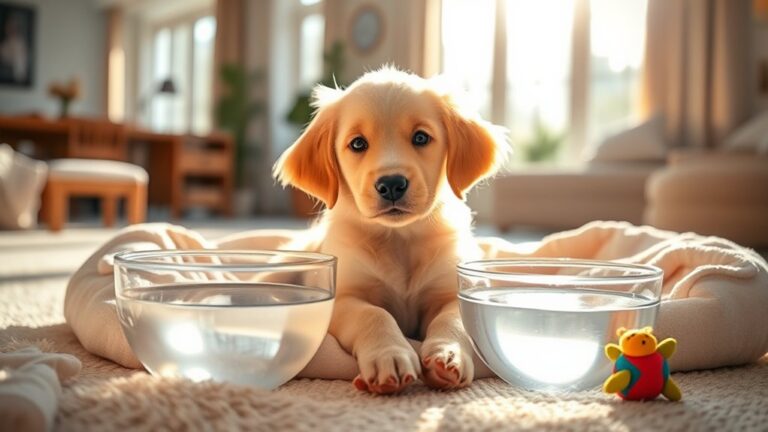
Buy Puppy Bowls for Easy Feeding and Hydration
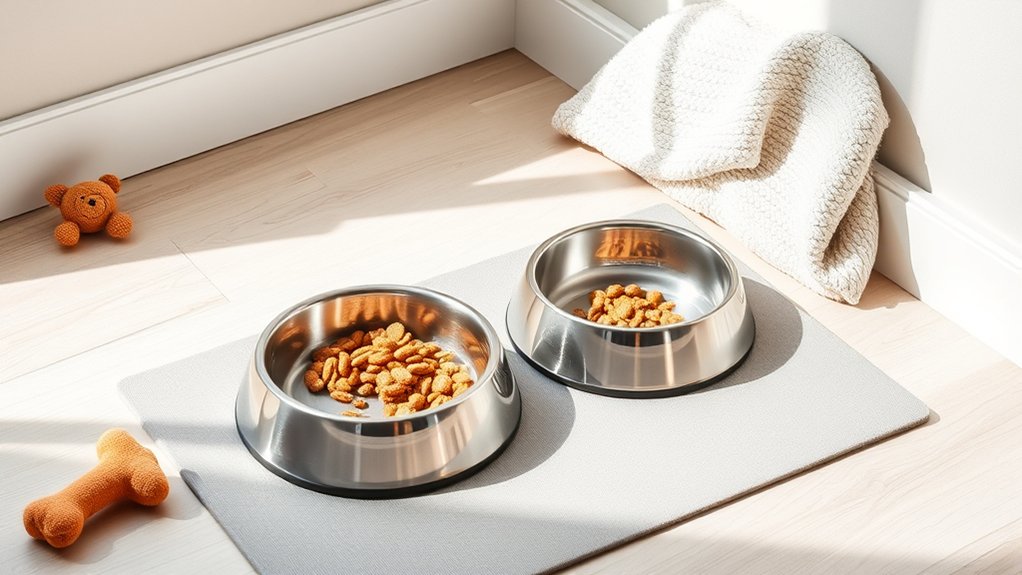
When you’re picking out puppy bowls, it’s smart to go for durable materials that can handle a bit of rough use. After all, puppies can be pretty enthusiastic eaters! You’ll also want to make sure the size suits your pup’s breed and eating style. And don’t forget to think about designs that are easy to clean and simple for your puppy to access. That way, mealtime stays hassle-free for both of you.
Choosing Durable Materials
Since puppies are often playful and curious, you’ll want to select bowls made from durable materials that can withstand their energy and prevent spills. Look for bowls crafted from stainless steel or heavy-duty plastic, as these resist chewing and tipping.
Just like you choose durable chew toys to keep your puppy engaged without easy destruction, your feeding gear should match that toughness. Avoid flimsy bowls that crack or tip over easily, leading to messes and frustration.
Likewise, when investing in other pet essentials, sturdy scratching posts provide lasting entertainment and durability. Prioritizing strength and resilience in your puppy’s items ensures they last longer and handle rough puppy play, making feeding and hydration hassle-free for both you and your furry friend.
Size and Design Options
Although durability is essential, selecting the right size and design for your puppy’s bowls plays a crucial role in making feeding and hydration easy. You want bowls that fit your puppy’s breed and age to prevent spills and overeating.
Consider designs that complement other puppy clothing and training accessories for a coordinated look.
| Bowl Size | Suitable Puppy Size | Material | Design Feature | Easy Cleaning |
|---|---|---|---|---|
| Small | Toy breeds | Stainless Steel | Non-slip base | Yes |
| Medium | Small to medium | Ceramic | Elevated stand | Yes |
| Large | Medium to large | Plastic | Spill-proof edges | Yes |
| Adjustable | Growing puppies | Silicone | Collapsible design | Yes |
| Dual bowl set | Multiple puppies | Stainless Steel | Separate compartments | Yes |
Choose wisely for smooth mealtime routines.
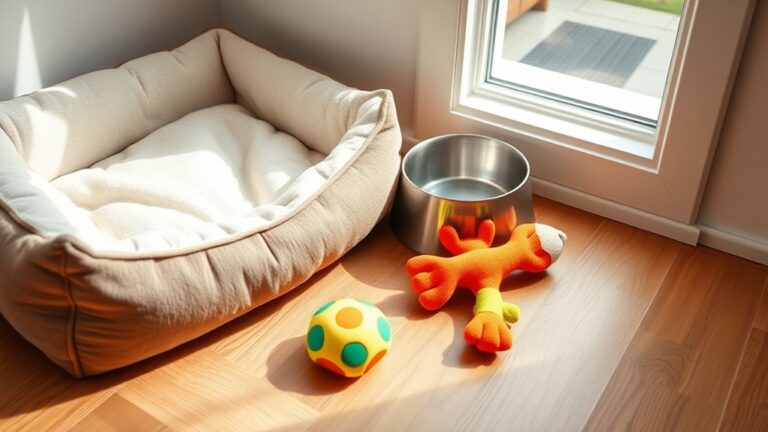
Pick a Cozy Bed That Fits Your Puppy’s Size
Choosing a cozy bed that fits your puppy’s size guarantees they feel safe and comfortable as they rest and grow. When you pick the right bed, you’re not just providing a comfy spot; you’re supporting their overall well-being.
Puppies spend a lot of time sleeping to recharge for their daily adventures, including puppy grooming and puppy socialization sessions. A snug bed helps them relax after playtime or a bath.
Make sure the bed is appropriately sized, not too big or small, so your puppy feels secure. Look for soft, washable materials that make cleaning easy after grooming.
A bed with raised sides can offer extra support and a sense of security, which is especially helpful during early socialization when your puppy is adjusting to new experiences.
Gather Safe and Fun Toys to Keep Your Puppy Busy
To keep your puppy happily engaged, you’ll want to gather a variety of safe and stimulating toys. Choose toys that are durable and free of small parts that could be swallowed, ensuring toy safety is a top priority. Chew toys, puzzle toys, and soft plushies can meet your puppy’s different needs, from soothing teething discomfort to encouraging problem-solving.
Providing a range of toys also supports puppy socialization by introducing new textures and play styles. Interactive toys can help your puppy learn appropriate play behaviors and reduce boredom, which often leads to destructive habits. Rotate toys regularly to maintain interest and observe how your puppy interacts with each item to spot any safety concerns early.
Pick the Right Collar and Leash for Training
Keeping your puppy engaged with the right toys sets a great foundation for training, and selecting the right collar and leash takes that training a step further. When picking a collar, consider collar types like flat buckle collars for everyday use or martingale collars, which are gentle and prevent slipping. Avoid choke chains or prong collars for young pups, as they’re too harsh.
For leash lengths, shorter leashes around 4 to 6 feet give you better control during training sessions, helping your puppy focus and respond to commands. Longer leashes, like 10 to 15 feet, can be useful once your pup is more reliable, allowing some freedom while still maintaining safety.
Choose a leash made of durable material with a comfortable handle to guarantee you and your puppy have smooth training experiences. By choosing the right collar types and leash lengths, you set clear boundaries and build trust, making training effective and enjoyable for both of you.
Collect Grooming Supplies to Keep Your Puppy Clean
You’ll want to gather some essential grooming tools like brushes, nail clippers, and puppy-safe shampoo to keep your adorable companion clean. Regular grooming doesn’t just keep your puppy looking great—it also promotes healthy skin and a shiny coat. Plus, staying consistent with cleaning helps prevent problems like matting and infections.
Essential Grooming Tools
Although your puppy’s grooming needs may seem simple at first, having the right tools makes all the difference in keeping them clean and comfortable. Establishing a consistent puppy grooming routine is easier when you have everything on hand. These essential tools help you care for your pup’s coat, nails, and overall hygiene effectively.
| Tool | Purpose |
|---|---|
| Slicker Brush | Removes loose fur and tangles |
| Nail Clippers | Keeps nails trimmed safely |
| Puppy Shampoo | Gentle cleaning without irritation |
Using these tools regularly supports a healthy grooming routine, making your puppy’s care less stressful and more enjoyable. You’ll notice your pup feels fresher and happier with each grooming session.
Regular Cleaning Benefits
Having the right grooming tools makes it easier to maintain your puppy’s cleanliness regularly. When you collect grooming supplies, you’re setting yourself up for consistent hygiene routines that keep your puppy healthy and happy.
Regular brushing, bathing, and nail trimming reduce dirt buildup and prevent skin problems. Don’t forget puppy dental care. Using a soft toothbrush and pet-safe toothpaste can ward off bad breath and dental disease early on.
Sticking to these routines strengthens your bond and helps you spot any health issues quickly. By investing a little time each day, you guarantee your puppy stays comfortable and clean, making life easier for both of you.
Set Up Training Pads or Plan Outdoor Potty Solutions
When training your puppy, setting up designated potty areas can make a huge difference in their progress. Whether you choose training pads indoors or plan outdoor potty solutions, consistency is key.
Designating specific potty areas and maintaining consistency are essential for successful puppy training progress.
If you opt for indoor training, place training pads in a quiet corner and encourage your puppy to use them regularly. Crate training complements this by teaching your puppy to hold their bladder while inside the crate, reducing accidents.
For litter box options, some small breeds adapt well to litter boxes, especially if you live in an apartment or bad weather limits outdoor trips.
If you prefer outdoor potty training, select a consistent spot in your yard and take your puppy there frequently, praising them when they go. Remember, patience and routine help your puppy learn faster.
Whichever method you choose, keeping the area clean will prevent odors and reinforce good habits.
Find a Vet and Schedule Your Puppy’s First Checkup
Keeping your puppy healthy starts with finding a reliable veterinarian and scheduling their first checkup. This initial visit is vital for evaluating your puppy’s overall health, discussing pet vaccination schedules, and addressing any concerns you might have. Choose a vet with good reviews and a convenient location, so you can easily return for follow-ups.
During the checkup, your vet will guide you through essential vaccinations to protect your puppy from common diseases. It’s also a great time to discuss veterinary insurance options, which can help manage unexpected medical costs and give you peace of mind. Make sure to bring any health records your puppy has, especially if you’re adopting from a shelter or breeder.
Keep Puppy Treats Handy for Training and Rewards
Since puppies respond well to positive reinforcement, you’ll want to keep tasty treats within reach during training sessions. Healthy snacks act as excellent training incentives, encouraging your puppy to learn commands and good behavior quickly. Choose treats that are small, soft, and nutritious to keep your puppy motivated without overfeeding.
Here’s how to make the most of puppy treats:
- Use them consistently as training incentives to reinforce good behavior.
- Opt for healthy snacks that support your puppy’s growth and avoid harmful ingredients.
- Keep treats accessible in a treat pouch or designated spot for convenience during training.
- Limit treat quantity to prevent excessive calorie intake, balancing training with a healthy diet.
Frequently Asked Questions
How Do I Choose the Right Breed for My Lifestyle?
You choose the right breed for your lifestyle by considering breed characteristics like energy level, size, and grooming needs. Think about how much time you can dedicate to exercise and training.
Also, factor in puppy nutrition requirements since some breeds have specific dietary needs. Matching a breed’s traits with your daily routine helps guarantee a happy, healthy pup and a smooth experience for you.
Don’t rush. Research thoroughly before deciding.
When Should I Start Socializing My Puppy?
You should start socializing your puppy as early as 3 weeks old and definitely by 7 to 8 weeks. During this time, focus on gentle exposure to new people, sounds, and environments while ensuring their puppy nutrition supports healthy growth.
Make sure your bedding essentials offer a cozy, safe space for rest after socialization sessions. Early socialization helps your puppy build confidence and adapt well to different situations throughout life.
What Vaccinations Does My Puppy Need and When?
Your puppy needs core vaccinations like distemper, parvovirus, and rabies. Start the vaccination schedule at 6-8 weeks old, with boosters every 3-4 weeks until they’re about 16 weeks.
Puppy health depends on staying up-to-date with these shots to prevent serious diseases. After the initial series, your vet will recommend annual or triennial boosters.
Stay consistent, and your puppy will grow up strong and protected!
How Can I Prevent My Puppy From Chewing Furniture?
You’ll practically save your house from total destruction by tackling chewing triggers early. Puppies chew out of boredom, teething pain, or curiosity, so you’ve got to redirect that energy.
Offer furniture alternatives like sturdy chew toys or frozen treats to keep their jaws busy. Consistently praise your pup when they choose the right item. By understanding what sparks their chewing, you’ll protect your furniture and keep your puppy happily entertained.
When Is the Best Age to Begin Obedience Training?
You should start obedience training as early as 7 to 8 weeks old, right when your puppy is settling in. At this age, their brain is super receptive, making learning easier.
Alongside training, focus on puppy nutrition to keep their energy up and support development. Crate training pairs well with obedience, helping your puppy learn boundaries and feel secure.
Starting early sets the stage for a well-behaved, happy dog.
Conclusion
You might think bringing a puppy home is just about cuddles and cuteness, but as you’ve seen, it takes a whole toolkit to keep that bundle of energy happy and healthy. From puppy-proofing your space to vet visits, you’re signing up for a rewarding whirlwind.
So, get ready, because while your puppy might be small, the list of things you’ll need sure isn’t! But hey, that’s all part of the fun, right? Having the right things needed for a puppy makes all the difference in giving them a great start.