
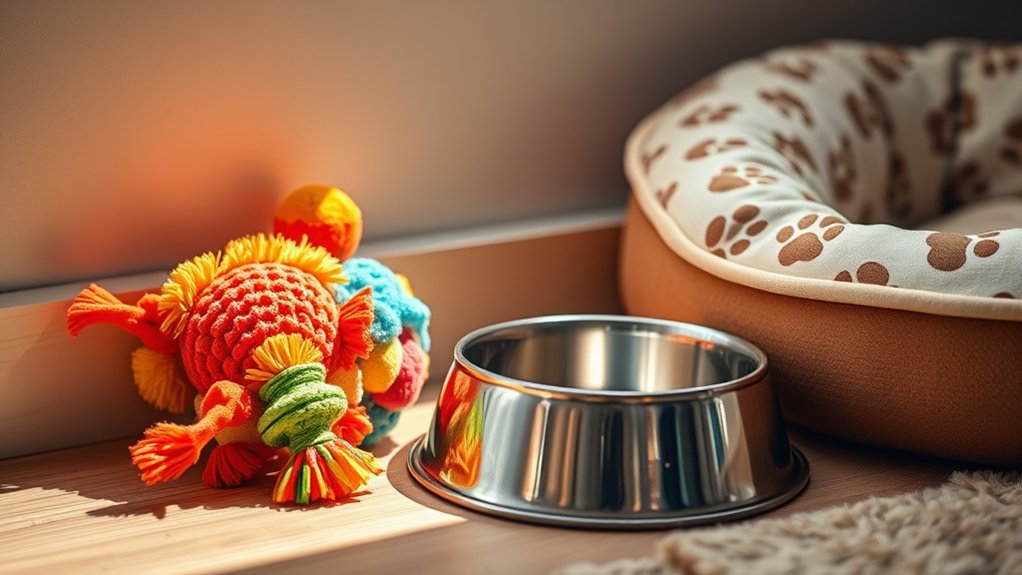
Top 3 Must-Have Supplies for a New Puppy
Bringing home a new puppy can be exciting but also overwhelming. If you’re feeling unsure about what supplies you really need, you’re not alone. Many new puppy parents struggle to figure out the essentials that will keep their furry friend happy and healthy from day one.
When bringing home your new puppy, you’ll want cozy, washable bedding and a secure crate to create a safe, comfy space.
Next, have puppy-specific food and easy-to-clean bowls to support healthy growth and hydration.
Finally, training tools like a properly sized leash, harness, and tasty treats will set you up for socialization and behavior success.
With these essentials, you’ll be ready to give your puppy the best start and investigate more ways to care for them.
Key Takeaways
- Cozy, washable bedding and a secure crate provide a safe, comfortable resting space for your new puppy.
- Puppy-specific food and clean feeding bowls ensure proper nutrition and hydration.
- A leash and harness are essential for safe socialization and controlled outdoor experiences.
- Basic grooming tools like nail clippers and a soft toothbrush support health and hygiene.
- Training aids such as a clicker and tasty treats promote effective behavior learning and socialization.
Keep Your Puppy Comfortable and Safe
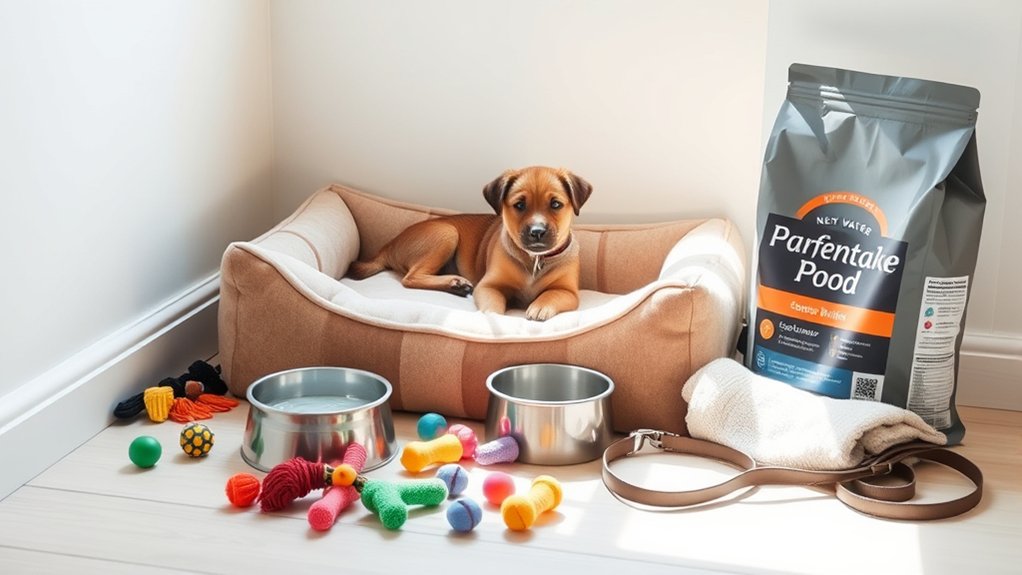
Before your new puppy arrives, make sure you have a cozy bed and a secure crate ready. Puppy bedding is essential to create a warm, comfortable space where your puppy can rest and feel safe. Choose soft, washable materials that are easy to clean, since puppies can be messy.
The crate will serve as your puppy’s personal den, offering a secure spot for naps and nighttime. To keep your puppy safe as they investigate, install safety gates in doorways or at the top of stairs. These gates help you control where your pup can go, preventing access to hazardous areas while giving them room to roam safely.
Feeding and Health Supplies for New Puppies

When you bring your new puppy home, having the right feeding and health supplies on hand guarantees you can meet their needs from day one. Start with quality puppy nutrition. Choose food formulated specifically for puppies to support their growth and energy levels. Use appropriate feeding bowls that are easy to clean and sized right for your puppy. Keep fresh water available at all times to keep them hydrated.
For veterinary essentials, prepare a basic first aid kit including items like antiseptic wipes, gauze, and a digital thermometer. Schedule a vet visit early to discuss vaccinations, deworming, and flea prevention. Keep records of these visits organized. You’ll also want nail clippers, a soft toothbrush, and puppy-safe toothpaste to maintain dental health. By having these feeding and health supplies ready, you’ll make certain your puppy stays healthy and happy as they grow.
Training Tools to Get Your Puppy Started Right
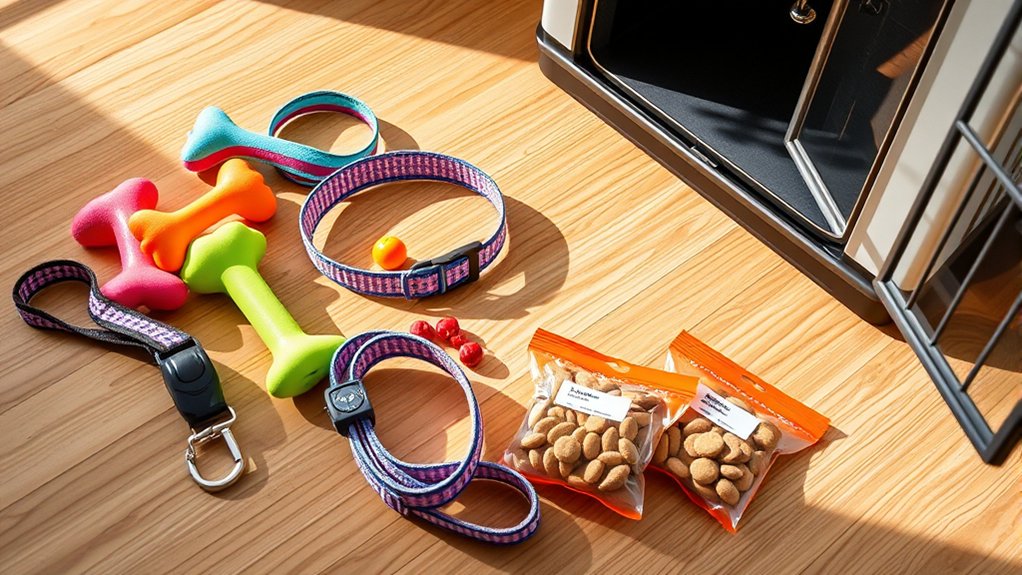
Since puppies learn best through consistent guidance, having the right training tools is essential to set them up for success. You’ll want to focus on tools that support puppy socialization and crate training techniques, both key to raising a well-adjusted dog.
Consistent guidance and the right tools are key to successful puppy socialization and crate training.
Start with a sturdy crate that’s the right size. It’ll be your go-to for safe confinement and helping your puppy feel secure. Next, include a clicker or a gentle training device to mark good behaviors clearly and encourage learning.
Don’t forget a leash and harness for controlled socialization outings, which expose your puppy to new people, dogs, and environments safely. Finally, keep tasty, small training treats handy to reward progress and keep your puppy motivated.
Here are the essential training tools to get started:
- Properly sized crate for crate training techniques
- Clicker or training marker
- Leash and harness for puppy socialization
- High-value training treats
Frequently Asked Questions
When Should I Schedule My Puppy’s First Vet Visit?
You should schedule your puppy’s first vet visit within the first week of bringing them home. This visit is essential to discuss puppy nutrition and set up a vaccination schedule.
Your vet can also guide you on crate training to create a safe, comfortable space for your pup. Early vet visits guarantee your puppy stays healthy and adjusts smoothly to their new environment, giving you peace of mind as you start this exciting journey together.
How Do I Puppy-Proof My Home Effectively?
Imagine your puppy’s curious nose sniffing every corner, enthusiastic to investigate. To puppy-proof your home effectively, start by removing or securing hazards like electrical cords, toxic plants, and small objects they could swallow.
Use baby gates to block off unsafe areas and store cleaning supplies out of reach. Creating this safe home environment means you’ll protect your puppy while letting them explore freely, giving you peace of mind and your pup a happy, hazard-free space.
What Vaccinations Does My Puppy Need and When?
Your puppy needs core vaccinations starting at 6-8 weeks: distemper, parvovirus, and adenovirus. Follow up with boosters every 3-4 weeks until 16 weeks old.
Rabies vaccination usually comes at 12-16 weeks. Alongside vaccination, maintain proper puppy nutrition to support immunity and growth.
Consistent training techniques help your puppy stay calm during vet visits, making vaccinations less stressful for both of you. Always consult your vet for a tailored schedule.
How Much Socialization Does My Puppy Require Daily?
How often do you want your puppy to feel confident and happy around new people and places? Puppy socialization requires at least 15 to 30 minutes daily during the essential socialization timing, which is between 3 to 14 weeks old.
You should expose your puppy to different sights, sounds, and gentle interactions every day. Consistent, positive experiences help your puppy grow into a well-adjusted adult dog, so don’t miss out on this vital period!
When Can I Start Introducing My Puppy to Other Pets?
You can start introducing your puppy to other pets once they’re fully vaccinated, usually around 8 to 10 weeks old. Begin with calm, controlled Puppy Playdates to make sure everyone stays safe and comfortable.
Use Pet Introduction Tips like keeping initial meetings short, on neutral ground, and closely supervised. This helps your puppy build positive associations and social skills without feeling overwhelmed.
Setting the stage for healthy, happy relationships with other animals is key.
Conclusion
So, you want the perfect puppy, huh? Well, unless you plan on living in chaos, you’ll need those must-have supplies because puppies don’t come with a manual or a magic button.
Keep them comfy, fed, and maybe, just maybe, trained. Otherwise, enjoy the endless mess, noise, and “puppy eyes” guilt trips.
Trust me, investing in these basics now saves you from future puppy-induced insanity. Your sanity—and your floors—will thank you for having the top 3 must-have supplies for a new puppy.