

How to Adopt a Dog in 10 Essential Steps
Adopting a dog can feel overwhelming, especially if you’re unsure where to start or worried about making the right choice. You’re not alone—many people struggle with finding a pet that truly fits their lifestyle and home. But with the right guidance, you can navigate this journey with confidence and bring home a loving companion.
To adopt a dog, first make sure you’re ready for daily care, time, and costs. Choose a breed that fits your lifestyle and living space. Find reputable shelters with healthy, well-matched dogs and meet several to find a good fit.
Prepare your home with supplies and a safe space. Complete the application honestly and plan your dog’s first days with routine, training, and vet visits. Keep following this guide to confidently welcome your new companion.
Key Takeaways
- Assess your readiness by evaluating your lifestyle, finances, and emotional commitment before choosing a suitable dog breed.
- Research living space compatibility and find reputable shelters with transparent adoption policies and clear health information.
- Visit shelters to meet dogs and observe their behavior. Prepare your home with safe spaces and essential supplies.
- Complete the adoption application honestly. Be ready for home visits and gather all necessary documents for approval.
- Establish routines for feeding, training, and veterinary care to ensure a smooth adjustment and ongoing well-being for your dog.
Decide If You’re Ready to Adopt a Dog

Before you bring a dog home, you need to honestly assess whether you’re ready for the responsibility. Owning a dog means committing to daily care, including proper dog nutrition tailored to their needs. Different breeds have specific dietary requirements, so understanding breed-specific traits helps you provide the right food and avoid health issues.
Assess your readiness for dog ownership, including daily care and breed-specific nutrition, to ensure their health and happiness.
You’ll also need time for exercise, training, and regular vet visits. Consider your lifestyle. Can you handle the energy level and temperament of a dog? Some breeds require more attention and mental stimulation than others.
Financially, are you prepared for food costs, medical expenses, and supplies? Emotional readiness matters, too. Dogs rely on you for companionship and stability. If you’re uncertain about any of these factors, take time to reflect before adopting.
Being prepared benefits both you and your future dog, ensuring a happy, healthy relationship right from the start.
Choose the Best Dog Breed for Your Lifestyle
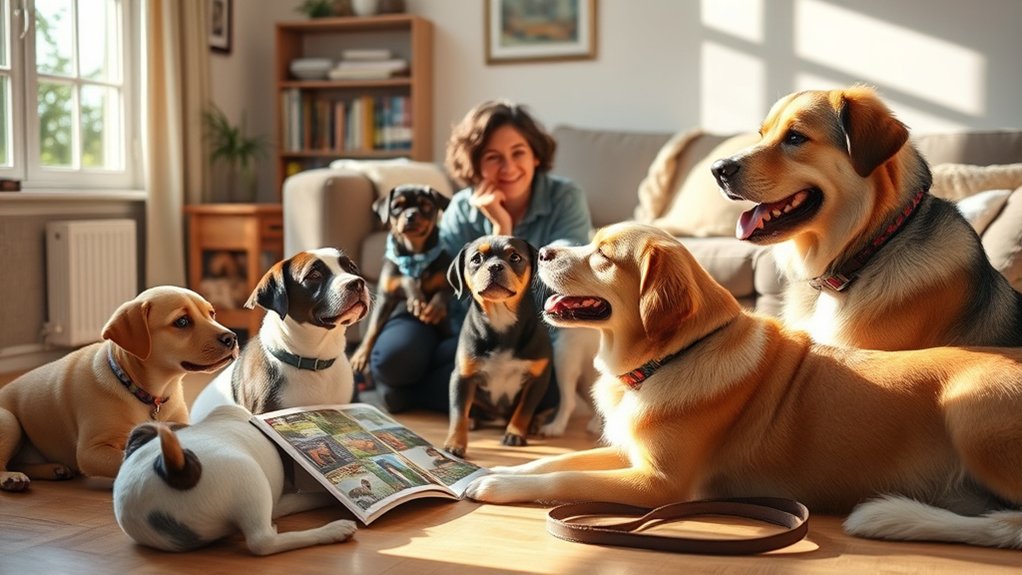
You’ll want to match a dog’s energy level with how active you are each day. So, if you love going for runs or hikes, a high-energy dog might be a great fit. On the other hand, if you prefer a more relaxed pace, a calmer dog could be better.
Also, think about the size of your living space. Is your home big enough for a large dog to roam around, or would a smaller breed be a better match? It really makes a difference in how comfortable your dog will feel.
And don’t forget about grooming. Some dogs need a lot of extra care to keep their coats healthy, while others are pretty low-maintenance. Consider how much time you can realistically spend on grooming to keep your new pet happy and healthy.
Assess Activity Level
Although adopting a dog is exciting, evaluating your activity level first helps guarantee you pick a breed that matches your lifestyle. If you lead an active life, you’ll want a dog that thrives on daily exercise routines and can keep up with your pace.
Conversely, lower activity levels might call for a breed that’s content with shorter walks and less intense play. Remember, a dog’s exercise needs also affect their nutrition requirements, so matching activity with diet is key for their health.
| Activity Level | Suitable Breeds |
|---|---|
| Very Active | Border Collie, Husky |
| Moderately Active | Beagle, Bulldog |
| Light Activity | Basset Hound, Pug |
| Sedentary | Chihuahua, Shih Tzu |
| Mixed Activity | Labrador, Golden Ret. |
Consider Living Space
Since your living space directly impacts a dog’s comfort and behavior, it’s essential to choose a breed that fits well within your home environment. If you live in a small apartment, a large, energetic dog might feel cramped and stressed. So, smaller or less active breeds could be a better match.
Compatibility considerations like noise tolerance and energy levels matter too. Some breeds adapt better to limited space and close neighbors. On the other hand, if you have a spacious yard, a larger, more active dog may thrive.
Take time to honestly assess your living space and daily routine to guarantee your new dog feels comfortable and happy. Matching your dog’s needs with your environment helps build a healthy, lifelong bond.
Evaluate Grooming Needs
Living space isn’t the only factor to consider when choosing a dog breed; grooming needs play a significant role in how much time and effort you’ll dedicate to your new pet. Some breeds require daily brushing and regular baths, while others need minimal coat maintenance.
Before adopting, assess your willingness to use grooming tools like brushes, clippers, and nail trimmers consistently. If you prefer low-maintenance care, breeds with short, smooth coats might suit you better.
However, if you enjoy grooming as bonding time, a dog with a longer or curly coat could be a great match. Understanding these needs guarantees you pick a breed that fits your lifestyle, preventing stress for both you and your pet.
Always factor in grooming when making your final decision.
Find Reputable Dog Shelters and Rescue Groups Nearby
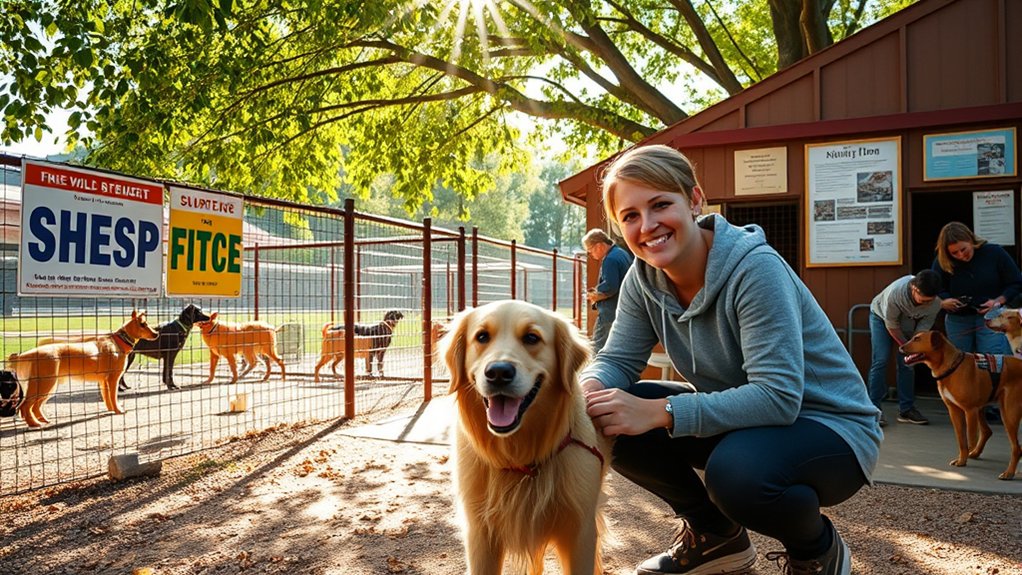
When you’re ready to adopt, start by researching reputable dog shelters and rescue groups in your area. Look for organizations with positive reviews and transparent adoption policies. A trustworthy shelter will provide clear information about each dog’s background, including health and behavioral evaluations.
Don’t hesitate to ask about pet nutrition guidelines they follow, as proper diet plays a big role in your new dog’s well-being. Shelters that emphasize balanced pet nutrition show a commitment to long-term care.
Also, check if the shelter offers or recommends basic dog training techniques to help you and your new pet adjust smoothly. Rescue groups often provide resources or classes to set you both up for success.
Visit and Meet Dogs to Find Your Perfect Match
Before deciding on a dog, plan visits to shelters so you can interact with different dogs and get a feel for their personalities. Meeting dogs in person helps you observe their dog personality, whether they’re energetic, shy, or affectionate.
Pay close attention to how each dog responds to you and other people. This firsthand experience is essential to understanding which dog will fit best with your lifestyle.
Also, consider breed characteristics during your visit. Some breeds are more active or independent, while others thrive on companionship and calm environments.
Knowing these traits will guide you in choosing a dog whose temperament matches your daily routine and home setting.
Don’t rush. Spend quality time with several dogs to compare their energy levels and behaviors.
This hands-on approach guarantees you find a dog that’s not only a good match on paper but also feels right in your heart.
Understand the Adoption Application Process
When you’re ready to adopt, you’ll need to fill out an application form that asks about your lifestyle and home. The shelter will take a close look at your answers during the screening and approval process.
Be ready for some common questions about your experience with pets and how you plan to care for your new dog. It’s all part of making sure you and your future furry friend are the perfect match!
Application Form Requirements
Although adopting a dog can be exciting, you’ll need to complete an application form that helps shelters understand your lifestyle and guarantee the best match. This form asks about your experience with pet nutrition and your familiarity with dog training techniques to assure you’re prepared for your new companion. It also covers your living situation and daily routine to see if it aligns with the dog’s needs.
Typical application form requirements include:
- Personal contact information
- Details about your home environment
- Experience with pet nutrition and feeding routines
- Knowledge of dog training techniques
- References or veterinary contacts
Filling out this form honestly sets the foundation for a successful adoption and prepares you to welcome your dog responsibly.
Screening And Approval Process
How does the shelter decide if you’re the right fit for a dog? They carefully review your application, focusing on your ability to provide a safe, loving home. They’ll consider your knowledge of dog nutrition, making sure you understand the importance of a balanced diet for your new pet’s health.
Shelters also assess your familiarity with training techniques, as consistent training helps dogs adjust and thrive in their new environment. You might be asked about your lifestyle and experience with pets to gauge your readiness. This screening ensures the dog’s needs align with your capabilities.
Common Application Questions
What types of questions can you expect on a dog adoption application? You’ll be asked about your lifestyle, experience, and ability to care for a dog. The application helps shelters guarantee the dog’s needs, including dog nutrition and breed specific traits, match your home environment.
Common questions include:
- Your daily routine and time spent with pets
- Experience with dogs and understanding of breed specific traits
- Knowledge of dog nutrition and feeding habits
- Living situation (house, yard, rental policies)
- Other pets or family members in the home
Answer honestly and thoughtfully. This process assures the dog you adopt thrives in your care and fits well with your lifestyle. Your transparency helps create a loving, safe environment for your new companion.
Get Ready for the Home Visit and Interview
Before the home visit and interview, you’ll want to prepare your space and gather any necessary documents. Make sure your living area is clean and safe, as this shows you’re ready to provide a good environment. Have identification, proof of residence, and any references handy.
During the interview, be ready to discuss your experience with dog training and how you plan to handle the dog’s needs. Understanding the breed characteristics of the dog you’re adopting is vital. You’ll want to explain how your lifestyle matches those traits.
For example, some breeds need more exercise or mental stimulation. Sharing your plan for regular walks or training sessions helps demonstrate commitment. The interviewer may also ask about your daily routine and how you’ll integrate the dog into your home.
Prepare Your Home for Your New Dog’s Arrival
Before your new dog arrives, it’s a great idea to create a safe space where they can feel comfortable and secure. You’ll want to have all the essential supplies ready too—things like food, water bowls, and a cozy bed.
Doing this little bit of prep will really help your dog settle in smoothly from day one. It makes everything feel welcoming and calm right from the start.
Safe Space Setup
How can you make your home welcoming and secure for your new dog? Creating a safe space helps your dog adjust smoothly while supporting good dog nutrition and effective training techniques. Start by choosing a quiet, comfortable spot where your dog can relax without distractions. Make sure this area is free from hazards and easily accessible.
Consider these essentials for setting up a safe space:
- Soft bedding to provide comfort and warmth
- Access to fresh water to support proper dog nutrition
- Toys that encourage positive training techniques and mental stimulation
- A barrier or gate to limit access to unsafe areas
- A consistent routine to help your dog feel secure and understand boundaries
This setup fosters a calm environment, easing your dog’s transition into their new home.
Essential Supplies Ready
Once you bring your new dog home, having essential supplies ready guarantees a smooth adjustment and meets their immediate needs. Start with quality food that supports proper dog nutrition, ensuring your pet gets the vitamins and minerals they need.
Set up food and water bowls in a quiet, accessible spot. Prepare a comfortable bed and safe toys to help your dog feel secure and entertained. Don’t forget a leash, collar, and ID tag for walks and identification.
As you settle in, plan to use positive training techniques, like treats and praise, to encourage good behavior from day one. Having these essentials ready helps you build a strong foundation for your dog’s health, happiness, and successful integration into your home.
Plan Your New Dog’s First Days: Feeding, Exercise, and Sleep
Although bringing your new dog home is exciting, you’ll want to establish a clear routine for feeding, exercise, and sleep right away. Consistent dog nutrition supports their health and helps them adjust smoothly.
You should feed your dog at regular times using the food recommended by the shelter or vet to avoid digestive issues. Exercise routines are just as vital; gentle walks and playtime help burn energy and reduce anxiety.
Here’s how to plan your dog’s first days effectively:
- Set specific feeding times with measured portions based on vet advice
- Introduce short, calm walks to build exercise habits gradually
- Create a quiet, comfortable sleep area free from distractions
- Monitor your dog’s behavior for signs of tiredness or hunger
- Keep fresh water accessible at all times
Learn Basic Training and Socialization Tips for New Dog Owners
Because your new dog is learning about their environment and boundaries, starting basic training and socialization early sets the foundation for good behavior and confidence. Begin house training by establishing a consistent routine for bathroom breaks, rewarding your dog immediately after they go outside. Use clear commands and positive reinforcement to encourage desired behaviors.
Incorporate socialization techniques by exposing your dog gradually to different people, animals, sounds, and environments in a controlled, positive way. This helps them adapt confidently to new experiences and reduces fear or aggression later. Keep interactions short and upbeat, always rewarding calm, friendly behavior.
Schedule Vet Visits and Plan Ongoing Care
When you bring your new dog home, scheduling a vet visit early guarantees they start with a clean bill of health and necessary vaccinations. This first appointment helps set the foundation for your dog’s ongoing health, identifying any immediate concerns and creating a vaccination schedule. Regular veterinary care is essential to keep your dog happy and healthy.
To plan ongoing care effectively, consider these steps:
- Schedule annual wellness exams to monitor health changes.
- Keep up with vaccinations and parasite prevention.
- Discuss diet and weight management with your vet.
- Plan dental cleanings and check-ups.
- Monitor behavior and report any changes promptly.
Frequently Asked Questions
Can I Adopt a Dog if I Rent My Home?
Yes, you can adopt a dog if you rent your home, but you’ll need to check your lease for any pet-friendly policies first. Many apartments have specific rules about pet size, breed, or number.
Apartment living requires you to be extra responsible, making sure your dog doesn’t disturb neighbors. If your place isn’t pet-friendly, consider asking your landlord for permission or looking for a pet-friendly apartment before adopting.
What Are Common Adoption Fees and What Do They Cover?
You’ll find that adoption fees typically cover the adoption process, including vaccinations, spaying or neutering, and microchipping. The fee breakdown often includes vet exams, licensing, and sometimes a starter pack of food or supplies.
These fees usually range from $50 to $300, depending on the shelter. By understanding the fee breakdown, you’re better prepared to budget and guarantee your new dog gets the best start in your home.
Are There Specific Breeds That Are Harder to Adopt?
Yes, some breeds face more adoption challenges due to breed compatibility with families or local regulations. Dogs like pit bulls or large breeds often have a harder time finding homes because people worry about their behavior or size.
You’ll need to think about how well a breed fits your lifestyle and environment. Understanding these adoption challenges helps you prepare and increases your chances of successfully adopting the right dog for you.
How Does Adopting a Senior Dog Differ From a Puppy?
Imagine a calm sunset beside a playful sunrise—that’s how adopting a senior dog differs from a puppy. You’ll focus more on senior health, managing existing conditions and offering comfort, while with a puppy, you’re diving into puppy training, setting boundaries and teaching basic commands.
Seniors often need less energy but more medical care, whereas puppies demand time and patience to shape their behavior. You’ll find both rewarding in very different ways.
Can I Return the Dog if It Doesn’T Work Out?
Yes, you can usually return a dog if it doesn’t work out, but policies vary by shelter or rescue. Keep in mind, training challenges and behavioral adjustments often take time, especially with rescue dogs.
Don’t rush to give up; many issues improve with patience and support. Before returning, communicate with the organization. They often offer resources or advice to help you and your dog succeed together.
Conclusion
Adopting a dog is like planting a seed; you’re starting a beautiful journey full of growth and love. By following these steps, you’re setting the stage for a lifelong friendship filled with joy and loyalty.
Remember, patience and preparation will help your new four-legged companion feel right at home. So take the leap, open your heart, and get ready for a rewarding adventure that will change both your lives forever.
By embracing these essential steps, you’re well on your way to a happy and fulfilling experience with your new best friend. Adopting a dog is truly a life-changing decision that brings endless happiness.