
How to Get a Puppy in 7 Essential Steps
Thinking about getting a puppy but feeling overwhelmed by all the steps involved? You’re not alone. Many people struggle with where to start, how to choose the right breed, and what to prepare before bringing a new furry friend home.
Getting a puppy is exciting, but it can also feel like a big responsibility.
To get a puppy in 7 essential steps, first assess if your lifestyle can handle daily care, training, and costs.
Choose a breed that fits your family’s energy and environment.
Find a reputable breeder or rescue for a healthy, ethical puppy.
Prepare your home by puppy-proofing and setting boundaries.
Gather all supplies like food, toys, and a crate.
Schedule your pup’s first vet visit.
Finally, plan training and socialization to set them up for success.
Keep going to learn how to do each step right.
Key Takeaways
- Assess your lifestyle and commitment to make sure you have enough time, attention, and financial resources for puppy care and training.
- Research and choose a breed that fits your household’s energy, lifestyle, and health needs.
- Find a reputable breeder or rescue organization with ethical practices, health testing, and a transparent history.
- Prepare your home by puppy-proofing, setting boundaries, and creating a safe, comfortable resting space.
- Gather essential supplies, schedule a vet visit, and plan early training and socialization strategies.
Assess If a Puppy Fits Your Lifestyle and Commitments
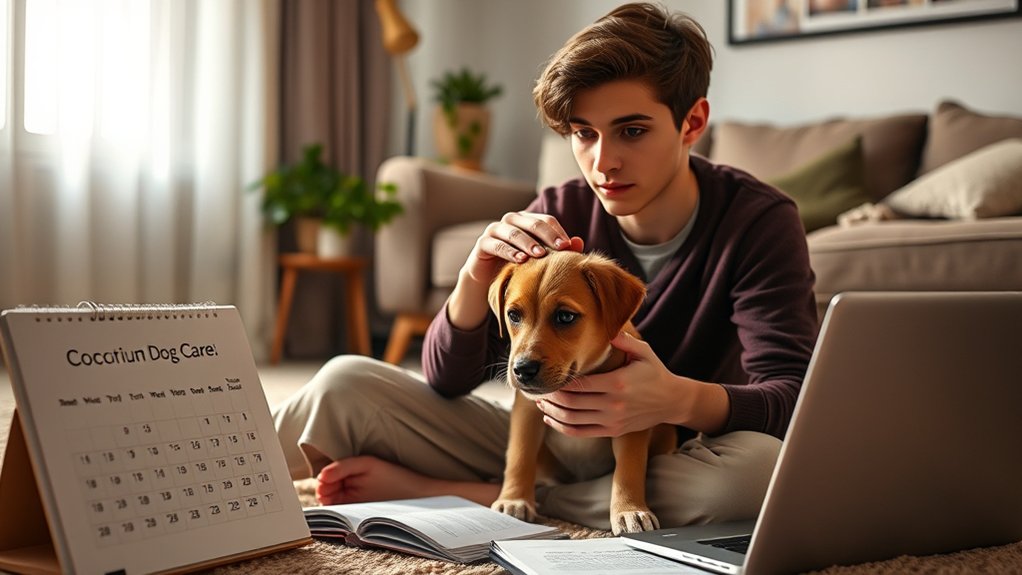
Before bringing a puppy home, you need to honestly evaluate your daily routine and long-term plans. Puppies demand a significant time commitment, including feeding, training, exercise, and socialization. If your schedule is packed with work, travel, or other obligations, you might struggle to provide the attention a puppy needs to thrive.
Bringing home a puppy requires honest evaluation of your time and commitment to ensure they thrive.
Consider whether you can consistently dedicate time to housebreaking and teaching basic commands.
Financial responsibilities are another essential factor. Puppies require vet visits, vaccinations, food, toys, grooming, and potential emergency care. These costs add up quickly and can strain your budget if you’re unprepared.
You should also think about future expenses, such as training classes or pet insurance.
Choose the Right Breed for Your Home and Family

How do you find a puppy breed that fits your home and family? Start by researching breed temperament to understand how different dogs behave and interact. Some breeds are energetic and need lots of exercise, while others are calmer and better suited for quieter households.
Consider the ages and activity levels of everyone in your home to guarantee the breed you choose matches your family’s lifestyle.
Next, look into the breed’s genetic history. This will give you insight into potential health issues and longevity, helping you prepare for future care needs.
Knowing a breed’s background can also prevent surprises related to behavior or medical conditions.
How to Find a Reputable Puppy Breeder or Rescue

Although finding the perfect puppy breed is important, securing your new pet from a reputable breeder or rescue is just as crucial. Start by researching breeders who prioritize ethical breeding practices. A reputable breeder will health-test their dogs, provide a clean environment, and be transparent about lineage and temperament. Don’t hesitate to ask for references or visit their facilities in person.
Alternatively, consider adopting from a rescue organization. Rescues often have puppies needing homes and can match you with a dog that fits your lifestyle. They’ll also provide medical histories and behavior assessments.
Whether you choose a breeder or rescue, avoid impulsive decisions. Look for certifications or affiliations with recognized clubs and organizations to ensure you’re supporting responsible care. Taking these steps helps guarantee your new puppy comes from a safe, loving background, setting you both up for a happy, healthy future together.
Prepare Your Home Environment for Your Puppy
When you bring your puppy home, creating a safe and welcoming environment is essential for their comfort and well-being. Start by puppy-proofing your space to guarantee indoor safety. Remove hazardous items, secure electrical cords, and block off areas that could pose risks.
Set up a designated training environment where your puppy can learn commands and develop good habits without distractions. This area should be quiet, organized, and free of temptations like toys or food that might interfere with focus.
Establish clear boundaries early to help your puppy understand where they’re allowed to roam. Make sure their resting spot is cozy and easily accessible, providing a sense of security.
Gather Essential Puppy Supplies Before Arrival
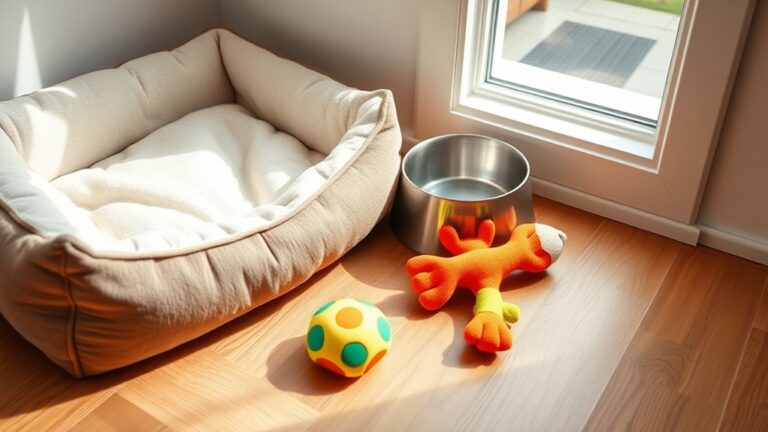
Before your puppy arrives, you’ll want to gather all the must-have supplies to keep them safe and comfortable. Think about picking out safe toys that match their size and chewing habits.
Also, get feeding supplies ready, like bowls and puppy food. Having these essentials on hand will really help your new four-legged friend settle in smoothly.
Must-Have Puppy Essentials
Since your new puppy will depend on you for everything, gathering essential supplies ahead of time guarantees a smooth shift and helps you feel prepared from day one. Prioritizing items that support puppy health and effective training techniques is key.
Here’s what you’ll need before your puppy arrives:
- High-quality puppy food suited to their nutritional needs
- Durable collar and leash for safe walks and training
- Comfortable crate or bed to create a secure space
- Food and water bowls that are easy to clean
- Basic grooming tools like a brush and nail clippers
Having these essentials ready guarantees your puppy’s health is supported and sets the stage for positive training experiences from the start. Being prepared makes those first days easier for both of you.
Choosing Safe Puppy Toys
How do you pick toys that keep your puppy safe and entertained? Start by choosing toys made from non-toxic materials to prevent any health risks if your puppy chews or licks them. Look for durable options that withstand sharp puppy teeth but won’t break into small, swallowable pieces.
Prioritize toys designed for interactive play, such as fetch balls or puzzle toys, to keep your puppy mentally and physically engaged. Avoid toys with loose parts or small components that can pose choking hazards. Also, consider your puppy’s size and chewing strength when selecting toys to ensure they’re appropriate.
Preparing Puppy Feeding Supplies
When you bring your new puppy home, having the right feeding supplies ready makes mealtime smooth and stress-free. Proper puppy nutrition starts with setting up a consistent feeding schedule and having all essentials on hand.
Before your puppy arrives, gather these items to keep feeding time organized and efficient:
- Food and water bowls (preferably non-slip and easy to clean)
- High-quality puppy food recommended by your vet
- Measuring cups to control portions according to feeding schedules
- Treats for training and positive reinforcement
- Storage container to keep puppy food fresh and accessible
Book Your Puppy’s First Vet Visit
Before your new puppy settles in, you’ll want to schedule their first vet visit to make certain they’re healthy and up to date on vaccinations. This initial checkup is vital for evaluating your puppy’s overall health and setting a vaccination schedule tailored to their needs.
During the appointment, the vet will examine your puppy for any signs of illness or congenital issues. They’ll also discuss parasite prevention and nutrition tips to keep your puppy thriving.
Booking this visit early guarantees you stay on top of essential vaccines that protect against common diseases. It also gives you a chance to ask questions about puppy health and care.
Plan Puppy Training and Socialization for Success
Although bringing your puppy home is exciting, you need to start training and socialization immediately to set them up for success. Puppy socialization is essential during the first few months to help your pup become confident and well-adjusted. Pair this with consistent training techniques to build good habits early on.
To plan effectively, consider these key steps:
Introduce your puppy to various people, animals, and environments safely. Use positive reinforcement to encourage desired behaviors.
Keep training sessions short but frequent to maintain attention. Expose your puppy gradually to new sounds and experiences.
Establish a routine that includes potty training, basic commands, and playtime.
Frequently Asked Questions
How Do I Puppy-Proof My Yard for Safe Outdoor Play?
To puppy-proof your yard, focus on garden safety by removing toxic plants and securing fences to prevent escapes. Regular yard maintenance helps keep hazards like sharp tools, chemicals, and debris out of reach.
Check for holes or gaps where your pup might squeeze through. Create a designated play area with safe toys and shaded spots.
What Vaccinations Are Essential Beyond the First Vet Visit?
Think of vaccinations as the armor your puppy needs in the battlefield of life. Beyond the first vet visit, you’ll want to maintain boosters for distemper, parvovirus, and rabies.
Just like strong puppy nutrition fuels their growth, these vaccines protect their health. Pair this with socialization techniques to build their confidence and resilience.
Staying on top of both ensures your puppy grows into a healthy, well-rounded companion ready for anything.
How Can I Manage Puppy Teething Pain Effectively?
You can manage puppy teething pain effectively by offering safe chew toys that soothe their gums while supporting puppy nutrition. Frozen treats or chilled toys provide relief and keep your pup engaged.
Use positive training techniques to redirect biting from hands to toys, reinforcing good behavior consistently. Regularly check their mouth for discomfort, and keep their diet balanced to promote healthy teeth development during this challenging phase.
When Should I Start Crate Training My Puppy?
You should start crate training your puppy as soon as they step paw into your home. Waiting feels like forever in dog years! Early crate training techniques help your puppy see the crate as a cozy den, making socialization smoother.
Introduce the crate gently, pairing it with treats and playtime. This early start sets the stage for great puppy socialization, helping your canine companion feel safe and confident in new situations.
What Are Common Signs of Puppy Illness to Watch For?
You should watch for signs like lethargy, vomiting, diarrhea, loss of appetite, and coughing. Changes in puppy nutrition habits or refusal to eat can also signal illness.
If your puppy isolates itself or shows discomfort during play, it might need attention. Since puppy socialization is essential, notice if your pup suddenly avoids other dogs or people.
Catching these signs early helps keep your puppy healthy and happy.
Conclusion
Getting a puppy might seem like a big leap, but when you’ve assessed your lifestyle, chosen the perfect breed, and prepared your home, it all clicks into place. It’s just like that unexpected wagging tail greeting you at the door.
As you gather supplies, book the vet, and plan training, you’ll find the pieces falling perfectly into place. Before you know it, your new four-legged companion will be curled up beside you.
You’ll wonder how you ever lived without them. Getting a puppy truly brings a special kind of joy that fills your home with love and laughter.