
3 Essentials to Get for a New Puppy
Bringing home a new puppy is exciting, but it can also feel overwhelming. You want to make sure you have everything your furry friend needs, but where do you start? You’re not alone—many new puppy owners struggle with figuring out the essentials to get off on the right paw.
You’ll want the right feeding supplies for your new puppy, like small, durable bowls and consistent portion control to build healthy habits.
Next, set up a cozy, quiet bedding area with soft, washable materials to promote restful sleep and security.
Finally, choose effective training tools such as a clicker, crate, and leash to encourage good behavior and socialization.
Keep these essentials in mind, and you’ll be well on your way to giving your puppy a great start.
Key Takeaways
- Select durable, easy-to-clean feeding bowls designed for puppies to ensure hygiene and prevent spills.
- Provide soft, washable bedding in a quiet, draft-free area to promote comfort and restful sleep.
- Establish a consistent feeding routine with measured portions to support healthy growth and digestion.
- Use essential training tools like a clicker, crate, and leash to encourage positive behavior and socialization.
- Organize all supplies in designated spots to create a safe, secure, and stress-free environment for your puppy.
Choose the Right Feeding Supplies for Your Puppy
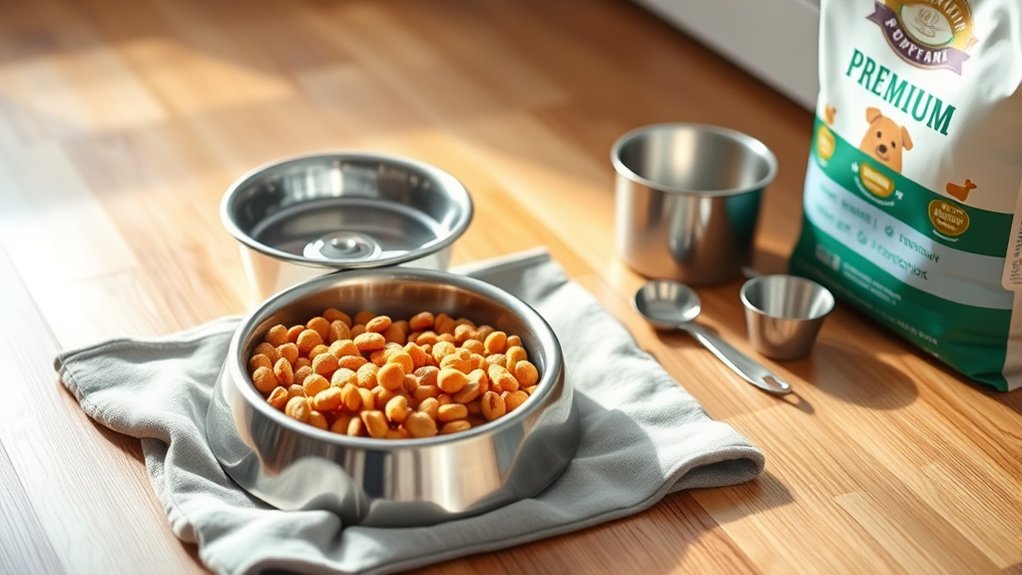
When you bring a new puppy home, choosing the right feeding supplies is essential for their health and comfort. Start with bowls designed specifically for puppies, smaller and shallow to suit their size and prevent spills.
Bringing home a new puppy means selecting smaller, shallow bowls made just for their size and comfort.
Stainless steel or ceramic bowls are best since they’re durable and easy to clean. This helps avoid bacteria buildup that could affect your puppy’s nutrition.
You’ll want to establish consistent feeding schedules to support their growth and digestion. Use a measuring cup to provide accurate portions at regular intervals. This helps you monitor their intake and adjust as needed.
You might also consider a slow feeder bowl if your puppy tends to eat too quickly. It can improve digestion and prevent choking.
Keep these supplies in a designated spot to create a routine your puppy can expect. This promotes good habits early on.
Set Up Comfortable and Safe Puppy Bedding Areas
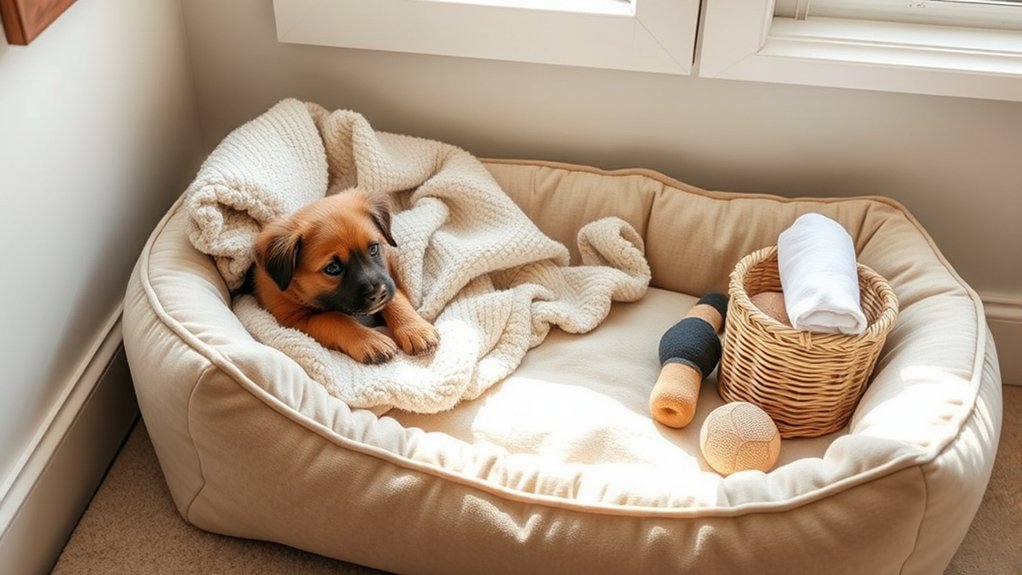
Although your puppy will investigate many spots, creating a designated bedding area guarantees they have a cozy, secure place to rest. Start by selecting high-quality puppy bedding materials, such as soft blankets, washable cushions, or orthopedic beds designed for small dogs. These materials help regulate body temperature and provide comfort during naps and nighttime sleep.
Place the bedding in a quiet corner, away from drafts and heavy foot traffic, to establish safe sleeping zones where your puppy feels protected.
Ensure the bedding is easy to clean, as puppies can be messy. Avoid items with loose stuffing or small parts that could pose choking hazards.
Choose Puppy Training Tools to Build Good Habits
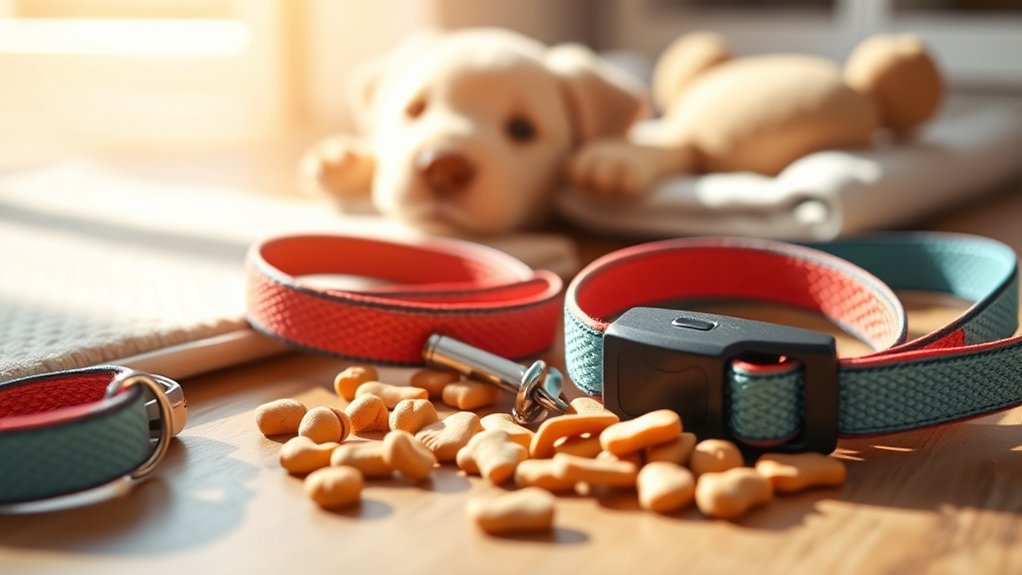
To build good habits in your puppy, you’ll need the right training tools that make learning easier and more effective. Choosing tools that support puppy socialization and crate training techniques helps your pup adapt quickly and behave well.
For example, a clicker can reinforce positive actions, while a comfortable crate encourages safe, stress-free crate training. Leashes and harnesses also help with controlled socialization outings, teaching your puppy how to interact politely.
Here’s a quick guide to essential training tools:
| Tool | Purpose | Benefits |
|---|---|---|
| Clicker | Mark good behavior | Reinforces training quickly |
| Crate | Crate training techniques | Provides safe space, aids sleep |
| Leash & Harness | Puppy socialization outings | Controls movement, reduces stress |
Using these tools consistently will build strong habits and ensure your puppy grows into a well-mannered dog.
Frequently Asked Questions
How Often Should I Schedule Vet Visits for My New Puppy?
You should schedule vet visits for your new puppy every 3-4 weeks until they’re about 16 weeks old to keep up with vaccinations and health checks. Regular vet trips also help monitor your puppy’s progress with crate training and puppy grooming habits.
After that, annual check-ups work well unless your vet recommends otherwise. Staying consistent guarantees your puppy stays healthy and happy as they grow.
What Vaccinations Does My Puppy Need and When?
You might’ve heard puppies need tons of shots, but the puppy vaccination schedule actually targets core diseases like distemper, parvovirus, and rabies.
Your vet usually starts vaccines at 6-8 weeks, repeating every 3-4 weeks until 16 weeks old. While vaccination side effects are rare, mild swelling or tiredness can happen. Stick to the schedule, and your puppy’ll be protected and healthy in no time.
How Can I Socialize My Puppy Safely With Other Dogs?
You can socialize your puppy safely by starting with controlled puppy playdates where all dogs are vaccinated and friendly. Socialization tips include keeping interactions short and positive, watching your puppy’s body language, and avoiding overwhelming situations.
Gradually expose your puppy to different environments, sounds, and gentle dogs to build confidence. Always supervise playdates closely, and if your puppy seems stressed, give them a break to guarantee a happy, safe social experience.
What Are Common Signs of Illness in Puppies?
Think of puppy health like a delicate flower. Any change can signal trouble. Common illness symptoms you should watch for include lethargy, loss of appetite, vomiting, diarrhea, coughing, sneezing, or unusual discharge from eyes or nose.
If your puppy feels unusually warm, has difficulty breathing, or shows behavior changes, don’t hesitate to consult a vet. Catching illness symptoms early helps keep your canine companion happy and healthy.
How Do I Puppy-Proof My Home Effectively?
To puppy-proof your home effectively, start by identifying pet proofing obstacles like exposed wires, toxic plants, and small objects your puppy could swallow. Use baby gates or playpens to block off unsafe areas.
Provide safe chew toys to redirect their biting and prevent damage. Secure trash bins and keep cleaning supplies out of reach. Regularly check your space from your puppy’s perspective to spot new hazards and keep your home safe and welcoming.
Conclusion
Getting the right feeding supplies, cozy bedding, and effective training tools sets your new puppy up for success. You want your loyal companion to feel safe, loved, and well-behaved, right?
By preparing these essentials, you’re not just meeting basic needs. You’re building a strong foundation for a happy, healthy life together.
So, why wait? Start gathering these must-haves now and watch your puppy thrive in their new home with the right essentials for a new puppy.