
10 Essential Tips to Take Care of a Puppy
Bringing a new puppy home is exciting, but it can also feel overwhelming. If you’re wondering how to give your furry friend the best start, you’re not alone. Many people struggle with knowing where to begin and how to care for a puppy properly. That’s why we’ve put together 10 essential tips to help you navigate this rewarding journey with confidence.
To take care of your puppy, choose a breed that fits your lifestyle and prepare your home by puppy-proofing.
Establish a healthy feeding schedule and consistent potty training routine.
Teach basic commands with patience and positive reinforcement.
Keep up with vet visits and vaccinations to stay ahead of health issues.
Create a safe, stimulating environment and give your puppy plenty of playtime and exercise to build confidence and happiness.
Consider these steps more for a well-rounded pup.
Key Takeaways
- Choose a breed that matches your lifestyle and puppy-proof your home to keep things safe.
- Establish a consistent feeding and potty routine with high-quality puppy food and regular bathroom breaks.
- Begin basic training early using clear commands, positive reinforcement, and short, engaging sessions.
- Socialize your puppy gradually with people and other pets in calm, controlled environments to build confidence.
- Schedule regular vet visits, follow vaccination plans, and watch for health signs to catch any issues early.
Choose the Right Puppy for Your Lifestyle
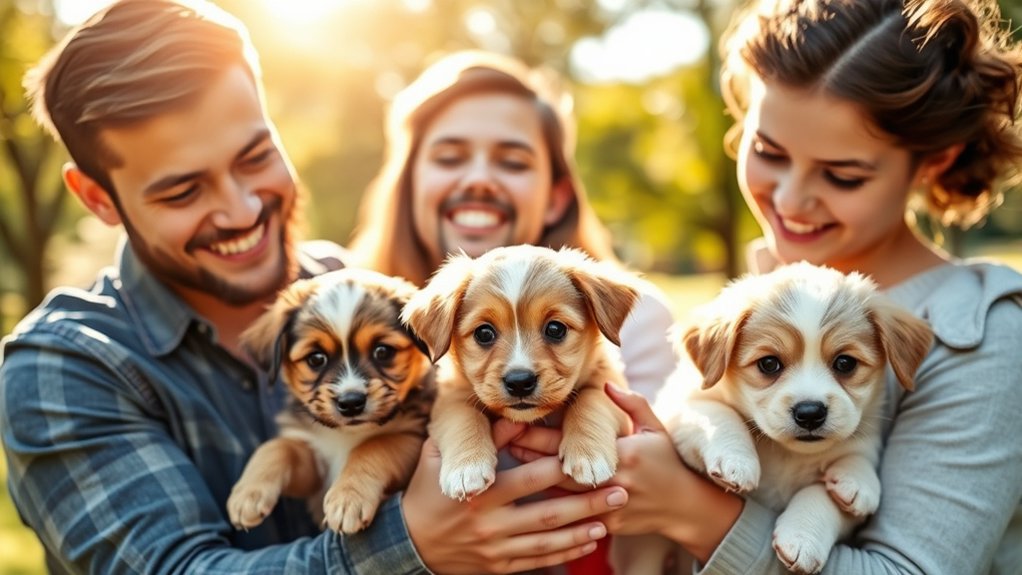
Choosing the right puppy for your lifestyle is essential to guarantee a happy and healthy relationship. You’ll want to research various puppy breeds to find one that matches your activity level, living space, and time availability. For instance, high-energy breeds need lots of exercise, while smaller or calmer breeds may suit quieter homes. Understanding breed traits helps you avoid surprises and ensures you can meet your puppy’s needs.
During the adoption process, ask about the puppy’s temperament, health, and history to make an informed choice. Visiting shelters or reputable breeders allows you to interact with puppies and see which one connects with you. Remember, the adoption process is as much about finding the right fit as it is about giving a puppy a loving home. By choosing thoughtfully, you set the foundation for a strong bond and a joyful experience together.
Prepare Your Home for Your New Puppy
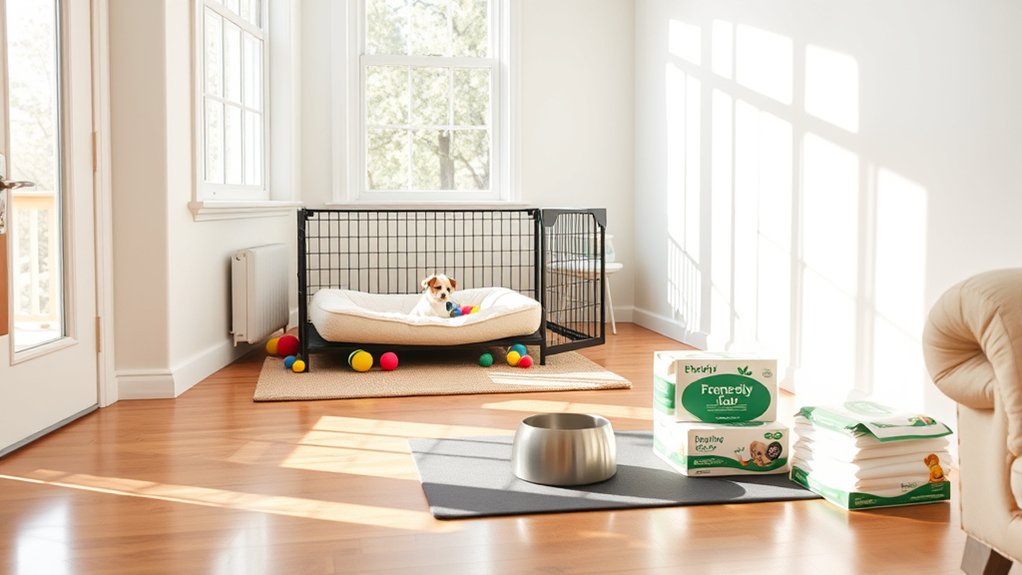
Before bringing your new puppy home, make sure you create a safe and welcoming environment. Puppy-proof your space by removing hazardous items like electrical cords and toxic plants. Set up a designated area with a comfy bed, fresh water, and proper feeding bowls.
Create a safe, welcoming space by puppy-proofing and setting up a cozy area with essentials.
Since puppy nutrition is vital from day one, have high-quality puppy food ready to support their growth and health. Organize feeding supplies nearby for easy access.
Next, gather essential training accessories such as a collar, leash, crate, and chew toys. These tools will help establish routines and encourage positive behavior. Confirm the crate is cozy and inviting, as it will serve as a safe retreat for your puppy.
Keep training accessories within reach to make daily sessions straightforward.
Set Up a Healthy Feeding Schedule
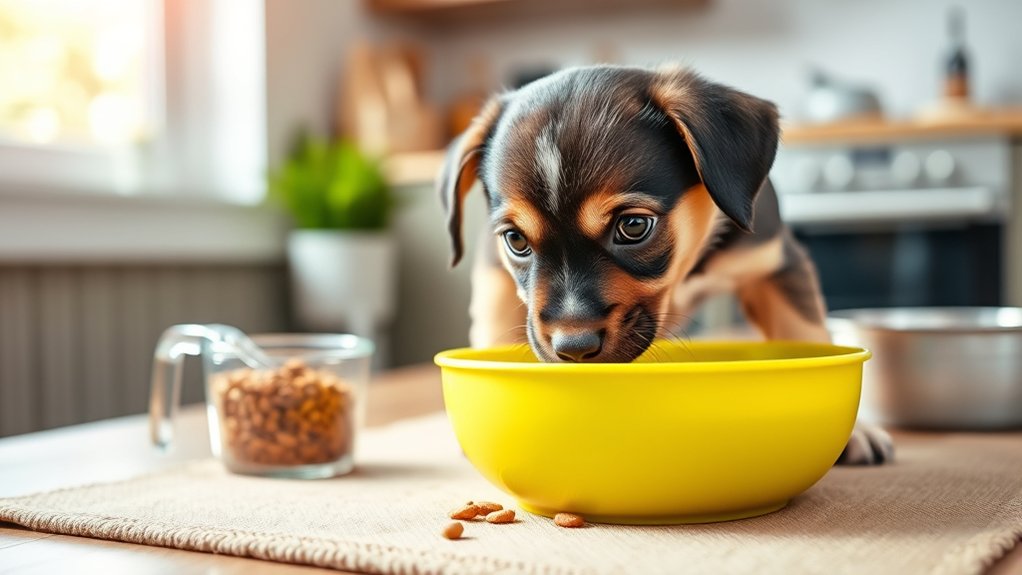
How often you feed your puppy plays a crucial role in their development and well-being. Following proper nutritional guidelines guarantees they get the right balance of nutrients to grow strong and healthy. Puppies have different feeding needs than adult dogs, so adjusting the feeding frequency as they age is essential.
Here are key points to set up a healthy feeding schedule:
Feed your puppy 3 to 4 times a day until they’re about six months old, then gradually reduce to twice daily. Stick to high-quality puppy food that meets recommended nutritional guidelines for their breed and size. Measure portions carefully to avoid overfeeding and keep track of your puppy’s weight and energy levels.
Establish a Consistent Potty Training Routine
To help your puppy learn quickly, it’s important to set regular potty times throughout the day. Pick a specific spot where you want them to go, and take them there every time.
And don’t forget—whenever your puppy goes in the right place, give them a reward! This way, they’ll start to understand that good behavior gets a treat.
Set Regular Potty Times
Establishing regular potty times is essential for helping your puppy learn when and where to go. Potty training becomes much easier when you maintain schedule consistency. Puppies thrive on routine, so setting specific times for bathroom breaks trains their bladder and helps prevent accidents.
To set regular potty times, consider these tips:
Take your puppy out first thing in the morning, after meals, and before bedtime. Offer bathroom breaks every 1-2 hours during the day, adjusting as your puppy grows. Watch for signs your puppy needs to go, like sniffing or circling, and act quickly.
Use Designated Potty Area
Choosing a single spot for your puppy’s bathroom breaks makes training faster and more effective. When you consistently take your puppy to the same designated potty area, they quickly learn where to go, reinforcing good habits.
This consistency supports puppy hygiene by reducing accidents inside your home and keeping areas clean. Incorporate this spot into your regular potty training schedules to create a predictable routine your puppy can follow.
Be sure to take your puppy there after meals, naps, and playtime to encourage timely bathroom breaks. Sticking to a designated area also helps you monitor your puppy’s health by noticing any changes in their bathroom habits.
Reward Successful Potty Trips
When your puppy successfully uses the designated potty area, immediately rewarding them reinforces the behavior and encourages them to repeat it. To guarantee potty success, you need to maintain reward consistency. This means giving praise or treats right after each successful potty trip, so your puppy connects the action with positive outcomes.
Without consistent rewards, your puppy may get confused and slow down training progress. Here’s how to stay consistent:
Offer a small treat or affection every time your puppy goes in the right spot. Use the same verbal cue or praise phrase to reinforce the behavior. Avoid rewarding accidents to prevent mixed signals.
Teach Basic Commands to Build Good Behavior
Although your puppy is full of energy and curiosity, teaching basic commands early will help you guide their behavior effectively. Start with simple commands like “sit,” “stay,” and “come.” These form the foundation of good behavior and keep your puppy safe.
During puppy training, use clear, consistent commands every time to avoid confusion. Command consistency is key. Stick to the same words and gestures to help your puppy understand what you expect.
Keep training sessions short but frequent, making them fun with treats and praise to encourage learning. Remember, patience is essential; your puppy is still learning how to behave.
Socialize Your Puppy With People and Other Pets
You’ll want to start socializing your puppy early to help them feel comfortable around people and other pets. It’s best to introduce them in controlled settings where you can manage interactions safely. That way, you can keep things calm and positive.
Also, make sure to use positive reinforcement to encourage good behavior. This helps build their confidence and makes socializing a fun experience for your puppy. Before you know it, they’ll be more relaxed and happy around new faces and furry friends.
Early Exposure Benefits
Why is early socialization so important for your puppy’s development? Early exposure plays a vital role in reaching key developmental milestones and opening socialization benefits that shape your puppy’s behavior. When you introduce your puppy to various people and pets early on, you help them build confidence and reduce fearfulness.
By exposing your puppy to diverse experiences, you promote improved adaptability to new environments and situations, enhanced communication skills with other dogs and humans, and a reduced risk of behavioral problems like aggression or anxiety.
These socialization benefits not only support your puppy’s emotional growth but also set the foundation for a well-rounded adult dog. Don’t miss this critical window. Early exposure is essential for your puppy’s lifelong happiness and success.
Controlled Meeting Environments
Since puppies are still learning how to interact, creating controlled meeting environments helps you guide their social experiences safely. When you introduce your puppy to new people or pets, keep meetings calm and supervised to prevent overwhelming them.
Choose quiet, neutral spaces free from distractions, allowing your puppy to focus on positive interactions. Controlled meeting environments let you monitor body language closely, stepping in if anxiety or aggression appears.
Gradually increasing the number and variety of encounters supports balanced puppy socialization, building confidence without pressure. By managing these early experiences thoughtfully, you set the foundation for your puppy to grow into a well-adjusted adult dog, comfortable around different individuals and animals.
Positive Reinforcement Techniques
How can you encourage your puppy to enjoy meeting new people and pets? Use positive reinforcement techniques to create a fun, safe environment. Clicker training paired with treat-based rewards helps your puppy associate social interactions with positive experiences.
When your puppy remains calm and friendly, immediately use the clicker and offer a tasty treat. This builds good habits quickly.
Here’s how to apply these techniques effectively:
Start with brief, controlled introductions to new people or pets. Use the clicker to mark good behavior and follow up with treat-based rewards. Gradually increase socialization duration as your puppy gets comfortable.
Keep up With Vet Visits and Vaccinations
Although it might seem overwhelming at first, staying on top of your puppy’s vet visits and vaccinations is essential for their health. Regular check-ups help you catch potential issues early and guarantee your puppy grows strong and healthy.
Keeping up with vet visits and vaccinations is key to your puppy’s early health and long-term strength.
Follow the vaccination schedule your vet provides. It’s designed to protect your puppy from common and dangerous diseases. Missing or delaying vaccines can leave your puppy vulnerable.
Keep a record of all vet visits and vaccinations so you’re prepared in case of veterinary emergencies. Knowing your puppy’s medical history helps the vet respond quickly and effectively.
Don’t hesitate to reach out to your vet if you notice anything unusual between visits, like changes in appetite, behavior, or energy levels. Staying proactive with vet care not only safeguards your puppy’s well-being but also gives you peace of mind as you watch them thrive.
Create a Safe, Stimulating Space for Your Puppy
You’ll want to set up puppy-friendly areas that keep your little one safe and comfortable. It’s a good idea to provide interactive toys, too, since they help keep your puppy engaged and mentally stimulated. Also, make sure to establish clear, secure boundaries—this will help prevent accidents and protect your home.
Design Puppy-Friendly Areas
When setting up your home for a new puppy, creating a safe and stimulating area is essential to support their growth and well-being. Start by puppy proofing furniture. Secure loose wires, remove toxic plants, and block off small spaces where your pup might get stuck.
Next, focus on designing cozy corners where your puppy can relax and feel secure. Use soft bedding and gentle lighting to make the space inviting. Finally, make sure the area encourages exploration and comfort without hazards.
Use baby gates to define safe puppy zones. Place non-slip mats to prevent injuries. And keep cleaning supplies and sharp objects out of reach.
Provide Interactive Toys
Creating a puppy-friendly area sets the stage for their comfort and safety, but keeping them engaged is just as important. Providing interactive toys encourages interactive play, which helps your puppy develop problem-solving skills and prevents boredom.
Choose toys that challenge your pup’s mind, such as puzzle feeders or treat-dispensing balls. These not only entertain but also offer valuable mental stimulation, which is essential for healthy growth. Rotate toys regularly to maintain your puppy’s interest and keep their environment fresh.
Make sure all toys are safe, durable, and appropriately sized to avoid choking hazards. By offering a variety of interactive toys, you create a stimulating space where your puppy can learn, play, and thrive, setting a strong foundation for their well-being.
Ensure Safe Boundaries
Although puppies are curious by nature, setting clear and safe boundaries helps keep them secure while exploring their environment. You need to focus on boundaries enforcement to create distinct safety zones in your home. This prevents accidents and teaches your puppy where they can and cannot go.
Start by designating specific areas free of hazards and distractions. Use baby gates or playpens to define these safety zones clearly. Here’s how to guarantee safe boundaries effectively:
Block access to stairs and dangerous rooms with gates. Remove small objects or toxic plants from allowed zones. Provide a cozy bed or crate as a safe retreat.
Spot and Manage Common Puppy Health Problems
Because puppies are still developing their immune systems, they’re especially vulnerable to common health issues like parasites, infections, and digestive problems. You should prioritize puppy vaccination to protect your furry friend from serious diseases.
Keep an eye out for signs of common illnesses such as lethargy, vomiting, diarrhea, or loss of appetite. These symptoms can indicate infections or parasites, so act quickly if you notice them.
Regular vet check-ups are essential to catch any problems early. Deworming treatments and flea control can prevent many health issues.
Monitor your puppy’s behavior and stool regularly to spot abnormalities. If your puppy shows signs of discomfort or unusual behavior, contact your vet immediately.
Managing these health concerns promptly helps guarantee your puppy grows strong and healthy. By staying vigilant and following vaccination schedules, you’re giving your puppy the best start in life.
Give Your Puppy Plenty of Playtime and Exercise
When you give your puppy plenty of playtime and exercise, you help them burn off energy and develop strong muscles. Consistent puppy playtime and well-planned exercise routines are essential for their physical and mental well-being. Without enough activity, puppies can become restless or develop behavioral issues.
To keep your puppy happy and healthy, consider these tips:
- Schedule short, frequent play sessions throughout the day to match their energy levels.
- Incorporate a mix of activities like fetch, tug of war, and gentle walks to engage different muscles.
- Use interactive toys to stimulate your puppy mentally during exercise routines.
Frequently Asked Questions
How Do I Choose the Right Type of Collar and Leash?
You should choose a collar that fits snugly but isn’t too tight to guarantee collar safety. Two fingers should fit between the collar and your pup’s neck.
For leash training, pick a lightweight, durable leash that’s comfortable for you to hold and easy for your puppy to manage. Adjustable collars and harnesses can offer better control during training while preventing choking.
Always check the materials for comfort and durability to keep your puppy safe and happy.
What Are the Best Toys for Teething Puppies?
You absolutely need to get your teething puppy toys that could survive an army of tiny, relentless jaws! Look for durable rubber or nylon chew toys. They’re perfect for soothing sore gums.
Don’t forget toys that encourage socialization tips, like interactive fetch balls or tug ropes to keep your puppy mentally sharp. Pair these with proper puppy nutrition to support healthy teeth and gums, and you’ll have a happy, well-adjusted pup in no time!
How Can I Safely Travel With My Puppy?
To safely travel with your puppy, secure them in a well-ventilated crate or use a pet seatbelt to keep them stable. Make sure their vaccination schedule is up to date to protect against diseases during trips.
Before traveling, groom your puppy to keep them comfortable and reduce shedding in the car. Bring familiar toys and blankets to ease anxiety.
Plan frequent breaks for bathroom and stretch time to keep your puppy happy and healthy on the road.
When Should I Start Crate Training My Puppy?
You should start crate training your puppy as soon as you bring them home, usually around 8 weeks old. Early crate training helps with house training by teaching your puppy to hold their bladder and feel secure.
It also supports puppy socialization by providing a safe space during new experiences. Be patient and consistent, making the crate a positive place with treats and praise, so your puppy learns to love their cozy den.
How Do I Handle Separation Anxiety in Puppies?
To handle separation anxiety in your puppy, start by gradually increasing alone time while using positive reinforcement. Focus on puppy socialization to help them build confidence around people and new environments.
Combine this with consistent housebreaking techniques to create a routine they can trust. Avoid making a big fuss when leaving or returning, so your puppy learns that time apart is normal and safe, reducing their anxiety over time.
Conclusion
Taking care of a puppy might seem overwhelming at first, but you’ll soon realize that every challenge coincides with a joyful moment, like potty training mishaps turning into proud tail wags. By choosing the right puppy, sticking to routines, and giving lots of love and playtime, you’re not just raising a pet—you’re building a lifelong bond.
Remember, the care you give now shapes a happy, healthy companion for years to come. Taking care of a puppy means creating a foundation for trust and happiness that will last a lifetime.