
First Week With New Puppy – 5 Essential Tips
Bringing home a new puppy is exciting, but it can also feel overwhelming. You’re not alone if you’re struggling to figure out how to keep your puppy safe, happy, and well-behaved during those first few days. Many new puppy owners want to get off on the right foot but aren’t sure where to start. That’s why we’ve gathered essential tips to help you navigate this important first week with your furry friend.
In your puppy’s first week, secure your home by removing hazards and setting safe boundaries. Create a cozy spot with a comfy bed and a piece of your clothing to help them settle. Establish a consistent feeding and potty schedule to build good habits.
Start gentle training with praise and introduce basic commands patiently. Most importantly, shower your puppy with love and calm attention to build trust. Keep these foundations strong, and you’ll soon uncover ways to deepen your bond and training.
Key Takeaways
- Puppy-proof your home by securing cords, blocking off unsafe areas, and creating a hazard-free environment.
- Set up a cozy, quiet resting spot with a soft bed and familiar scents to ease adjustment.
- Establish a consistent feeding and potty schedule with regular breaks immediately after meals.
- Start gentle crate training and basic commands using positive reinforcement and short, fun sessions.
- Spend calm, quality time bonding with gentle pets, soothing words, and matched energy levels.
Prepare Your Home for Your New Puppy

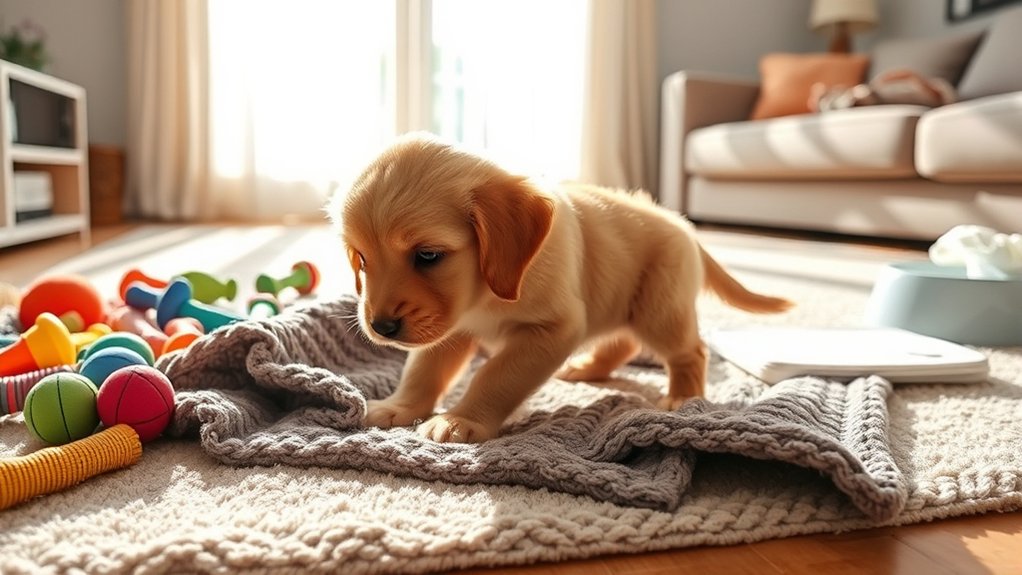
Before your new puppy arrives, make sure your home is safe and welcoming. Start by focusing on puppy proofing safety: secure electrical cords, remove toxic plants, and stash away small objects that could be swallowed. Block off areas where your puppy shouldn’t go, and check that trash cans have lids. This creates a safe environment and prevents accidents.
Once the space is secure, plan familiarization routines to help your puppy adjust smoothly. Introduce your puppy gradually to different rooms, sounds, and family members to reduce stress. Keep interactions calm and positive, using treats and gentle praise. Establish a daily routine for feeding, playtime, and potty breaks, so your puppy knows what to expect. This consistency builds confidence and helps your puppy settle in quickly. By combining thorough puppy proofing safety with thoughtful familiarization routines, you set the stage for a happy, secure start in your home.
Make a Cozy Spot for Your Puppy
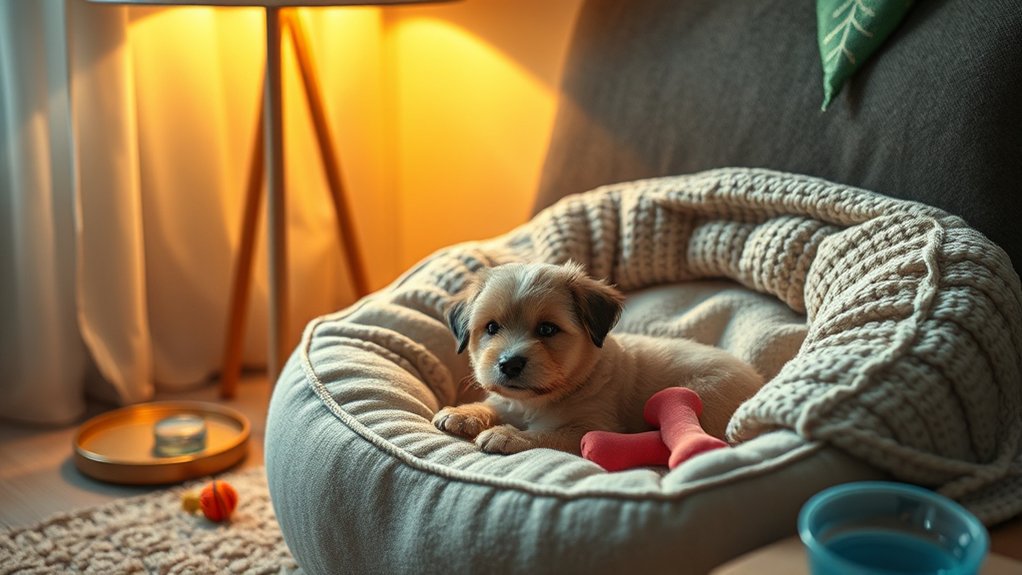
After creating a safe and welcoming environment, focus on giving your puppy a comfortable place to rest. Choose a quiet corner in your home where your puppy can feel secure. Place a soft bed or crate lined with a warm blanket for blanket comfort, helping your puppy relax and settle in.
Puppies thrive with familiar scents, so adding a piece of your clothing can ease their adjustment.
Next, consider your puppy’s toy selection. Pick a variety of safe chew toys and soft plush toys to keep your puppy entertained and comforted. Toys not only provide mental stimulation but also help reduce anxiety, especially during the first few nights.
Rotate toys regularly to maintain interest and prevent boredom.
Set a Feeding and Potty Schedule for Your New Puppy
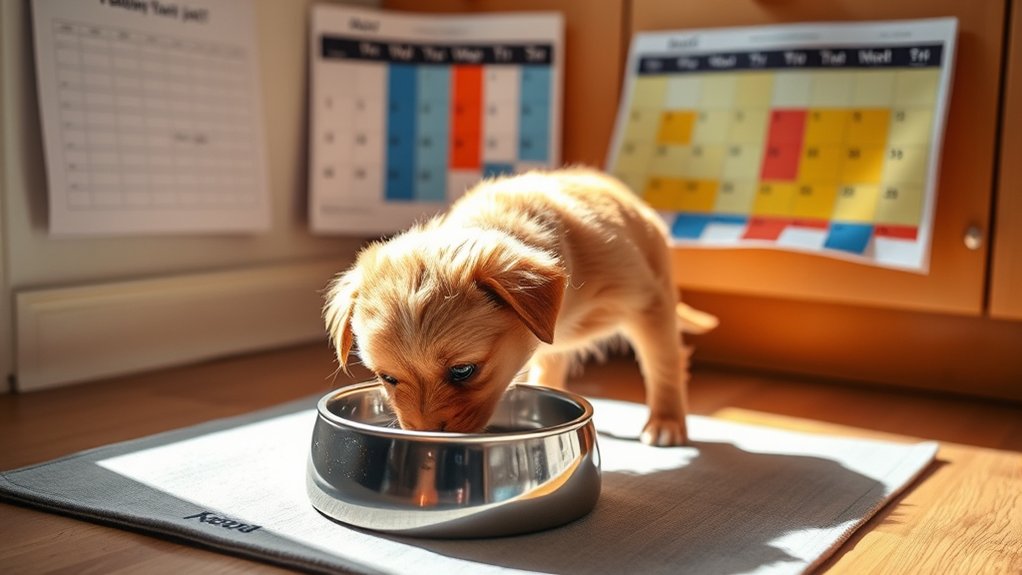
Since puppies thrive on routine, setting a consistent feeding and potty schedule helps you manage their needs and speeds up training. Stick to regular puppy feeding times, usually three to four meals a day, to regulate digestion and make potty timing predictable. After each meal, take your puppy outside promptly to reinforce good habits.
Here’s a simple daily schedule to guide you:
| Time | Activity | Notes |
|---|---|---|
| 7:00 AM | Puppy feeding | Fresh water always available |
| 7:30 AM | Potty break | Take puppy outside immediately |
| 12:00 PM | Puppy feeding | Monitor food portion size |
| 12:30 PM | Potty break | Praise your puppy for success |
| 6:00 PM | Puppy feeding | Avoid late-night meals |
| 6:30 PM | Potty break | Keep sessions calm and brief |
Consistent puppy feeding and potty timing reduce accidents and help your puppy adapt quickly to their new home.
Start Gentle Training to Build Good Habits
Keeping a consistent feeding and potty schedule sets the foundation for your puppy’s daily routine. This makes it easier to introduce gentle training that encourages good behavior. Start crate training early by making the crate a comfortable, safe space for your puppy.
This helps with housebreaking and prevents destructive habits when you’re not watching. Use positive reinforcement, like praise and treats, to reward calm behavior in the crate.
Incorporate basic commands like “sit” and “stay” during short sessions, keeping training fun and stress-free. Alongside this, begin socialization exercises by gently exposing your puppy to new sights, sounds, and friendly people or pets.
This builds confidence and reduces fear in unfamiliar situations. Remember, consistency and patience are key. By starting gentle training now, you set your puppy up for a well-behaved, happy future.
Show Your Puppy Lots of Love
Showing your puppy plenty of love during the first week helps build a strong bond and makes them feel safe in their new home. You can strengthen puppy bonding by offering gentle pets, soothing words, and calm attention. This affectionate communication reassures your puppy that they’re loved and secure.
Spend quality time cuddling and playing, which encourages trust and comfort. Use a soft voice to talk to your puppy, making sure your tone is warm and inviting. Avoid overwhelming them with too much excitement; instead, match their energy to keep interactions positive.
Frequently Asked Questions
When Should I Schedule My Puppy’s First Vet Visit?
You should schedule your puppy’s first vet visit within the first week of bringing them home. This early appointment helps guarantee your puppy’s health by checking for any issues and starting vaccinations.
Regular vet appointments are essential to track growth, administer shots, and discuss diet or behavior concerns. Don’t wait. Getting your puppy checked promptly sets a strong foundation for their health and well-being.
How Do I Introduce My Puppy to Other Pets?
Picture your puppy’s curious nose meeting your cat’s cautious eyes for the first time. To ease puppy socialization, introduce them slowly in a calm, controlled space. Keep your puppy on a leash and let your cat approach at her own pace.
Use treats and praise to create positive associations. Repeat short, gentle meetings daily, ensuring both pets feel safe and confident while getting used to each other.
What Vaccinations Does My New Puppy Need?
Your puppy needs core vaccinations like distemper, parvovirus, adenovirus, and rabies. Puppy vaccination schedules usually start at 6-8 weeks old, with boosters every 3-4 weeks until about 16 weeks.
You might also consider vaccines for bordetella or Lyme disease based on your area. Watch for vaccination side effects like mild fever or lethargy, but serious reactions are rare.
Always consult your vet to tailor the schedule to your puppy’s needs.
How Can I Prevent My Puppy From Chewing Furniture?
Chewing furniture is like a puppy’s way of speaking in a language you don’t want to hear. To stop this, focus on puppy proofing furniture by covering legs and corners with protective barriers or bitter sprays.
Use chewing deterrents like taste repellents or provide plenty of chew toys to redirect their energy. Stay consistent and patient, and your puppy will learn what’s off-limits while keeping your home intact.
When Will My Puppy Start Teething?
Your puppy will start teething around 3 to 4 months old, and this phase can last until they’re about 6 months. During puppy teething, expect them to chew a lot as their adult teeth come in.
You’ll want to offer safe teething remedies like chew toys or cold treats to soothe their gums and protect your furniture. Stay patient, and keep redirecting their chewing to appropriate items to help them through this stage.
Conclusion
Bringing a new puppy home is exciting and a little overwhelming, but remember, you’re not alone. By preparing your space, creating a cozy spot, setting routines, and starting gentle training, you’re setting your puppy up for success.
Most importantly, shower them with love. It’s what they need most. After all, isn’t building a lifelong bond the greatest reward? Cherish these first days because they’re the foundation of a happy, healthy friendship with your new puppy.