
7 Essential Tips for Taking Care of a New Puppy
Bringing home a new puppy is exciting, but it can also feel overwhelming. If you’re wondering how to give your furry friend the best start, you’re not alone—many new puppy owners struggle with where to begin and what steps to take.
To care for your new puppy, start by puppy-proofing your home and setting up a cozy, safe space.
Schedule vet visits for vaccinations and health checks, and pick high-quality, breed-appropriate food with a consistent feeding routine.
Establish early training and socialize your puppy while using positive reinforcement.
Provide daily exercise and mental challenges, and watch for any health or behavior issues to address promptly.
Stick with these steps, and you’ll build a happy, well-adjusted companion in no time.
Key Takeaways
- Puppy-proof your home by securing hazards and setting up a comfortable, safe space like a crate or bed.
- Schedule timely vet visits for vaccinations, health checks, and parasite prevention to ensure early health management.
- Feed high-quality puppy food in small, consistent meals while monitoring appetite and avoiding overfeeding.
- Begin early training and socialization with positive reinforcement. Expose your puppy to people, pets, and different environments.
- Provide daily physical exercise and mental stimulation using walks, playtime, and interactive toys to promote well-being.
Prepare Your Home for Your Puppy’s Arrival
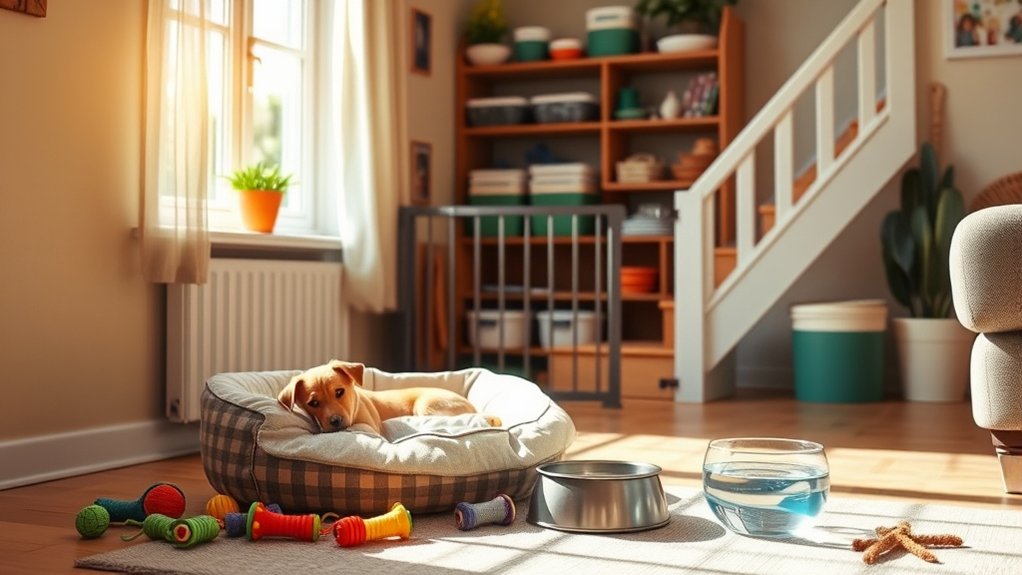
Before your puppy arrives, you’ll want to make sure your home is safe and welcoming. Start by puppy proofing furniture. Move fragile items out of reach and cover electrical cords to prevent chewing hazards.
Secure cabinets with childproof locks, especially those containing cleaning supplies or food. Clear small objects from the floor that your pup might swallow.
Next, focus on selecting cozy bedding. Choose a soft, washable bed that fits your puppy’s size, providing a comfortable and secure spot for rest.
Place the bedding in a quiet corner where your puppy can feel safe but still part of family activity. This setup not only helps your puppy settle in but also encourages good habits early on.
Schedule Vet Visits and Vaccinations

Once your puppy is home, you’ll want to schedule their first vet visit promptly to guarantee they start off healthy. During this initial appointment, the vet will check for any health issues, start vaccinations, and advise on parasite prevention. Keeping up with these visits ensures your puppy builds strong immunity.
Schedule your puppy’s first vet visit promptly to ensure health, vaccinations, and parasite prevention from the start.
Regular vet check-ups also help you monitor growth and address concerns early. Vaccinations protect against serious diseases, so follow the vet’s recommended schedule closely.
Besides health, your vet can offer tips on puppy grooming, including when and how to bathe and brush your pup. They’ll also guide you on crate training, emphasizing its role in safe confinement and housebreaking.
Scheduling these visits early sets a foundation for lifelong health and happiness. Don’t delay—book your puppy’s vet appointments now to stay ahead of potential issues and support their development.
Choose the Right Food and Feeding Schedule

Choosing the right food and feeding schedule plays an essential role in your puppy’s growth and overall health. Puppies have specific nutritional needs that differ from adult dogs, so it’s imperative to select a high-quality puppy food formulated to support their development.
Look for labels indicating complete and balanced nutrition, and consider your puppy’s breed size and any special dietary requirements.
Establish consistent feeding schedules to regulate your puppy’s digestion and energy levels. Most puppies benefit from three to four small meals a day until they’re about six months old, then you can gradually shift to two meals daily.
Stick to regular times to build routine and help monitor their appetite and health.
Avoid overfeeding or offering too many treats, as this can cause weight issues. Consult your vet to tailor feeding schedules and nutritional choices, ensuring your puppy gets the best start in life.
Establish a Training and Socialization Routine
Although it might seem overwhelming at first, establishing a consistent training and socialization routine is essential for helping your puppy develop good behavior and confidence. Start by introducing crate training early; it provides your puppy a safe space and aids in housebreaking. Make sure the crate is comfortable and never use it as punishment.
Puppy socialization is just as crucial. Expose your puppy to different people, environments, and other animals in a controlled way. This helps prevent fearfulness and aggression later on. Schedule regular playdates and short walks, gradually increasing new experiences as your puppy grows.
Consistency is key. Stick to set times for training and socialization sessions to build your puppy’s routine. Keep sessions short and positive to maintain your puppy’s attention. By establishing these habits early, you’ll set a solid foundation for a well-behaved, confident adult dog.
Use Positive Reinforcement With Your Puppy
Building a consistent training and socialization routine sets the stage for effective communication with your puppy. Using positive reinforcement is one of the most effective training techniques to shape your puppy’s behavior.
Consistency and positive reinforcement are key to effective communication and shaping your puppy’s behavior.
Focus on rewarding good behavior immediately with treats, praise, or play. This approach not only motivates your puppy but also strengthens your bond.
Keep in mind that puppy temperament varies; some pups respond better to gentle encouragement, while others thrive with more enthusiastic praise. Always observe your puppy’s reactions and adjust your methods accordingly.
Avoid punishment, as it can create fear or confusion and hinder progress. Instead, redirect unwanted behavior and reward the desired action.
Provide Exercise and Mental Stimulation
You’ll want to make sure your puppy gets daily exercise to stay healthy and happy. It’s not just about physical activity—using interactive toys can keep their mind sharp and prevent boredom too. Plus, regular training and socialization are great for building good habits and boosting their confidence.
Daily Physical Activity
Daily physical activity is vital for your puppy’s growth and well-being. Regular exercise not only helps burn energy but also supports muscle development and mental sharpness.
When you take your pup to the park, always prioritize playground safety by checking the area for hazards and making certain it’s puppy-friendly. Leash training during walks is essential; it keeps your puppy safe and teaches good behavior.
Consistency in daily activity builds a routine your puppy can rely on.
| Time of Day | Activity Type |
|---|---|
| Morning | Leash walk |
| Midday | Playtime in yard |
| Afternoon | Training session |
| Evening | Short walk |
| Night | Calm cuddle time |
This balanced schedule ensures your puppy stays physically active and mentally engaged.
Interactive Toys Usage
Keeping your puppy physically active is just one part of their development. To support both exercise and mental growth, focus on interactive toys that encourage problem-solving and engagement.
When you prioritize toy selection, choose items that challenge your puppy’s mind, like puzzle feeders or treat-dispensing toys. These stimulate curiosity while keeping them busy.
Interactive play with your puppy using these toys not only provides physical activity but also strengthens your bond. Rotate toys regularly to maintain interest and prevent boredom.
Avoid toys that pose choking hazards or are easily destroyed. By combining smart toy selection with consistent interactive play, you’ll help your puppy develop mentally and physically, setting the stage for a happy, healthy life.
Training and Socialization
Although exercise is essential, training and socialization provide just as crucial mental stimulation for your puppy. You’ll want to teach your puppy social cues early so they learn how to interact with people and other dogs confidently.
Crate training is another key tool; it offers your puppy a safe space and aids in housebreaking. Structured training sessions challenge your puppy’s mind while reinforcing good behavior. Balancing these with regular exercise keeps your puppy happy and well-adjusted.
| Training Activity | Purpose | Benefit |
|---|---|---|
| Crate Training | Safe space, housebreaking | Reduces anxiety, builds routine |
| Socialization Walks | Exposure to new stimuli | Understands puppy social cues |
| Basic Commands | Obedience training | Mental challenge, safety |
| Play Sessions | Interactive fun | Builds bond, relieves stress |
| Puzzle Toys | Mental stimulation | Enhances problem-solving |
Manage Common Puppy Health and Behavior Issues
When you bring a new puppy home, you’ll likely face some common health and behavior challenges. To keep your puppy healthy, focus on puppy dental care early. Brush their teeth regularly with a dog-safe toothpaste to prevent plaque buildup and bad breath. Healthy teeth contribute to overall well-being and comfort.
Behavior-wise, crate training can be a lifesaver. It provides your puppy with a safe space and helps with housebreaking. Introduce the crate gradually, making it a positive place with treats and toys. If your puppy shows signs of chewing, barking, or anxiety, redirect their attention and stay consistent with training.
Also, watch for signs of illness like lethargy, vomiting, or diarrhea and consult your vet promptly. Managing these issues early ensures your puppy grows into a happy, well-adjusted dog. Remember, patience and consistency are key as your new four-legged companion adapts to their new home.
Frequently Asked Questions
How Do I Introduce My Puppy to Other Pets at Home?
When introducing new pets, start slow to guarantee positive puppy socialization. Let your puppy and other pets sniff each other through a barrier first. Gradually allow supervised, calm interactions in a neutral space.
Keep sessions short and reward good behavior with treats. Watch for signs of stress and separate them if needed. Consistent, gentle introductions help your puppy build confidence and form safe bonds with your other pets.
What Are the Best Puppy-Proofing Products for Furniture Protection?
Think of puppy proofing furniture as building a fortress around your favorite pieces. To protect upholstery, use slipcovers made of durable fabrics like microfiber or leather, which resist scratches and stains.
Furniture guards and corner protectors act like shields, preventing chew marks and dents. You’ll also want pet-safe sprays that deter chewing without harming your puppy.
These products let you enjoy your home without worrying about your puppy turning furniture into a playground.
When Should I Start Crate Training My Puppy?
You should start crate training your puppy as soon as you bring them home. Early training helps establish good habits and complements puppy nutrition by creating a calm, secure space for meals and rest.
Use positive training techniques like treats and praise to make the crate inviting. Consistency is key. Gradually increase crate time so your pup feels comfortable and safe, supporting both their behavior development and overall well-being.
How Can I Track My Puppy’s Growth and Development Milestones?
You can track your puppy’s growth by weighing them weekly. Puppies can gain about 2-4 pounds a month depending on the breed. Keep a journal to note milestones like teething and first walks.
Monitor puppy nutrition closely and adjust food as they grow. Regular veterinary visits are essential because vets track development and catch issues early. Using a growth chart alongside these steps helps you make certain your puppy is on the right track.
What Are Signs of Separation Anxiety in Puppies?
You’ll notice signs of separation anxiety in your puppy if they whine, bark, or scratch when you leave. They might also drool excessively or try to escape their crate.
To help, focus on puppy socialization by gradually exposing them to different environments and people. Use crate training tips like making the crate a positive space and leaving them there for short periods so they feel safe and secure when alone.
Conclusion
Caring for your new puppy means preparing your home, scheduling vet visits, and choosing the right food. It also involves establishing training routines, using positive reinforcement, and providing exercise and mental stimulation.
You’ll need to manage health concerns and address behavior issues with patience and love. By doing these things consistently, thoughtfully, and lovingly, you’ll build a strong bond and foster good habits.
This approach helps create a happy, healthy life for your canine companion. Remember, caring for your new puppy is all about love and commitment every step of the way.