

5 Key Expenses of Owning a Dog
If you’re a dog owner, you’ve probably felt overwhelmed trying to keep up with the costs of caring for your furry friend. You’re not alone—many people struggle with budgeting for everything a dog needs without breaking the bank.
From daily essentials to unexpected vet visits, managing these expenses can feel like a full-time job.
When you own a dog, you’ll need to budget for five key expenses: food and treats that support their health, grooming supplies tailored to their coat, and training to build good behavior and social skills.
Routine vet care keeps your pup healthy with vaccinations and check-ups, while unexpected costs can arise, so having an emergency fund or pet insurance is wise.
Understanding these basics will help you provide the best care and manage costs effectively.
Key Takeaways
- Food and treats vary in cost based on size, breed, and dietary needs. Premium options often offer better nutrition.
- Grooming expenses depend on breed and coat type. This includes tools and occasional professional haircuts.
- Training and socialization costs cover classes, tools, and sometimes professional trainers for behavior or advanced skills.
- Routine vet care includes vaccinations, dental care, parasite prevention, and regular wellness exams to keep your dog healthy.
- Unexpected expenses like emergencies mean you should have an emergency fund, pet insurance, and be prepared with basic first aid.
Food and Treats: Budgeting for Daily Nutrition

How much should you expect to spend on feeding your dog? The cost varies depending on your dog’s size, breed, and dietary needs, but budgeting for quality dog nutrition is essential. You’ll want to invest in balanced dog food that meets your pet’s health requirements, often found in premium brands that may cost more but provide better nutrients.
Feeding your dog the right diet supports their energy, coat health, and overall well-being.
Treat selection also affects your budget. While treats are great for training and rewarding good behavior, choosing healthy options is key. Avoid cheap treats with fillers and opt for those with natural ingredients.
Keep in mind that treats shouldn’t make up more than 10% of your dog’s daily caloric intake. By carefully planning meals and treat choices, you can manage expenses without compromising your dog’s nutrition and happiness.
Grooming and Supplies: What You’ll Need Regularly
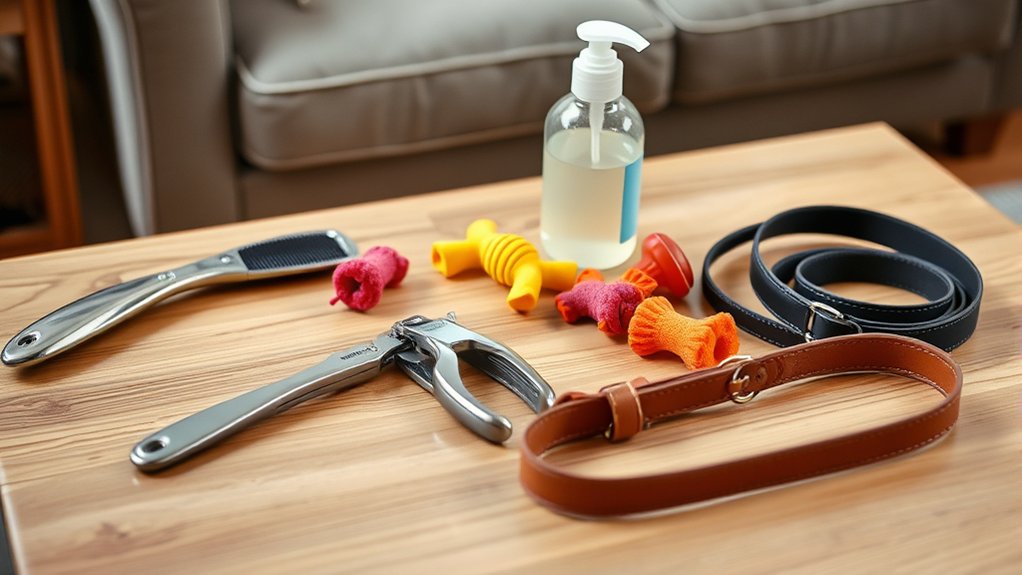
Although grooming needs vary by breed and coat type, you’ll regularly need essential supplies to keep your dog clean and comfortable. Dog grooming isn’t just about looks; it helps prevent health issues like matting and skin infections. Basic grooming tools include a brush suited to your dog’s coat, nail clippers, dog shampoo, and ear cleaning solution. Depending on your dog, you might also need specialized combs or de-shedding tools.
When you go supply shopping, focus on quality and durability to avoid frequent replacements. Keep a stash of grooming wipes and towels for quick cleanups between baths. Regular grooming sessions at home can save you money compared to professional services, but some breeds require occasional visits to a groomer for haircuts or thorough care.
Training and Socialization Expenses

Keeping your dog well-groomed is just one part of responsible pet ownership; investing in training and socialization is equally essential. Training classes help you build a strong bond with your dog while teaching fundamental commands and good behavior. Puppy socialization is especially important early on to ensure your dog grows into a confident, well-adjusted companion.
Here are key training and socialization expenses you should consider:
- Group or private training classes, which vary in cost and duration
- Puppy socialization sessions to expose your dog to different environments and other dogs
- Training tools like leashes, clickers, or treat pouches
- Hiring a professional trainer for behavior issues or advanced skills
- Online or app-based training resources for ongoing learning
Routine Vet Care Costs
When do you schedule your dog’s routine vet visits? Regular check-ups are essential for maintaining your pet’s health and catching issues early. Routine vet care typically includes vaccinations, flea/tick prevention, and dental care. Dental care is vital to prevent costly problems down the line. Pet insurance can help offset these predictable costs, making budgeting easier.
Here’s a quick overview of common routine vet expenses:
| Service | Average Cost | Frequency |
|---|---|---|
| Vaccinations | $75 – $100 | Annually |
| Dental Care | $300 – $700 | Annually or biannually |
| Wellness Exam | $50 – $100 | Annually |
| Parasite Prevention | $40 – $200 | Monthly to Quarterly |
Unexpected Expenses: Preparing for Emergencies
How will you handle unexpected medical emergencies for your dog? Emergency preparedness is crucial because accidents and sudden illnesses can happen anytime. Having a plan and some financial backup can save you stress and protect your furry friend’s health.
Here’s how you can prepare:
- Research and keep contact info for nearby emergency vets.
- Set aside an emergency fund specifically for unexpected expenses.
- Consider insurance coverage to reduce out-of-pocket costs.
- Learn basic pet first aid to stabilize your dog before professional help.
- Keep a pet emergency kit stocked with essentials like bandages and antiseptics.
Unexpected expenses can quickly add up, so being proactive helps you avoid tough decisions when time is critical. With insurance coverage and an emergency plan, you can focus on your dog’s recovery instead of worrying about the bills. Preparing now means you’re ready for anything life throws at your canine companion.
Frequently Asked Questions
How Much Space Does a Dog Need at Home?
You need to take into account your dog’s space requirements carefully. A dog crate should be large enough for your dog to stand, turn around, and lie down comfortably.
Besides the crate, your dog needs enough room to move, play, and stretch. Depending on your dog’s size and energy, a small apartment might feel cramped, while a larger home or yard offers more freedom.
Make sure the living area suits your dog’s activity level.
What Are the Best Dog Breeds for Apartment Living?
Choosing the best dog breeds for apartment living is like picking the right key for a cozy lock. Small, calm breeds like French Bulldogs, Cavalier King Charles Spaniels, and Dachshunds fit perfectly.
You’ll want to take into account dog breed compatibility with your lifestyle and space. For apartment living tips, focus on regular walks and mental stimulation to keep your pup happy.
This way, you’ll enjoy a harmonious home with your canine companion.
How Often Should I Exercise My Dog Daily?
You should exercise your dog daily for at least 30 to 60 minutes, depending on their breed and energy level. Establishing consistent dog exercise routines helps maintain their health and happiness.
Pay attention to your dog’s behavior to find ideal activity levels. Some dogs need more vigorous play, while others prefer gentle walks.
Mixing walks, playtime, and mental stimulation keeps your dog balanced and satisfied every day.
Can I Travel Frequently With My Dog?
You and your dog can chase horizons together, but traveling frequently means planning carefully. Always seek out dog-friendly accommodations that welcome your pet with open arms.
Pack essentials and follow travel safety tips, like keeping their leash handy and ensuring vaccinations are up to date. With some preparation, your adventures will be joyful rather than stressful.
This way, you both can discover the world while staying safe and comfortable every step of the way.
What Are Common Behavioral Issues in New Dogs?
Common behavioral issues in new dogs include training challenges like housebreaking and leash pulling, plus socialization concerns such as fear or aggression toward other animals and people. You might notice separation anxiety or excessive barking, too.
To tackle these, you’ll need consistent training and gradual socialization to help your dog feel comfortable. Addressing these early on prevents bigger problems, making your bond stronger and daily life easier for both of you.
Conclusion
Owning a dog means welcoming a furry friend who fills your days with joy and tail-wagging love. Picture the wagging tail at the end of a long day, the soft fur you groom with care, and the happy barks during training sessions.
While expenses like food, vet visits, and emergencies can add up, being prepared lets you focus on those priceless moments together. With thoughtful budgeting, you’ll create a happy, healthy life for your loyal companion.
Remember, understanding the key expenses of owning a dog helps you provide the best care and enjoy every moment with your furry friend.