
10 Essential Tips for Your First Day With New Puppy
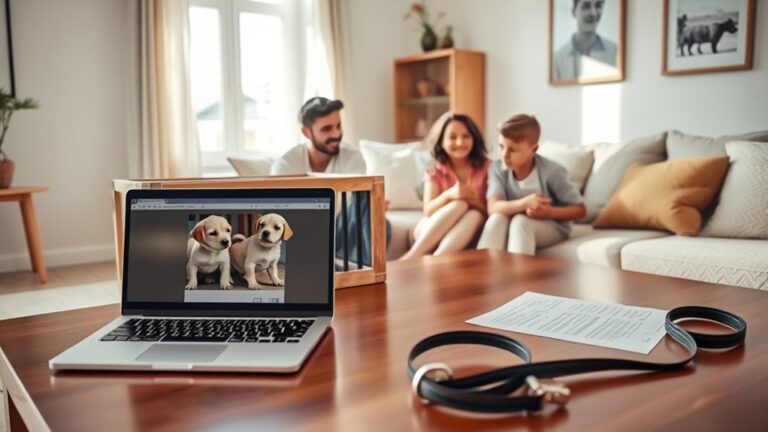
Bringing home a new puppy is exciting, but it can also feel overwhelming. Many new pet parents struggle with how to prepare for their puppy’s first day and want to make sure everything goes smoothly. If you’re feeling a bit lost or anxious, you’re not alone—getting ready for your furry friend’s arrival takes some planning and care.
Get your puppy essentials ready like food, toys, and a cozy bed before they arrive. Set up a quiet, safe space with familiar scents to help them settle.
Introduce your puppy to one room at a time, using gentle routines for feeding and potty breaks. Use familiar toys for comfort and watch for any health concerns.
Establish boundaries early and schedule regular rest to prevent overstimulation. Keep following for more ways to guarantee a smooth first day with your new pup.
Key Takeaways
- Prepare a safe, quiet space with cozy bedding and familiar toys to help your puppy feel secure and comfortable. This will make their new environment less intimidating.
- Introduce your puppy to one room at a time. Letting them explore gradually helps prevent overwhelm and keeps things calm.
- Establish a consistent routine for feeding, potty breaks, and play. This builds trust and gives your puppy a sense of structure.
- Monitor your puppy’s health closely for any signs of illness. If anything seems off, don’t hesitate to consult a vet.
- Plan regular rest periods and keep play sessions short. This avoids overstimulation and supports healthy development.
Gather Puppy Essentials Before Bringing Them Home

Before you bring your new puppy home, make sure you have all the essential supplies ready. Start with quality puppy nutrition; choose food that supports their growth and meets vet recommendations. Having the right food and feeding schedule helps your puppy stay healthy and energized.
Next, gather training tools like a collar, leash, and treats. These will be vital for reinforcing good behavior from day one. You’ll want to practice basic training techniques early, such as sit, stay, and potty training, to create a positive learning environment.
Gather training tools early to reinforce good behavior and establish a positive learning environment from day one.
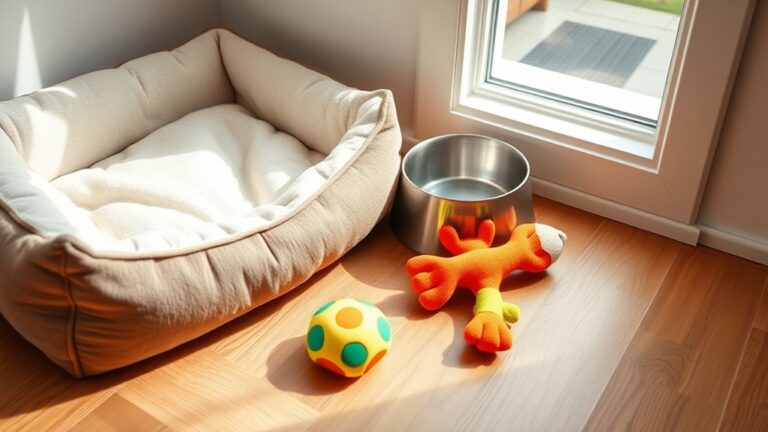
Don’t forget essentials like food and water bowls, a comfortable bed, and chew toys to keep your puppy entertained and happy. Preparing these items beforehand lets you focus on bonding with your new canine companion instead of scrambling for supplies.
Being organized sets a strong foundation for a smooth shift and successful first day with your puppy.
Prepare a Safe and Cozy Space for Your Puppy

Find a quiet spot in your home where your puppy can feel calm and undisturbed. Then, add some soft, comfortable bedding to help them settle in easily. By creating this cozy space, you’re giving your puppy a safe place to relax and feel secure.
Choose a Quiet Area
Although your new puppy will want to investigate, setting up a quiet area helps them feel safe and calm during their first day. Choose a spot away from heavy foot traffic, loud noises, and busy rooms. This space becomes their retreat as they adjust to a new environment.
You’ll want to introduce crate training here, so pick a place where the crate won’t be disturbed but still lets your puppy observe family life without feeling overwhelmed. Creating this balance supports puppy socialization by allowing gentle exposure to household sounds and people at a comfortable pace.
Keep their quiet area consistent, so they know where to relax and recharge. This thoughtful setup makes your puppy’s acclimation smoother and builds a foundation for confidence and comfort.
Provide Comfortable Bedding
How can you make your puppy’s new space feel inviting and secure? Start by providing comfortable bedding that offers cushion comfort and warmth. Choose bedding materials that are soft, durable, and easy to clean, like cotton or fleece.
Avoid anything too thick or heavy, as puppies can overheat or feel trapped. Place the bedding in a quiet, draft-free corner to create a safe haven.
Make sure the bed is the right size, big enough for your puppy to stretch but cozy enough to feel snug. Adding a small blanket or a piece of your clothing can also help your puppy feel more at ease with familiar scents.
Introduce Your Puppy Slowly to the New Environment

Take your time and let your puppy explore one room at a time. This way, they won’t get overwhelmed. Also, try to keep the noise down so they feel safe and calm. By introducing them slowly, your puppy will settle into their new home more comfortably.
Gradual Room Exploration
When you bring your new puppy home, start by introducing them to one room at a time to prevent overwhelming them. Let your puppy sniff around and get comfortable with each space before moving on. This gradual room exploration helps build their confidence and reduces anxiety.
Begin indoor training in the first room, setting up a designated spot for their bed and toys. Once they’re settled, slowly expand their access to other rooms, maintaining a calm atmosphere.
After your puppy feels secure inside, you can incorporate outdoor exploration. Take short, supervised trips outside to familiarize them with new sights and smells. By pacing their introduction to both indoor and outdoor environments, you help your puppy adjust smoothly and create a solid foundation for future training.
Minimize Loud Noises
Once your puppy has started to investigate their new space, it’s important to keep the environment calm by minimizing loud noises. Puppies are often very sensitive to sound, so practicing noise reduction helps prevent overwhelming them.
Turn down the volume on TVs, radios, and household appliances, and avoid sudden or loud sounds that could startle your puppy. If you live in a noisy area, consider using white noise machines or soft background music to create a soothing atmosphere.
Gradually introduce your puppy to everyday sounds in a controlled way to build their confidence without triggering anxiety. By managing sound sensitivity carefully, you’ll help your puppy feel safe and secure, setting a positive tone for their adjustment to their new home.
Start a Simple Feeding Routine
Although feeding your new puppy might seem straightforward, establishing a simple and consistent routine is essential for their health and comfort. You’ll want to focus on feeding frequency and nutritional guidelines to guarantee your puppy grows strong and happy.
Puppies typically need to eat three to four times a day, depending on their age and breed size. Sticking to regular meal times helps regulate digestion and prevents overeating.
Here’s a quick feeding schedule and guideline for your first few weeks:
| Age (Weeks) | Feeding Frequency | Portion Size | Food Type | Notes |
|---|---|---|---|---|
| 6-8 | 4 times daily | Small, measured | Puppy-specific food | Adjust quantity as needed |
| 8-12 | 3-4 times daily | Moderate | Balanced puppy food | Monitor weight and appetite |
| 12-16 | 3 times daily | Moderate to large | High-quality kibble | Gradually reduce frequency |
| 16+ | 2-3 times daily | Larger meals | Puppy or adult food | Consult vet for transitions |
| Adult | 2 times daily | Consistent | Adult dog food | Maintain balanced nutrition |
Start Gentle Potty Training on Day One
Since puppies learn best through consistent routines, starting gentle potty training on day one sets the foundation for good habits. Begin by establishing a housebreaking schedule that aligns with your puppy’s natural needs. Take them outside first thing in the morning, after meals, naps, and playtime.
Consistent routines from day one build strong potty training habits for your puppy’s natural schedule.
Watch for signs like sniffing or circling, and promptly guide them outside to reinforce where they should go. Using crate training techniques can support this process by giving your puppy a safe, cozy space and helping them develop bladder control.
Keep the crate appropriately sized, just enough room to stand, turn, and lie down, so your puppy is less likely to soil it. Remember to take breaks for bathroom trips frequently, especially since young puppies can’t hold it long.
Consistency and patience are key. Praise your puppy immediately after they eliminate outdoors, reinforcing positive behavior and building trust in the new routine from day one.
Bond and Play With Your Puppy
Building a strong bond with your puppy starts through play, which helps you both connect and communicate. Engaging in playful interaction not only entertains your puppy but also lays the foundation for trust and affection.
Use gentle games like tug-of-war or fetch to encourage positive responses and teach boundaries. Remember, puppy socialization begins at home, so exposing your pup to different sounds, textures, and mild challenges during playtime is essential.
This helps your puppy become confident and well-adjusted. Keep sessions short and fun to avoid overwhelming your new friend. Pay attention to your puppy’s cues—if they seem tired or overstimulated, give them a break.
Consistent, loving play fosters a deeper relationship and supports healthy development. By making playtime a regular part of your routine, you’re not just entertaining your puppy; you’re also helping them grow into a happy, social dog who feels secure in your care.
Use Familiar Toys and Blankets to Calm Your Puppy
When you bring your puppy home, familiar toys and blankets can provide a comforting sense of security amidst all the new sights and sounds. These familiar toys act as a bridge between your puppy’s previous environment and their new home, easing anxiety and helping them adjust faster. Make sure to have a few of these toys within reach, especially ones they’ve shown interest in before.
Comforting blankets also play an essential role in calming your puppy. The soft texture and familiar scent offer reassurance during moments of stress or rest. Place these blankets in your puppy’s crate or sleeping area to create a cozy, safe spot they’ll want to return to. By surrounding your puppy with familiar toys and comforting blankets, you’re giving them tools to self-soothe and feel secure, making the changeover smoother for both of you on this exciting first day.
Watch for First-Day Health Issues
Although the excitement of bringing home your new puppy fills the day, you should stay alert for any signs of health issues. Puppies can be vulnerable, so early detection is key. Keep an eye out for the following:
1. Appetite and energy levels
If your puppy refuses to eat or seems lethargic, it could signal illness.
2. Breathing and coughing
Persistent coughing or difficulty breathing might indicate respiratory problems.
3. Skin and coat condition
Check for redness, swelling, or parasites during grooming essentials; these can be early signs of infection.
4. Digestive health
Monitor for diarrhea or vomiting, which may require immediate attention.
Be sure to review your puppy’s vaccination schedule with your vet to protect against common diseases. Watching for these health issues on day one helps guarantee your puppy starts life in your home happy and healthy. Don’t hesitate to contact a veterinarian if anything seems off.
Set Puppy Boundaries and Rules Early
You’ll want to set clear boundaries and rules right from day one to help your puppy understand what’s expected. When you’re consistent about enforcing these rules, training becomes a lot smoother and your puppy starts building good habits quickly. It also helps to designate specific spots for your puppy to eat, sleep, and play. This way, they get a sense of security and order in their new home.
Consistent Rule Enforcement
Because puppies learn best through repetition, setting clear boundaries and rules from day one is essential. Consistent rule enforcement helps your puppy understand what’s expected. This makes training consistency key to effective behavior management. Here’s how to maintain consistency:
- Use the same commands: Everyone in your household should use identical words for commands to avoid confusing your puppy.
- React uniformly: Respond to behaviors the same way every time, whether it’s praise for good actions or correction for unwanted ones.
- Set clear consequences: Immediate and consistent consequences help your puppy link actions to outcomes.
- Stick to routines: Regular feeding, potty, and playtimes reinforce boundaries and support behavior management.
Designated Puppy Areas
Maintaining consistency in rules naturally leads to defining clear spaces for your puppy to investigate and rest. Setting designated puppy areas helps establish boundaries early, making it easier for both of you to understand what’s acceptable.
Use crate training to create a safe, comfortable spot where your puppy can relax and feel secure. This space also supports housebreaking and reduces anxiety.
Outside the crate, designate play zones where puppy socialization can happen safely. This allows your pup to discover new sights and sounds without feeling overwhelmed.
Clear boundaries prevent confusion and help your puppy learn your expectations quickly. By setting these areas from day one, you promote good habits and a smoother shift into your home, laying a solid foundation for your puppy’s growth and well-being.
Plan for Rest Periods to Avoid Overstimulation
Although your new puppy is enthusiastic to investigate and play, it’s important to schedule regular rest periods to prevent overstimulation. Puppies have bursts of high energy but need downtime to recharge and process new experiences. Without a proper rest schedule, your puppy may become cranky, anxious, or overly excitable.
To manage your puppy’s energy effectively, consider these tips:
- Observe your puppy’s cues: Look for signs of tiredness like yawning or slowing down.
- Create a quiet rest area: Use a crate or a comfy bed away from distractions.
- Limit play sessions: Keep playtimes short and structured to avoid wearing your puppy out.
- Stick to a consistent schedule: Regular naps and nighttime sleep help balance energy levels.
Frequently Asked Questions
How Do I Choose the Right Veterinarian for My New Puppy?
You’ll want to choose a veterinarian who’s experienced with puppy health and offers compassionate veterinary care. Start by asking for recommendations from friends or breeders, then visit clinics to see if they’re clean and friendly.
Make certain they’re willing to answer your questions and explain puppy vaccinations, nutrition, and wellness plans. Finding a vet you trust ensures your puppy gets the best care and a healthy start in life.
When Should I Schedule My Puppy’s First Vaccination?
You should schedule your puppy’s first vaccination around 6 to 8 weeks old, like planting seeds for a healthy future. While you’re at it, keep their puppy diet balanced and consistent, supporting their growth like sunlight nourishes a sprout.
Crate training will help create a safe, cozy space during recovery from shots. Early vaccinations protect your pup from unseen dangers, letting them blossom into a happy, strong companion.
What Are the Best Socialization Practices After the First Day?
You should start socializing your puppy gradually by introducing them to new people, sounds, and environments. Puppy playdates are perfect for letting them interact safely with other friendly dogs.
Enroll in socialization classes to help your puppy build confidence and learn proper behavior around others. Keep experiences positive and avoid overwhelming them.
Consistent, gentle exposure will help your puppy grow into a well-adjusted, happy dog.
How Can I Prevent Separation Anxiety in My Puppy?
You’ll feel like you’re moving mountains when preventing separation anxiety in your puppy, but start with a puppy crate to create a safe, cozy space. Use gradual separation. Leave your pup alone for just a few minutes at first, then slowly increase the time.
Always make departures and arrivals low-key, and provide comforting toys. Consistency and patience will help your puppy feel secure, turning separation into a manageable, even stress-free experience.
What Training Methods Work Best for Different Puppy Breeds?
You’ll find that training techniques should match your puppy’s behavior and breed traits. For high-energy breeds, use active, reward-based methods to keep them engaged.
Calm or stubborn breeds respond better to consistent, gentle commands and patience. Small breeds often benefit from short, frequent sessions, while working breeds need more structure and mental challenges.
Tailoring your approach to your puppy’s natural tendencies helps them learn faster and stay motivated.
Conclusion
Starting your puppy’s first day right sets the tone for a happy, healthy life together. Did you know that nearly 80% of puppies develop strong habits in their first week? By gathering essentials, creating a safe space, and setting clear boundaries, you’re giving your new friend the best start possible.
Remember, patience and consistency are key. Your puppy will thank you with endless love and loyalty. Enjoy every precious moment of this exciting journey with your new puppy!