

7 Essential Tips for Your Puppy’s First Night Home
Bringing a new puppy home is exciting, but the first night can be tough for both of you. You’re not alone if you’re feeling nervous about how to help your puppy settle in comfortably. Many new pet parents struggle with making that transition smooth and stress-free.
Set up a puppy-proof area by clearing hazards and creating a cozy crate space. Introduce your puppy to their new home slowly, keeping things calm and quiet. Prepare a soft, secure sleeping spot away from noise.
Establish a relaxing bedtime routine with dim lights and gentle petting. Stick to their feeding and potty schedule, and comfort them to ease separation anxiety.
Watch for any signs of discomfort or health issues overnight. Keep going to find helpful ways to make this change smoother.
Key Takeaways
- Puppy-proof a safe, confined area with a crate and soft bedding to create a secure environment for the first night.
- Introduce your puppy to the home gradually, allowing calm exploration one room at a time to reduce stress.
- Set up a cozy, quiet sleeping space with familiar toys or blankets to provide comfort and reassurance.
- Establish a consistent bedtime routine with dim lights and soothing cues to help your puppy settle down.
- Monitor your puppy’s behavior and health overnight, watching for signs of discomfort or irregular bathroom habits.
Set Up a Puppy-Proof Area Before Bringing Your Puppy Home

Before you bring your puppy home, make sure to create a safe, puppy-proof area where they can wander without getting into trouble. Clear away any small objects, electrical cords, and toxic plants that could harm your new canine companion. This controlled space helps you focus on house training by limiting where accidents can happen, making cleanup easier and teaching boundaries quickly.
Setting up a cozy crate in this area supports crate training, giving your puppy a secure spot to rest and feel comfortable. The crate also aids house training by encouraging your puppy to hold their bladder longer, as dogs instinctively avoid soiling their sleeping space. Make sure the crate is inviting with soft bedding and some toys.
Introduce Your Puppy to Their New Home Slowly and Calmly
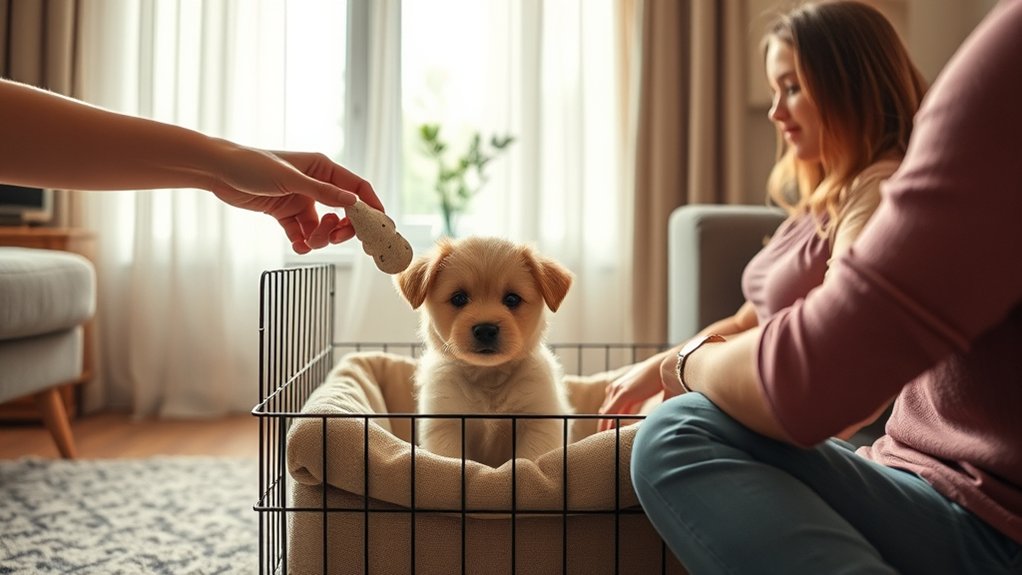
When you bring your puppy home, it’s best to let them explore one room at a time. This way, they won’t get overwhelmed. Try to keep the environment quiet and calm, so they can start feeling safe right away. Taking it slow like this really helps make the transition smooth and comfortable for your new furry friend.
Gentle Exploration Time
Although your new puppy is enthusiastic to investigate, you should introduce them to their new home slowly and calmly to prevent overwhelming them. Start with gentle exploration time that encourages playful sniffing and gentle handling. Here’s how to do it:
- Let your puppy sniff around one room at a time without rushing.
- Use a calm voice and slow movements to keep them relaxed.
- Gently handle your puppy during exploration to build trust.
- Offer short breaks if they seem overstimulated or tired.
This approach helps your puppy feel safe and curious, turning their first night into a positive experience. By pacing their introduction, you’ll set the tone for confident, happy exploration in their new environment.
Calm Environment Setup
Since your puppy is adjusting to a new and unfamiliar space, creating a calm environment helps them feel secure and reduces anxiety. Start by introducing your puppy to one quiet room, limiting overwhelming stimuli.
Use crate training to give them a cozy, safe spot to retreat to, which also aids in housebreaking. Make sure the crate is comfortable with soft bedding and a familiar toy.
Focus on noise reduction. Keep voices low and turn off loud appliances or TVs. Avoid sudden movements or bright lights that might startle your puppy.
Prepare a Cozy and Safe Sleeping Spot for Your Puppy

Creating a cozy and safe sleeping spot helps your puppy feel secure and comfortable during their first night home. Thoughtful sleeping arrangements can ease their adaptation and reduce anxiety. Here’s how to set it up:
Providing a cozy, secure sleeping spot helps your puppy feel safe and eases first-night anxiety.
- Choose a quiet, low-traffic area to minimize noise and distractions.
- Use a soft, washable bed that’s appropriately sized to provide comfort.
- Surround the bed with familiar items like a blanket or a toy to offer reassurance.
- Consider using a crate or playpen to create a defined, safe space that helps with noise reduction and limits wandering.
Set a Relaxing and Consistent Bedtime Routine
Create a calm environment by dimming the lights and reducing noise as bedtime approaches. It really helps set the mood for winding down. Try to stick to a consistent sleep schedule too—this way, your puppy feels secure and starts to understand when it’s time to rest. These simple steps make the whole transition much smoother for both of you.
Calm Environment Setup
Although your new puppy may be excited or nervous, you can help them settle by establishing a calm environment and a consistent bedtime routine. Creating a peaceful space supports puppy calming techniques and encourages restful sleep. Here’s how to set it up:
- Choose a quiet, dimly lit area free from distractions.
- Use a soft blanket or bed that smells familiar to comfort your puppy.
- Reduce nighttime noise by turning off loud appliances and using white noise if needed.
- Maintain gentle, soothing interactions before bedtime. Avoid overstimulation.
Consistent Sleep Schedule
Establishing a consistent sleep schedule helps your puppy know when it’s time to wind down and rest. You can start by setting a regular bedtime and sticking to it every night.
Incorporate nap training throughout the day to prevent your puppy from becoming overtired, which can make falling asleep harder. Create a calm sleep environment by dimming lights and minimizing noise to signal it’s time for rest.
Avoid stimulating activities right before bedtime, and use soothing cues like gentle petting or a quiet voice to help your puppy relax. Consistency in routine and environment builds a sense of security, making it easier for your puppy to settle down quickly.
This approach supports healthy sleep habits from the very first night home.
Keep up With Your Puppy’s Feeding and Potty Schedule
Since puppies thrive on routine, sticking to their feeding and potty schedule helps them feel secure and reduces accidents. Establishing a consistent feeding routine sets the foundation for successful potty training. Here’s how you can keep up with both:
- Feed your puppy at the same times each day to regulate digestion and potty needs.
- Take your puppy outside immediately after meals to encourage timely potty breaks.
- Watch for signs like sniffing or circling to know when your puppy needs to go.
- Reward your puppy with praise or treats after successful potty trips to reinforce good behavior.
Following these steps not only supports your puppy’s physical needs but also builds trust and confidence. Remember, consistency is key. By maintaining a reliable feeding routine and closely monitoring potty training, you’ll make your puppy’s first nights less stressful and set them up for long-term success.
Comfort Your Puppy to Reduce Separation Anxiety at Night
How can you ease your puppy’s nerves during their first night away from home? Start by focusing on puppy bonding. Spend quality time holding, petting, and softly talking to your new friend. This connection reassures your puppy they’re safe.
Use soothing techniques like gentle stroking or offering a favorite toy or blanket to provide comfort. Playing calming music or white noise can also help mask unfamiliar sounds that might trigger anxiety. Keep your puppy’s sleeping area cozy and close to you, so they feel your presence without being overwhelmed.
If your puppy whines, try not to rush in immediately. Instead, offer calm reassurances to avoid reinforcing anxious behavior. Remember, patience is key. Consistently using these comforting strategies will help your puppy adjust and feel secure.
Watch Your Puppy’s Behavior and Health Overnight
After helping your puppy feel safe and calm, keep a close eye on their behavior and health overnight. Monitoring puppy health early helps you spot any issues before they escalate. Watch for behavioral cues that show discomfort or distress so you can respond quickly.
Here are four key things to observe:
- Breathing patterns: Make sure your puppy’s breathing is steady and not labored.
- Restlessness or whining: Frequent restlessness or whining might mean anxiety or physical discomfort.
- Appetite and water intake: Check if your puppy eats and drinks normally after waking up.
- Bathroom habits: Keep an eye out for diarrhea or constipation, as these can point to digestive problems.
Frequently Asked Questions
When Should I Schedule My Puppy’s First Vet Visit?
You should schedule your puppy’s first vet visit within the first week of bringing them home. This helps guarantee their health and sets a baseline for their puppy diet, vaccinations, and deworming.
Your vet can also give you socialization tips to help your puppy adjust confidently to new environments and other pets. Early vet visits keep your puppy healthy and ready for a happy, well-rounded life.
Don’t wait, book it soon!
How Much Water Should My Puppy Have Before Bedtime?
Think of your puppy like a tiny engine; it needs just the right amount of fuel to run smoothly. For bedtime water intake, offer your puppy a small bowl of water about an hour before bed, usually around 1/4 to 1/2 cup depending on their size.
This guarantees proper puppy hydration without causing midnight bathroom trips. Adjust the amount based on how active they’ve been and the room temperature to keep them comfy all night.
Can I Give My Puppy Toys to Sleep With?
Yes, you can give your puppy toys to sleep with to boost puppy comfort, but you need to focus on toy safety. Choose soft, non-toxic toys without small parts that could be swallowed or choked on.
Avoid anything too hard or noisy that might disturb their sleep. A cuddly toy can provide reassurance and help your puppy feel secure during the night, making the changeover to their new home much smoother.
Should I Crate Train My Puppy From the First Night?
You might think crate training your puppy from the first night is harsh, but it actually helps. Starting crate training early supports housebreaking techniques and creates a safe space for your puppy.
While some worry it limits socialization, it actually complements puppy socialization by giving your pup structure and comfort. So, yes, begin crate training right away to build good habits and ease your puppy’s move into your home.
How Do I Handle Nighttime Whining or Barking?
When your puppy makes nighttime noise, don’t rush to comfort them immediately. That can reinforce whining. Instead, provide nighttime comfort by placing their crate near you so they feel secure.
Use a soft blanket or a ticking clock to mimic a heartbeat. If the whining continues, offer calm reassurance without picking them up. Over time, your puppy will learn to settle quietly, knowing you’re close but not responding to every sound.
Conclusion
Bringing your puppy home is a precious, pivotal moment. By preparing a peaceful place, practicing patience, and providing plenty of love, you’ll help your pup settle smoothly.
Stick to a steady schedule, soothe their separation stresses, and stay vigilant to their needs. With these simple steps, you’ll create a comforting, consistent environment where your puppy can grow happy and healthy.
Remember, your puppy’s first night home sets the stage for a strong, special bond ahead.