
How Do You Adopt a Pet in 5 Simple Steps
Adopting a pet can feel overwhelming, especially when you’re not sure where to start or what to expect. You’re not alone—many people struggle with finding the right match and navigating the adoption process smoothly.
If you’ve been dreaming of giving a furry friend a forever home but don’t know how to begin, this guide is here to help.
To adopt a pet in five simple steps, start by choosing one that fits your lifestyle and living space. Next, research and visit local shelters to find pets and learn about adoption policies.
Then, prepare your home by gathering supplies and creating a safe space. After that, complete an honest application and get ready for the interview.
Finally, bring your new pet home and patiently build trust. Keep going to uncover helpful tips for a smooth adoption experience.
Key Takeaways
- Choose a pet that matches your lifestyle, living space, and ability to provide daily care and exercise.
- Research and visit local shelters to find available pets and check out their environment and staff.
- Prepare your home by removing hazards, setting up a safe space, and gathering essential supplies.
- Complete the adoption application honestly, showing your commitment and readiness for pet care.
- Bring your new pet home calmly, build trust through gentle interaction, and keep consistent routines.
Choose a Pet Type That Fits Your Lifestyle and Home

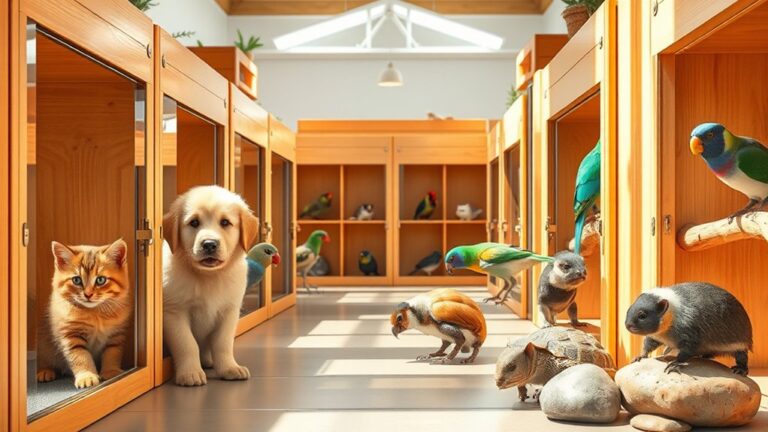
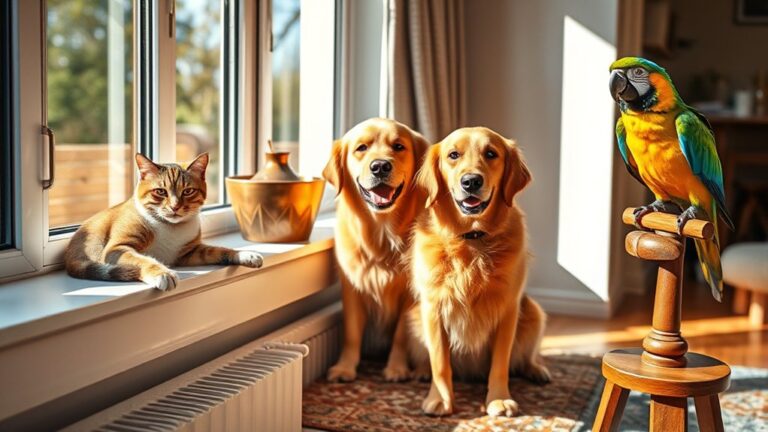
Before you bring a pet home, consider how its needs match your daily routine and living space. Some pets require more attention and space than others, so choosing one that fits your lifestyle is vital.
Consider your daily routine and living space to choose a pet that fits your lifestyle perfectly.
For example, dogs often need regular exercise and consistent pet training, which might be challenging if you have a busy schedule. Cats, on the other hand, are more independent but still need proper health care and mental stimulation. Smaller pets like rabbits or fish have different care demands that might suit smaller living spaces better.
Think about your ability to provide daily care, including feeding, grooming, and health care appointments. If you travel frequently or work long hours, a low-maintenance pet might be a better fit.
Assess your home environment. Do you have a yard or just an apartment? This will influence the type of pet that can thrive. Matching your lifestyle and home to your pet’s needs guarantees a happier, healthier relationship for both of you.
Find and Compare Local Shelters and Adoption Centers
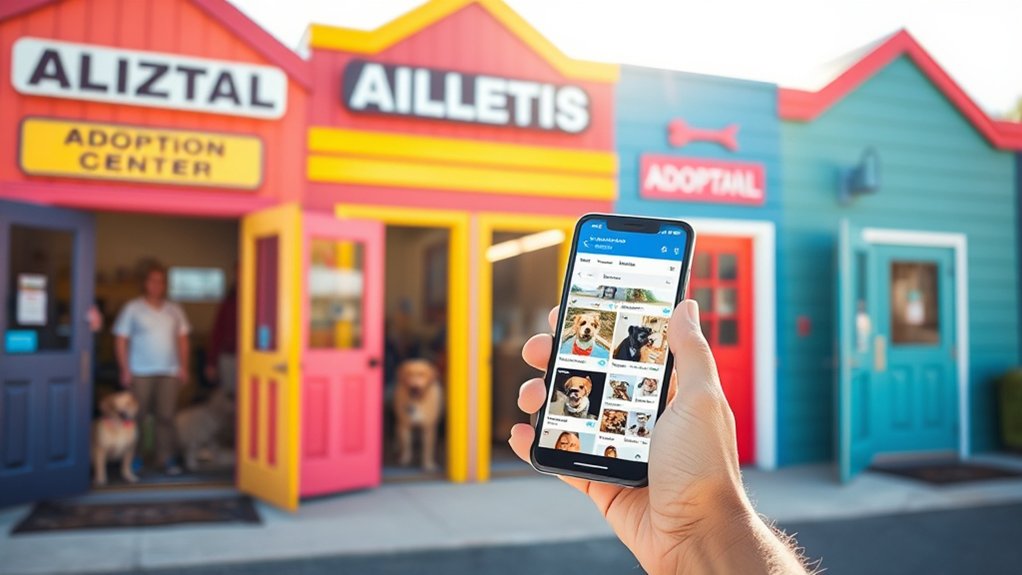
Once you’ve decided on the type of pet that fits your lifestyle and home, the next step is to investigate where you can adopt. Start by finding and comparing local shelters and adoption centers to guarantee you choose the best place for your new companion. Here’s how:
- Research online and visit websites to check available pets, adoption fees, and policies. Look for centers hosting volunteer opportunities or fundraising events. These often show active community involvement and better care for animals.
- Read reviews and ask for recommendations to get a sense of the shelter’s reputation and the quality of their adoption process.
- Visit shelters in person to observe the environment, meet staff, and interact with the pets. This firsthand experience helps you decide where you feel most comfortable adopting.
Prepare Your Home and Gather Essential Supplies
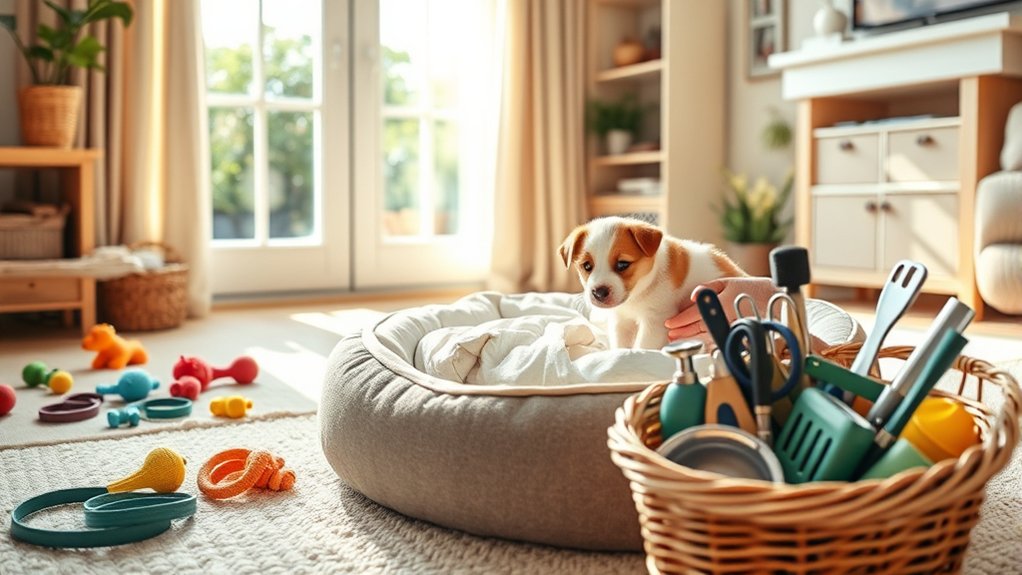
How do you make sure your new pet feels welcome and safe from day one? Start by preparing your home to be a secure, comfortable space. Clear hazards like loose wires or toxic plants, and designate a quiet area where your pet can rest and adjust. Gather essential supplies such as food and water bowls, a cozy bed, toys, and grooming tools.
Before bringing your pet home, plan for a health check with a veterinarian to ensure they’re in good shape and up to date on vaccinations. This step helps you spot any immediate medical needs. Moreover, consider behavior training tools and resources to foster positive habits early on. Training aids like clickers, treats, and leashes can make the transition smoother for both of you. Preparing your home thoughtfully and gathering these essentials lays the foundation for a happy, healthy relationship with your new pet.
Fill Out Your Adoption Application and Prepare for the Interview
Although adopting a pet can be exciting, you’ll need to carefully fill out the adoption application to increase your chances of approval. Be honest and thorough. Shelters want to guarantee their pets go to responsible homes. When preparing for the interview, keep these points in mind:
- Provide detailed information about your lifestyle and home environment, including any experience you have with pets. This shows you understand pet nutrition and how to care for their health.
- Show your commitment to training by mentioning any training tips you plan to follow or have used before. This reassures the shelter that you’ll help your new pet adjust well.
- Ask questions about the pet’s behavior and needs during the interview. It demonstrates your readiness and responsibility.
Bring Your New Pet Home and Build Trust
After your adoption application is approved and the interview is complete, you’ll bring your new pet home, a moment filled with excitement and responsibility. To help your pet settle in, create a calm, safe space where they can relax. Start trust-building techniques by giving them time to investigate at their own pace without overwhelming them. Use gentle tones and slow movements to show you’re a friend.
Engage in bonding activities like soft petting, playing with toys, or sharing quiet moments together. These interactions help your pet associate you with comfort and care. Consistency matters, so stick to regular feeding and walking schedules to build predictability. Be patient because trust develops over time. Avoid forcing contact, and respect your pet’s boundaries. By focusing on these trust-building techniques, you’ll create a strong foundation for a loving relationship that lasts a lifetime.
Frequently Asked Questions
What Vaccinations Does a Newly Adopted Pet Need?
When you adopt a pet, they need essential vaccinations like rabies, distemper, parvovirus, and bordetella, depending on their species. You should visit a vet for a full check-up and start veterinary care right away.
Regular pet grooming goes hand in hand with health, helping you spot any issues early. Maintaining vaccinations and grooming ensures your new friend stays healthy and happy in their new home.
How Do I Handle Pet Allergies in the Family?
If you’re dealing with pet allergies in the family, focus on pet allergy management right from the start. Choose allergy-friendly pet options like hypoallergenic breeds or smaller animals that shed less.
Keep pets out of bedrooms, clean regularly, and use air purifiers to reduce allergens. You can also bathe pets often and wash hands after handling them.
These steps help you enjoy your new pet without triggering allergies.
What Are the Common Adoption Fees and What Do They Cover?
Adoption fees usually range from $50 to $150, and they cover essential costs like vaccinations, spaying or neutering, and microchipping. When you pay the fee, you’ll also complete adoption paperwork that officially transfers the pet’s ownership to you.
These fees help shelters care for their animals and support ongoing medical needs. Knowing what the fee covers guarantees you’re prepared for both the paperwork and the pet’s initial health care.
Can I Adopt a Pet if I Rent My Home?
Of course, landlords just love having extra furry roommates, right? In reality, you can adopt a pet if you rent your home, but you’ll need to check for rental restrictions first.
Pet suitability depends on your lease agreement and landlord’s policies, so don’t assume every pet fits the bill. Get written permission to avoid surprises, and choose a pet that suits both your lifestyle and your rental situation for a happy home.
How Do I Introduce My New Pet to Existing Pets?
You should introduce your new pet slowly and calmly to your existing pets. Start with separate spaces, allowing them to sniff each other’s scents before face-to-face meetings.
Use pet behavioral training techniques to encourage positive interactions and reduce stress. Keep their nutrition balanced by following pet nutrition tips for both pets, ensuring they feel healthy and comfortable.
Patience and consistency help them build a peaceful relationship over time.
Conclusion
So, you’ve mastered the art of pet adoption, congratulations! Now, instead of binge-watching your favorite show, you’ll binge-feed, binge-walk, and binge-clean. But hey, who needs free time anyway?
With your new furry overlord ruling your heart and furniture, you’ll realize adopting isn’t just about saving a pet. It’s about signing up for unconditional love, endless surprises, and a lifetime subscription to slobbery kisses.
Welcome to the chaos you never knew you needed—this is the joy of pet adoption!