
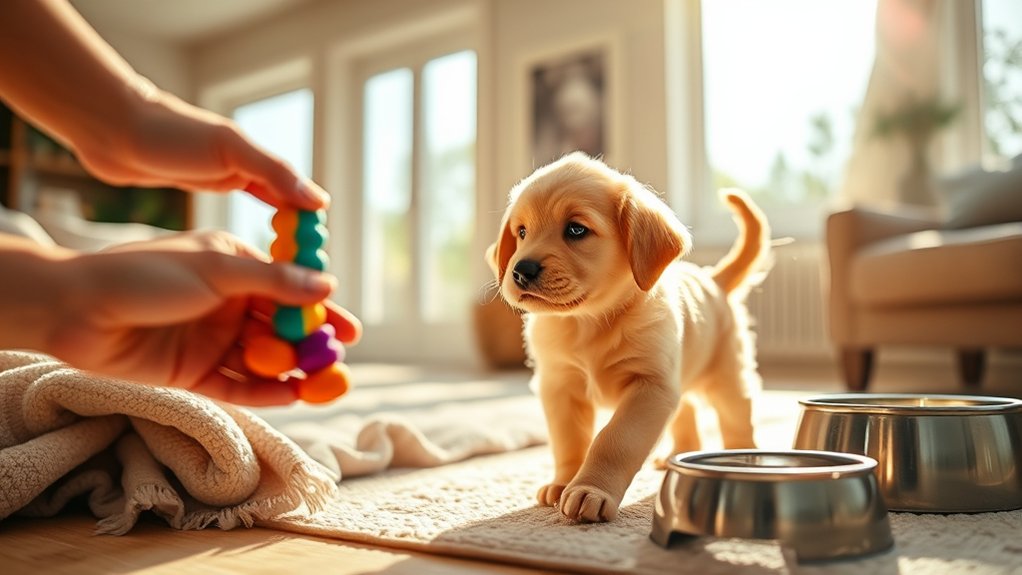
What to Do With a New Puppy in 3 Essential Steps
Bringing home a new puppy is exciting but can also feel overwhelming. You want to give your furry friend the best start, but many people struggle with where to begin. You’re not alone—setting up a safe space, establishing routines, and building a bond can all feel like a lot at once.
To welcome your new puppy, start by puppy-proofing your home and setting up a cozy, safe space with food and water nearby. Next, establish consistent feeding times, regular vet visits, and short play sessions to support their growth and health.
Then, build a strong bond using positive training and gentle socialization, helping your pup grow confident and happy. Keep going to uncover more ways to nurture your puppy’s physical and emotional wellbeing.
Key Takeaways
- Puppy-proof your home and prepare a safe, comfortable space with a crate, bedding, and accessible food and water bowls.
- Establish a consistent routine for feeding, exercise, and vet visits to support your puppy’s health and development.
- Begin positive, short training sessions combined with gentle socialization to build trust and confidence.
- Encourage regular play and exposure to new environments to foster emotional wellness and reduce stress.
- Use patience and positive reinforcement to nurture a strong, respectful bond with your puppy.
Prepare Your Home and Supplies for Your New Puppy
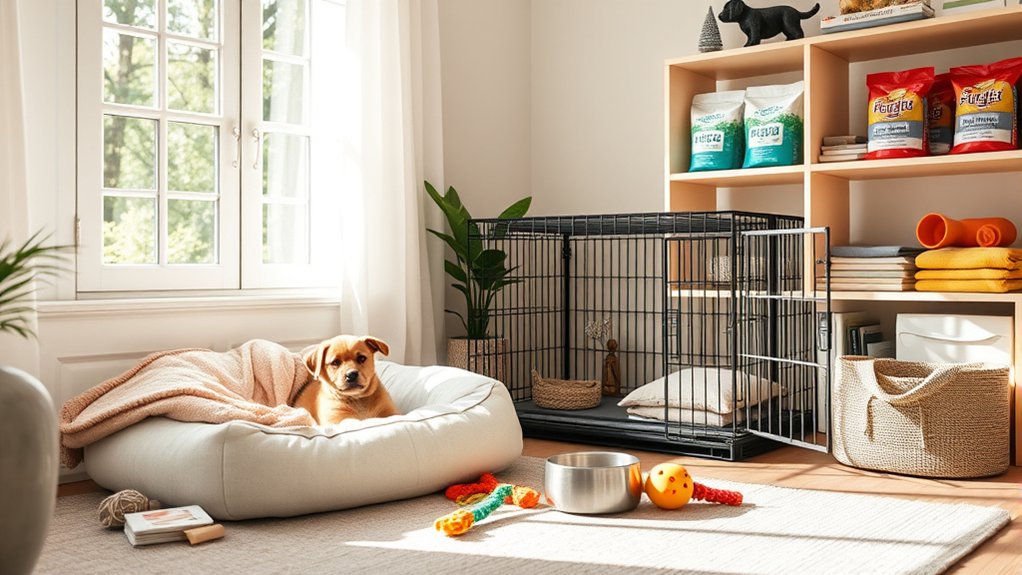
Before bringing your new puppy home, make sure you’ve gathered all the essential supplies and created a safe space. Start by puppy proofing tips like securing electrical cords, removing toxic plants, and locking away small objects that could be swallowed. These steps will protect your curious pup from hazards as they transition.
Next, focus on crate training essentials. Choose a crate that fits your puppy comfortably, and line it with a soft blanket or bed. The crate will serve as your puppy’s safe haven and help with house training by teaching them to hold their bladder.
Set up the crate in a quiet area where your puppy can feel secure but still be part of family activities. Having food and water bowls ready nearby will make settling in easier. By preparing your home thoughtfully, you’ll make your puppy’s explore smoother and set the stage for a happy, healthy start together.
Establish Feeding, Exercise, and Vet Care Routines for Your Puppy
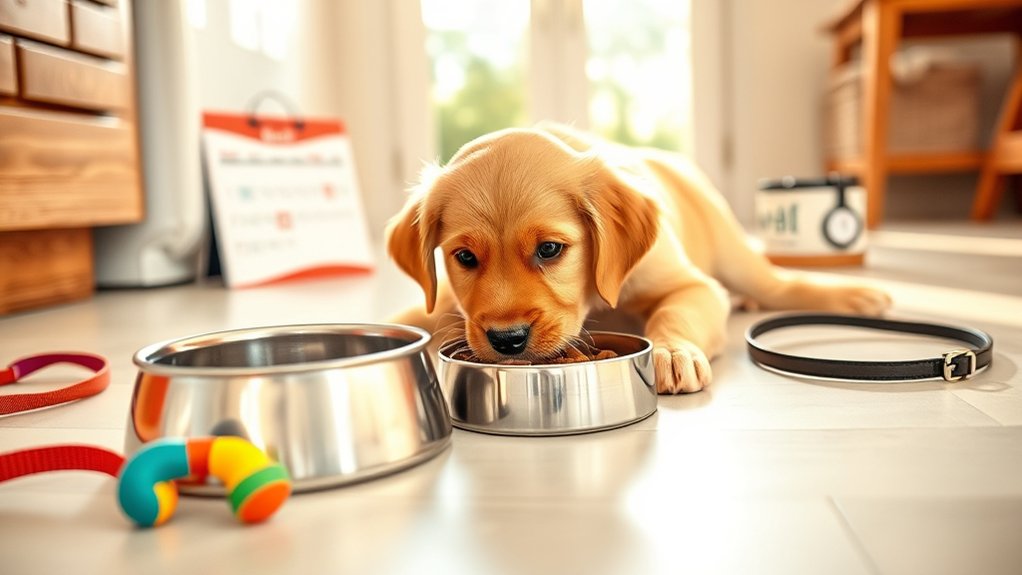
Once your puppy feels at home, establishing consistent feeding, exercise, and vet care routines will keep them healthy and happy. Focus on puppy nutrition by providing high-quality food designed for their age and size. Stick to regular meal times to support digestion and avoid overeating. Your vet can help you determine the right diet and feeding amounts.
Next, create an exercise schedule that matches your puppy’s energy level. Short, frequent play sessions and gentle walks prevent boredom and promote physical development. Avoid over-exercising to protect growing joints.
Finally, schedule regular vet visits for vaccinations, parasite control, and health check-ups. Early vet care helps catch potential issues and sets a foundation for lifelong wellness. Keep records of all treatments and consult your vet if you notice any changes in behavior or appetite. By establishing these routines, you’ll ensure your puppy thrives both physically and emotionally.
Build a Strong Bond With Your Puppy Through Training and Socialization
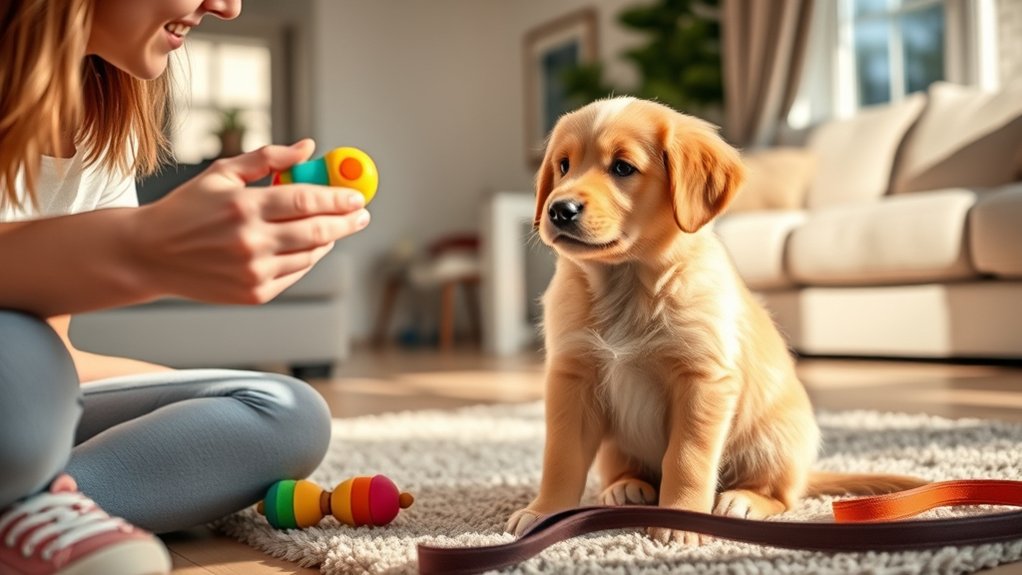
Building a strong bond with your puppy starts by investing time in consistent training and socialization. Use positive reinforcement during training sessions to encourage good behavior and build trust. Keep sessions short and fun to maintain your puppy’s interest.
Incorporate puppy playtime as a crucial part of bonding. It helps your puppy release energy and learn social cues in a relaxed setting.
Employ effective socialization techniques by gradually exposing your puppy to different people, animals, sounds, and environments. This helps prevent fear and aggression later on. Be patient and calm during these introductions, letting your puppy explore at their own pace.
A well-socialized puppy grows into a confident, happy dog who trusts you deeply. Remember, your commitment to training and socialization isn’t just about obedience. It’s about creating a lifelong connection built on mutual respect and understanding.
Frequently Asked Questions
How Do I Choose the Right Breed for My Lifestyle?
You should start by considering your daily routine and living space since breed-specific traits vary widely. If you’re active, pick an energetic breed; if not, a calmer dog fits better.
Also, think about how much time you can dedicate to puppy socialization, as some breeds need more interaction to thrive. Matching your lifestyle with a breed’s needs guarantees a happier pup and smoother training experience for you both.
When Should I Start Crate Training My Puppy?
Imagine your puppy’s mind as a sponge soaking up new experiences. You should start crate training as soon as your puppy comes home, usually around 8 weeks old. Early crate introduction helps create a safe space and supports puppy socialization by making them comfortable with boundaries.
Gradually, your puppy will see the crate as a cozy den, easing separation anxiety and encouraging good habits. Starting early sets the stage for a confident, well-adjusted dog.
What Vaccinations Does My Puppy Need and When?
You’ll want to follow a vaccination schedule starting at 6-8 weeks with distemper, parvovirus, and adenovirus shots. Boosters come every 3-4 weeks until about 16 weeks old.
Rabies vaccination usually happens around 12-16 weeks. Keep up with your vet’s advice, and while you’re at it, start puppy socialization after the initial vaccinations to help your pup build confidence safely. This combo keeps your puppy healthy and happy!
How Do I Handle Common Puppy Behavioral Problems?
You can handle common puppy behavioral problems by staying consistent and patient. When your puppy bites, redirect their attention to chew toys and avoid rough play.
For house training, take your puppy outside frequently, praise them when they go potty in the right spot, and clean accidents thoroughly to remove odors.
Establish a routine, use positive reinforcement, and avoid punishment to help your puppy learn good habits quickly and confidently.
What Are Signs of Illness to Watch for in Puppies?
When your puppy’s eyes look dull or they slump like a deflated balloon, watch closely. Signs like vomiting, diarrhea, coughing, or refusing food can mean illness. Poor puppy nutrition or skipped socialization techniques might weaken their immunity, making these symptoms more likely.
If your pup’s energy dips or they have trouble breathing, don’t wait. Call your vet. Catching sickness early keeps your canine companion happy and growing strong.
Conclusion
Bringing home a new puppy is like planting a seed. You need the right care for it to flourish. Just as a gardener waters, feeds, and nurtures a seed daily, you’ll prepare your home, set routines, and build a bond through training.
Remember, puppies thrive on consistency and love. By following these steps, you’re not just raising a pet. You’re growing a lifelong friend who’ll brighten your days with loyalty and joy. When you know what to do with a new puppy, you’re setting the stage for a happy, healthy relationship.