What Does a Puppy Need: 3 Essentials for New Owners
Bringing home a new puppy is exciting, but it can also feel overwhelming. You want to give your furry friend the best start, but figuring out exactly what they need isn’t always easy. You’re not alone—many new puppy owners struggle with choosing the right supplies and creating a safe, comfortable environment.
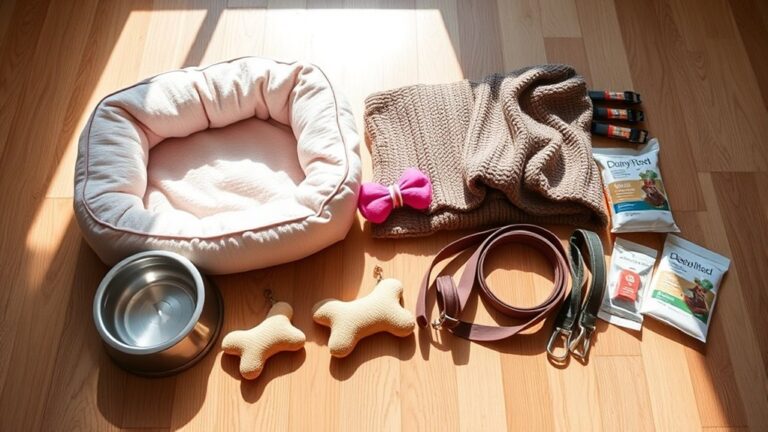
You’ll need three essentials to give your puppy a great start: the right supplies, nutritious food, and a cozy, safe space. Start with a comfy bed, chew toys, and a secure crate to keep your pup comfortable and safe.
Feed high-quality puppy food several times a day, and always provide fresh water. Create a quiet spot with soft bedding away from noise and hazards.
Want to make sure your puppy thrives? There’s plenty more to uncover.
Key Takeaways
- Provide a cozy bed and safe crate to ensure your puppy feels secure and comfortable.
- Use durable chew toys and puppy pads to support teething and house training.
- Feed high-quality puppy food 3-4 times daily with fresh water always available.
- Establish a calm, quiet space away from noise for rest and gradual socialization.
- Implement positive reinforcement with treats and praise to encourage effective training.
Must-Have Supplies for Your New Puppy’s First Month
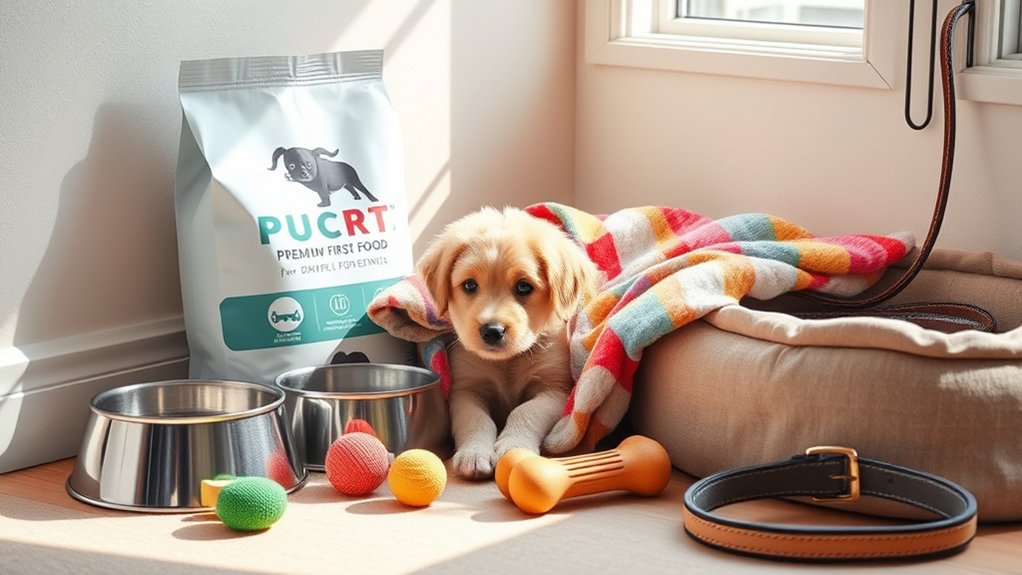
Before your new puppy arrives, you’ll want to gather essential supplies that guarantee their comfort, safety, and health during the first month. Start with a cozy bed, durable chew toys, a sturdy leash, and a collar with an ID tag. These basics create a safe environment and help you begin puppy socialization early, exposing your pup to new sights and sounds gently.
You’ll also need puppy pads or a designated potty area to support house training, and a crate that serves as a secure space for rest and boundaries. Using positive training techniques like treats and praise will make your sessions effective and enjoyable. Don’t forget grooming tools to keep your puppy clean and comfortable.
Having these must-have supplies on hand ensures you’re ready to support your puppy’s growth and learning, setting a strong foundation for socialization and training techniques that shape a well-behaved, happy dog.
Choosing the Right Food and Feeding Schedule
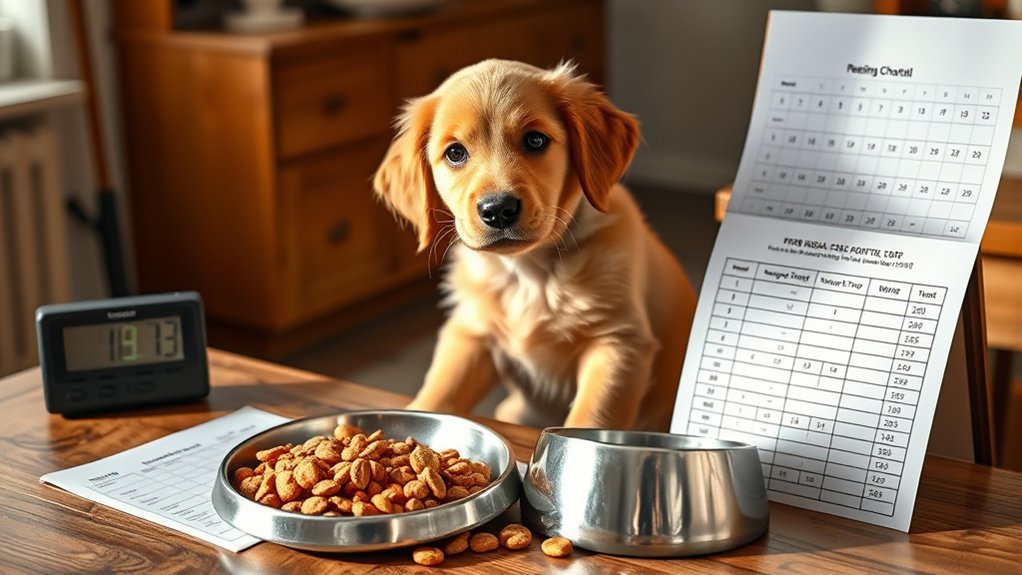
Along with having the right supplies, providing your puppy with proper nutrition plays a big role in their health and development. Choosing the right food and establishing consistent feeding routines guarantees your puppy grows strong and happy.
Focus on high-quality puppy food formulated to meet their unique nutritional needs. Avoid adult dog food, as it won’t support their rapid growth.
To get started, consider these essentials:
- Select a balanced puppy food rich in protein and essential vitamins.
- Feed your puppy 3-4 times daily, adjusting portions based on age and weight.
- Keep fresh water available at all times to stay hydrated.
- Monitor your puppy’s weight and energy, tweaking feeding amounts as needed.
How to Make a Safe, Cozy Space Your Puppy Will Love

Creating a safe, cozy space helps your puppy feel secure and comfortable as they adapt to their new home. Choose a quiet corner with soft bedding, away from heavy foot traffic and loud noises. This spot becomes their sanctuary, helping reduce anxiety during puppy training.
Use a crate or playpen to establish boundaries, making it easier to manage their behavior and housebreaking. Include familiar toys and a water bowl to keep them engaged and hydrated. Keep the space clean and free of hazards like electrical cords or small objects they might swallow.
As you work on socialization tips, gradually introduce your puppy to new sounds and people near their safe area so they associate comfort with new experiences. This thoughtful setup supports both their emotional well-being and learning, making your puppy’s adaptation smoother and strengthening your bond from day one.
Frequently Asked Questions
How Often Should I Take My Puppy to the Vet?
You should take your puppy to the vet for a check-up every 3 to 4 weeks until they’re about 16 weeks old to keep vaccinations on schedule. During these visits, the vet can guide you on puppy nutrition and help monitor crate training progress.
After that, annual visits work well to maintain health and catch any issues early. Don’t hesitate to visit sooner if you spot any health concerns or behavioral changes.
When Can I Start Training My Puppy?
You can start training your puppy as soon as you bring them home, usually around 8 weeks old. Begin with basic commands and crate training to create a safe space.
Keep training sessions short and positive. Make sure your puppy’s nutrition supports their energy and brain development during this critical learning phase.
Consistency and patience will help your puppy learn quickly and build a strong bond with you.
How Do I Socialize My Puppy With Other Dogs?
To socialize your puppy with other dogs, start by arranging puppy playdates with vaccinated, friendly pups. Keep the sessions short and positive to build confidence. Use socialization tips like supervising interactions closely and rewarding calm behavior with treats.
Gradually expose your puppy to different dog breeds and sizes, making sure each experience is safe and enjoyable. This helps your puppy develop good manners and reduces fear or aggression around other dogs.
What Are Common Puppy Health Issues to Watch For?
Worried about common puppy health issues? You should watch for signs like vomiting, diarrhea, lethargy, or coughing. Proper puppy nutrition supports their immune system, so feed high-quality food.
Stick to vaccination schedules to protect against diseases like parvovirus and distemper. Parasites, such as fleas and worms, also pose risks, so regular vet check-ups are key.
How Do I Handle My Puppy’s Teething Phase?
During your puppy’s teething phase, you’ll want to manage chewing behavior by providing safe teething remedies like chilled rubber toys or frozen washcloths. These soothe sore gums and redirect their urge to chew away from your belongings.
Stay consistent with gentle correction when they chew on inappropriate items, and offer plenty of praise when they use their toys. This helps your puppy develop healthy habits while easing their discomfort.
Conclusion
Bringing a puppy home is like planting a tiny seed. You’ll need the right essentials to help them grow happy and strong.
With must-have supplies, a balanced feeding schedule, and a cozy, safe space, you’re setting the stage for a loving bond. Remember, your care will be the sunlight and water your puppy needs to thrive.
Give them these essentials, and you’ll watch your new best friend bloom into a joyful companion. What does a puppy need? These basics are the answer to a happy, healthy start.