

Where to Post Lost Dogs — 5 Top Places to Share Notices
Losing a dog is heartbreaking, and if you’re going through this, you’re not alone. Many people struggle with the overwhelming feeling of not knowing where to start when trying to find their lost pet. You want to act fast and cover all the right bases to bring your furry friend home safely.
You should post lost dog notices on social media platforms like Facebook and Instagram with clear photos, descriptions, and relevant hashtags for quick sharing. Notify nearby shelters and rescue groups with detailed info and microchip numbers. List your dog on trusted online databases for real-time alerts.
Put up flyers on local community boards and at busy spots like stores or coffee shops. These five key places boost your chances of reuniting faster, and there’s more to uncover to help your search.
Key Takeaways
- Share clear photos and details on social media platforms like Facebook, Instagram, and Twitter. Use local groups and hashtags to reach more people.
- Notify local animal shelters and rescue groups with recent photos, microchip info, and behavior traits. This helps them identify your dog quickly.
- List the dog on trusted online lost dog databases with detailed descriptions. Update sightings in real-time to keep everyone informed.
- Post notices on local community boards featuring photos, contact info, and training responses. This makes it easier for people to recognize your dog.
- Distribute flyers at busy local spots like grocery stores and coffee shops. Also, engage neighborhood watch programs to spread the word.
Use Social Media To Spread Lost Dog Notices Fast

When your dog goes missing, you can quickly reach a wide audience by using social media. It’s one of the most effective pet recovery strategies because it spreads information instantly. Start by posting clear photos and descriptions on platforms like Facebook, Instagram, and Twitter. Include details such as your dog’s name, breed, color, and where they were last seen. Use relevant hashtags and local community groups to maximize visibility.
Social media tips include tagging friends, neighbors, and local pet organizations to boost shares. Update your posts regularly to keep the search active and maintain engagement. You can also create a dedicated page or event to centralize information. Remember, prompt and consistent posting increases the chances your dog will be spotted quickly.
Tell Nearby Shelters And Rescue Groups About Your Lost Dog
Although social media reaches many, notifying nearby shelters and rescue groups directly is essential for finding your lost dog. These organizations often receive lost pets daily and can quickly identify your dog if you’ve taken steps like pet microchipping or behavior training.
When contacting shelters, provide clear details including recent photos, microchip number, and any unique behaviors.
Here’s a quick guide on communicating with shelters and rescue groups:
| What to Provide | Why It Matters |
|---|---|
| Microchip Number | Speeds up identification |
| Recent Photos | Helps staff recognize your dog |
| Behavior Traits | Assists in handling safely |
| Contact Information | Enables quick communication |
| Last Seen Location | Narrows search areas |
List Your Lost Dog On Trusted Online Databases

Since time is critical in finding your lost dog, listing them on trusted online databases can dramatically increase your chances of a quick reunion. These platforms use pet recovery technology to connect lost pets with their owners efficiently. By uploading clear photos and detailed descriptions, you guarantee your dog’s information reaches a wide audience, including local shelters and volunteers actively searching.
Understanding lost dog behavior helps you craft accurate profiles, highlighting tendencies like hiding spots or how your dog reacts to strangers. Many online databases offer real-time alerts and maps, helping you track sightings and respond quickly. You can also update your dog’s status as new information comes in, keeping the search focused and organized.
Post Notices On Local Community Boards For Lost Dogs
Online databases reach many people quickly, but local community boards target your immediate neighborhood, where your lost dog is most likely to be found. Posting notices there helps you connect directly with nearby residents who can keep an eye out.
Make sure your flyer is clear, includes a recent photo, and lists your contact info. You can also add a brief note about your dog’s training tips, like whether they respond well to commands or might be shy around strangers. This info helps neighbors approach your dog safely.
Don’t forget to update the boards regularly and check back to remove outdated notices. Combining these local efforts with pet recovery apps boosts your chances of a quick reunion. These apps often allow you to link your community board posts, creating a seamless alert system.
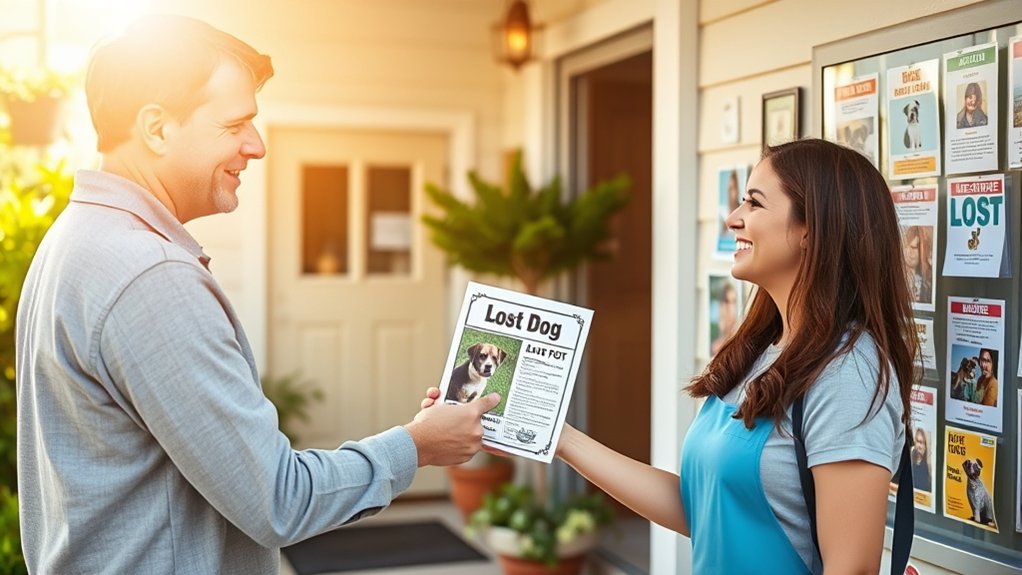
Share Lost Dog Flyers At Busy Local Spots
When you share lost dog flyers at busy local spots, you increase the chances that more people will see them and recognize your pet. Places like grocery stores, coffee shops, and community centers attract a steady flow of local residents who can keep an eye out for your dog. Make sure to ask permission before posting so your flyers stay visible longer.
Besides physical flyers, mention any pet tracking technology your dog might have, like a GPS collar, so people know how to help if they find your pet. Don’t forget to connect with neighborhood watch programs. They often have communication networks and can spread the word quickly throughout your community.
Getting these groups involved can multiply your reach and bring more eyes to your search. Combining traditional flyers with community involvement and technology boosts the chances of a quick reunion with your lost dog.
Frequently Asked Questions
How Soon Should I Start Searching After My Dog Goes Missing?
You should start searching for your dog immediately after they go missing. Don’t buy into lost pet myths that say your dog will come back on their own after a day or two.
Understanding dog behavior helps. You know they’re likely scared and hiding nearby. The sooner you begin, the better your chances of finding them quickly and safely.
Acting fast shows your dog you’re looking for them, which can bring them home sooner.
What Information Is Most Important to Include in a Lost Dog Notice?
You might think including lots of details will overwhelm people, but the most important info in a lost dog notice is clear and concise. Describe your dog’s behavior and appearance, including unique marks or habits, to help others identify them quickly.
Add your contact info and last seen location. These pet recovery strategies boost your chances of a safe reunion by making it easy for anyone to recognize and approach your dog.
Should I Offer a Reward for Finding My Lost Dog?
Yes, offering reward incentives can motivate people to help find your lost dog faster. You’ll want to clearly mention the reward in your community alerts to grab attention and encourage more eyes on the lookout.
Just be sure the reward is reasonable and stated upfront to avoid confusion. This approach often boosts the chances of a safe return because it makes your appeal stand out and shows you’re serious about bringing your dog home.
How Can I Keep My Dog Safe to Prevent Future Loss?
Keeping your dog cozy and secure means more than just walls and fences. It’s about thoughtful dog safety. You’ll want to invest in sturdy collars with ID tags, microchip your pet, and always keep them on a leash during walks.
Prevention tips include regular training to reinforce recall commands and ensuring your yard is escape-proof. By staying proactive, you’ll reduce the chances of your canine companion wandering off and keep them happily at home.
When Is It Appropriate to Involve Professional Pet Trackers?
You should involve professional pet trackers when your initial search hasn’t located your dog, especially if hours or days have passed. They use advanced tracking technology that you likely don’t have access to, which increases your chances of a quick recovery.
Professionals also excel in search team coordination, organizing volunteers efficiently. Don’t wait too long. Calling them early can make a huge difference in finding your dog safely and swiftly.
Conclusion
By sharing your lost dog’s notice across social media, shelters, online databases, community boards, and local spots, you maximize your chances of a quick reunion. Some think one method alone works best, but combining these approaches creates a stronger, faster network.
Don’t rely on just one channel—spread the word everywhere. Your dog’s safe return often depends on how many eyes and hearts you reach. Keep trying; every share counts when it comes to where to post lost dogs.