

How to Find a Lost Pet in 7 Essential Steps
Losing a pet can be one of the most heart-wrenching experiences you’ll face as a pet owner. You’re not alone—many people struggle with the panic and uncertainty that comes with a missing furry friend. The good news is, there are proven steps you can take to increase the chances of finding your lost pet and bringing them safely back home.
When your pet goes missing, stay calm and start searching nearby, calling their name softly and checking hiding spots. Alert neighbors and post clear photos on social media and local groups. Make and distribute flyers with details and contact info.
Contact shelters and vets promptly, and keep a log of all search efforts to stay organized. Be patient and persistent, knowing many pets return days later. Following these steps can help you maximize your chances to bring them home safely.
Key Takeaways
- Search immediately near home, calling your pet softly and checking hiding spots like bushes, garages, and under porches.
- Post clear photos and detailed descriptions on social media, local groups, and lost pet websites to reach a wider audience.
- Distribute flyers with contact info and last seen location in high-traffic areas and to neighbors and local businesses.
- Contact local shelters, animal control, and veterinary clinics promptly, sharing your pet’s details and following up regularly.
- Keep a detailed log of search areas and leads. Revisit spots, stay patient, and persistently expand your search zone.
What to Do First When Your Pet Goes Missing
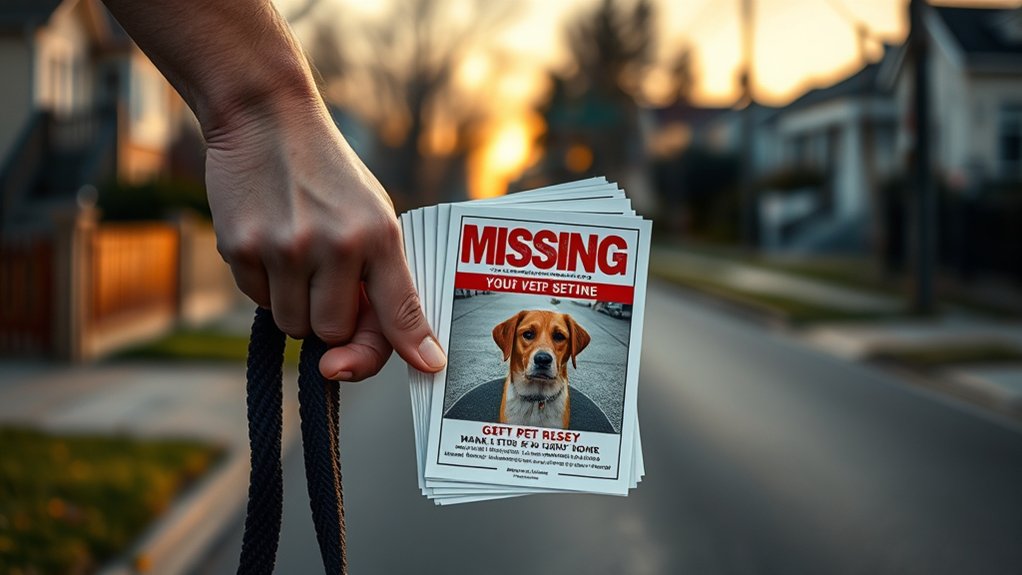
When your pet goes missing, act quickly to increase the chances of finding them. First, stay calm and think about your pet’s behavior. Are they shy or outgoing? Do they tend to hide or roam far? Understanding their typical behavior helps you predict where they might go.
Immediately check your home and nearby areas, calling their name softly. Use familiar sounds or toys that usually get their attention.
Search your home and nearby spots, softly calling your pet and using familiar sounds or toys to get their attention.
Next, alert family, friends, and neighbors, and ask them to keep an eye out. Post on social media and local lost pet groups with a clear photo and description.
Remember, lost pet prevention starts with securing your home and yard to avoid escapes. Consider microchipping and using ID tags for quick identification.
Acting fast and knowing your pet’s behavior can make all the difference in reuniting with your loyal companion.
Where to Look First for Your Lost Pet

Where should you begin your search for a lost pet? Start close to home. Pets often don’t wander far initially. Understanding pet behavior helps because many pets hide nearby, scared or injured. Check under porches, in bushes, garages, and sheds where they might seek shelter.
Lost pet statistics show that a majority are found within a mile of their home, so focus your efforts there first. Call your pet’s name gently and listen for any response. Bring a favorite toy or treat to lure them out.
Pets often follow familiar scents, so walk around your neighborhood leaving a piece of your clothing or their bedding outside. Remember, patience is key. Moving slowly and calmly increases your chances of a safe reunion. By starting close and working outward, you effectively use pet behavior insights and lost pet statistics to guide your search.
How to Use Social Media and Online Tools to Find Your Lost Pet

You’ll want to pick social media platforms where local pet communities are really active, like Facebook and Nextdoor. It helps to post clear photos along with detailed descriptions of your pet so people can recognize them quickly. Also, don’t forget to join and engage with local online groups—these are often the fastest way to get the word out.
Choosing Effective Platforms
Although losing a pet can feel overwhelming, choosing the right platforms to spread the word can considerably boost your chances of finding them quickly. Start with popular social media sites like Facebook, Instagram, and Twitter, where local community groups often share lost pet alerts.
Don’t overlook specialized apps and websites dedicated to lost pets, as they connect you directly with nearby users actively searching for animals. When posting, mention details about your pet’s nutrition or any special pet training they’ve had; this helps others recognize their behavior and needs.
Also, use platforms that allow location tagging to target your message effectively. By selecting effective platforms, you maximize visibility and tap into communities most likely to help reunite you with your pet swiftly.
Crafting Clear Pet Posts
When crafting posts about your lost pet, clarity and detail make all the difference in capturing attention quickly. You want people to recognize your pet instantly, so describe distinctive features and behaviors clearly.
Mention any specific pet behavior that sets your pet apart, like favorite spots or habits. Including details about your pet’s nutrition can hint at where they might head if hungry. Use a clear photo and avoid cluttered backgrounds.
Here’s what to include:
- Color and size of your pet
- Distinctive markings or scars
- Typical behavior patterns (e.g., shy, friendly)
- Recent changes in diet or favorite treats
- The location and time last seen
This approach helps others picture your pet accurately and increases the chances of a quick reunion.
Engaging Local Online Groups
Since time is critical, tapping into local online groups can dramatically boost your chances of finding your lost pet. These platforms connect you with neighbors who understand pet behavior and can share veterinary tips if your pet is found injured or scared. Post clear details and photos promptly, and engage actively with responses.
| Group Type | Benefits |
|---|---|
| Neighborhood forums | Immediate local reach |
| Pet rescue groups | Expert advice on pet behavior |
| Veterinary pages | Quick access to veterinary tips |
| Lost & found pages | Targeted audience for lost pets |
Why Making and Distributing Flyers Speeds Up Your Search
Creating and distributing flyers puts your lost pet’s information directly into the hands of people in your community who can help. Flyer distribution accelerates your search by spreading awareness quickly and reaching those who might spot your pet. With effective community outreach, you enlist neighbors, local businesses, and passersby to stay alert.
When you create flyers, make sure they include:
- A clear, recent photo of your pet
- Your pet’s name and description
- Your contact information
- The last known location and date seen
- A reward offer if applicable
Strategically placing these flyers around busy spots like parks, grocery stores, and vet clinics increases visibility. People who see your flyer are more likely to recognize and report sightings, helping you act fast. This hands-on approach complements online efforts and ensures your lost pet’s story reaches the eyes and ears of your entire community.
How to Talk to Neighbors About Your Lost Pet
Distributing flyers helps spread the word, but talking directly to your neighbors can make your search even more effective. Approach them politely and respect pet etiquette by asking if they’ve seen your lost pet without causing alarm. Share a clear description or photo and provide your contact info for quick follow-up.
Be mindful of their time and privacy. Knocking during appropriate hours shows consideration and encourages neighbor cooperation.
Encourage neighbors to check their yards, sheds, and garages, where pets often hide. Listen carefully to their observations and thank them sincerely. Positive interactions increase the chances they’ll stay alert and help.
You can also ask if they’re willing to share your flyer with others or post it in common areas. Building goodwill through respectful communication boosts your network and speeds up your pet’s safe return.
How and When to Notify Local Shelters and Animal Control
When you realize your pet is missing, contacting local shelters and animal control quickly can make all the difference in bringing them home. Act fast by notifying these places within the first 24 hours, as they often receive lost pets daily.
Don’t forget to call nearby veterinary clinics, since someone might bring your pet there for care. Also, inform your pet insurance provider if applicable, as they may offer resources or coverage for recovery efforts.
Here’s what to prepare when you call or visit shelters and animal control:
- A recent photo of your pet
- Detailed description including breed, size, and markings
- Date and location where your pet went missing
- Your contact information and preferred method of communication
- Any medical conditions or microchip details
Promptly alerting these organizations increases the chances your beloved pet returns home safe and sound.
How to Keep Searching If You Can’t Find Your Pet Right Away
Even if your initial search doesn’t turn up your pet, don’t lose hope. Keep expanding your efforts and stay organized to increase the chances of a safe reunion. Maintain emotional resilience by reminding yourself that many pets are found days or even weeks later.
Don’t lose hope—keep searching, stay organized, and remember many pets return days or weeks later.
Keep revisiting areas your pet frequented and widen your search zone gradually. Use flyers, social media posts, and local community boards to spread the word consistently.
Adopt a pet recovery mindset: stay proactive and patient. Check shelters and rescues daily, and follow up on any leads promptly.
Keep a log of where you’ve searched and whom you’ve contacted to avoid duplication and conserve energy. Reach out to neighbors, delivery drivers, and local businesses who might spot your pet.
Frequently Asked Questions
What Supplies Should I Prepare Before My Pet Goes Missing?
You should prepare a pet recovery emergency kit before your pet goes missing. Include recent photos, your pet’s collar with ID tags, a leash, and a copy of their microchip information.
Pack treats, a familiar blanket, and your contact info to share quickly. Having these supplies ready helps you act fast and stay organized during the stressful search, increasing your chances of a safe, speedy reunion.
How Can I Prevent My Pet From Getting Lost Again?
You can prevent your pet from getting lost again by understanding their behavior and using consistent training techniques. Pay attention to their habits and triggers, then teach them reliable recall commands.
Regularly reinforce these commands with positive rewards. Also, create a safe environment and supervise outdoor time. By combining behavior insights with effective training, you’ll decrease the chances of your pet wandering off and guarantee they stay close to you.
Are There Specific Signs of Stress in My Lost Pet?
Think of your pet’s mind as a stormy sea. Stress indicators like pacing, whining, or hiding show turbulent animal behavior. You’ll notice changes like excessive drooling, shaking, or loss of appetite. These signs tell you they’re scared or anxious.
When you spot these stress signals, stay calm and speak softly to help soothe your pet’s nerves. Recognizing these stress indicators helps you respond better and ease their distress quickly.
Can Microchipping Help Recover a Lost Pet?
Yes, microchipping can considerably help recover your lost pet. When your pet has a microchip, shelters and vets can scan it to identify you quickly.
Make sure you keep your microchip registration up to date with your current contact info. Also, having pet insurance can ease the financial burden if your pet needs medical care after being found.
Together, these steps increase the chances of a safe reunion.
What Legal Steps Should I Take if My Pet Is Stolen?
If your pet is stolen, you should immediately report the theft to local law enforcement and provide all relevant details. Follow legal procedures by filing a formal police report and checking pet theft laws in your area to understand your rights and possible penalties for the thief.
You can also notify animal shelters and use social media to spread the word. Acting quickly increases your chances of recovering your pet and pursuing justice under pet theft laws.
Conclusion
Losing your pet feels like the world’s stopped, but every step you take brings hope closer. While fear and frustration can weigh you down, your persistence and community’s support light the way.
You might feel powerless at first, yet your actions—searching, sharing, connecting—create momentum that can reunite you. Even when the days stretch long and uncertain, remember your love and determination are the strongest tools.
When it comes to how to find a lost pet, these qualities will guide you home.