

7 Essentials You Need for a New Cat Now
Bringing home a new cat can be exciting but also overwhelming. You want to make sure your furry friend feels comfortable and loved from day one, but figuring out what you truly need isn’t always easy. You’re not alone—many people struggle with choosing the right essentials for their new cat.
To welcome your new cat, you’ll want seven essentials: a sturdy scratching post to save your furniture, a cozy bed placed in a quiet spot, and a clean, accessible litter box with the right litter.
Choose quality food, provide engaging toys for mental stimulation, and have grooming tools ready to maintain their coat. Don’t forget to schedule that first vet visit to guarantee their health.
With these basics covered, you’re set to create a safe, happy home, and there’s plenty more to discover.
Key Takeaways
- Provide a sturdy scratching post to protect furniture and satisfy natural clawing instincts.
- Set up a clean, accessible litter box with preferred litter and maintain daily hygiene.
- Choose a cozy, appropriately sized cat bed placed in a quiet, comfortable location.
- Offer a variety of toys and enrichment items to stimulate play and mental activity.
- Schedule the first vet visit early to ensure vaccinations, health checks, and proper care guidance.
Add Scratching Posts for a Safe Space
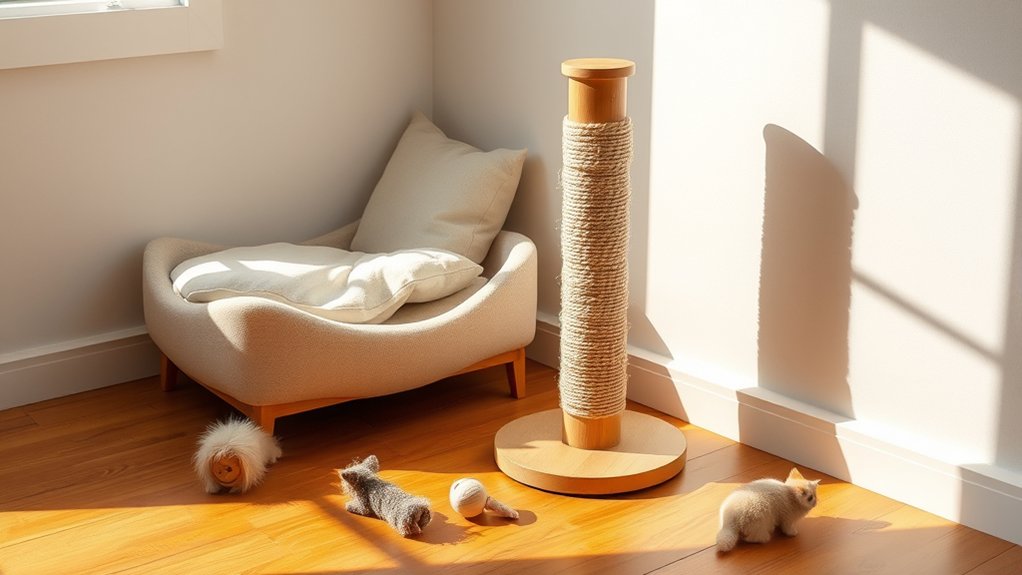
One essential item you need for your new cat is a scratching post. Cat scratching is a natural behavior that helps your feline keep their claws healthy and mark their territory. By providing a dedicated scratching post, you encourage this behavior in a safe space designed just for them.
This prevents damage to your furniture and reduces stress for your cat. When choosing a scratching post, look for sturdy materials like sisal or carpet that can withstand frequent use. Position the post in an area your cat frequents, such as near their favorite resting spot or a sunny window.
You can also add catnip to attract them to the post. Remember, a scratching post isn’t just a tool; it’s part of creating a safe space where your cat feels secure and comfortable expressing natural behaviors. This helps build trust and promotes a happy, healthy environment for your new feline companion.
Pick a Comfortable and Cozy Cat Bed

You’ll want to pick a cat bed made from soft, durable materials that can stand up to daily use. Think about your cat’s size and favorite sleeping positions when choosing the shape and size. And don’t forget to place the bed in a quiet, cozy spot where your cat can relax without being disturbed.
Choose Soft, Durable Materials
Although cats can nap just about anywhere, providing a bed made from soft, durable materials guarantees they have a cozy spot to retreat to. When choosing fabric textures, opt for materials that feel gentle against your cat’s fur, like plush fleece or microfiber, which offer comfort without irritation.
Durability considerations are just as important. Cats love to knead and scratch, so select fabrics that can withstand regular use and occasional claws. Look for beds with reinforced stitching and high-quality materials that won’t easily tear or wear out.
Consider Size And Shape
Soft, durable materials make a great bed, but size and shape play an equally important role in your cat’s comfort. When selecting a bed, keep size considerations in mind. Your cat should have enough room to stretch out fully without feeling cramped.
If your cat loves curling up, a round or oval bed suits shape preferences perfectly, offering a cozy nook. For cats that prefer sprawling, rectangular beds provide ample space.
Also, consider your cat’s age and activity level. Kittens may enjoy snug beds, while larger or older cats might need more room to relax comfortably.
Place In Quiet Spots
When choosing a spot for your cat’s new bed, pick a quiet area where they can relax without constant interruptions. Cats love cozy hiding spots that give them a sense of security. Quiet resting areas help reduce stress and encourage restful sleep.
Look for corners, elevated shelves, or under furniture where your cat feels safe. Make sure the bed is soft and fits the space well.
| Location Idea | Features | Why It Works |
|---|---|---|
| Corner of a room | Enclosed, private | Limits disturbances |
| Under a table | Shaded, tucked away | Creates a cozy hiding spot |
| Elevated shelf | Safe, quiet | Cat can observe surroundings |
| Behind curtains | Hidden, soft | Feels like a secret den |
| Near a window | Calm, warm sunlight | Quiet spot with engagement |
Choose wisely to make your cat feel at home.
Set Up a Clean and Accessible Litter Box
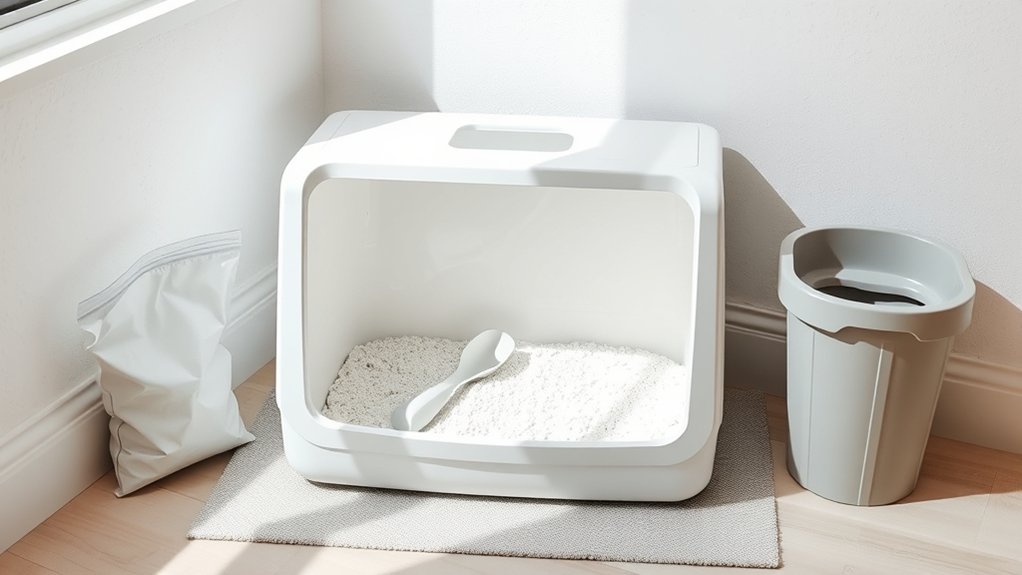
You’ll want to pick a litter type your cat prefers and a box that’s easy for them to reach. It’s important to keep the litter box clean, so be sure to scoop it daily and change the litter regularly. When the box is tidy and easy to access, your cat will feel more comfortable and be encouraged to use it consistently.
Choose Proper Litter Type
How do you pick the right litter for your new cat? Start by considering clumping litter, which makes cleaning easier since it forms solid clumps when wet. This allows you to scoop waste quickly.
Many cats prefer it because it helps control odors better. However, if you’re worried about tracking, litter spreading outside the box, look for non tracking options designed to minimize mess. These litters often have larger granules or unique textures that stick less to your cat’s paws.
You might need to try a few types to see what your cat likes best, but focusing on clumping litter with non tracking qualities can save you time and keep your home cleaner. Remember, a good litter choice supports your cat’s comfort and maintains hygiene.
Select Accessible Litter Box
Although choosing the right litter is essential, selecting an accessible litter box is just as important to keep your cat comfortable and encourage consistent use. You want to evaluate litter box placement carefully. It should be in a quiet, low-traffic area where your cat feels safe.
Make sure the box is easy to enter and exit, especially for kittens or older cats. Size matters too; pick a litter box that’s spacious enough for your cat to turn around comfortably. Also, opt for a design that’s easy for you to scoop and clean, supporting regular litter box cleaning.
Here’s what to keep in mind:
- Quiet, private location for litter box placement
- Low sides for easy access
- Ample interior space
- Simple design for effortless cleaning
Maintain Cleanliness Regularly
Keeping your cat’s litter box clean is one of the most important steps to guarantee they use it consistently and stay healthy. You should scoop waste daily and change the litter completely at least once a week. This prevents odors and discourages your cat from avoiding the box.
Place the litter box in a quiet, accessible spot away from their food and water to encourage regular use. Regularly washing the box with mild soap helps maintain hygiene without harsh chemicals.
Incorporate cleaning the litter box into your daily grooming routine to stay on top of it effortlessly. A clean litter box supports your cat’s well-being and comfort, reducing stress and potential health issues.
Staying consistent with cleanliness ensures a happy cat and a fresh home environment.
Pick the Best Food for Your New Cat
When you bring a new cat home, choosing the right food plays a crucial role in keeping them healthy and happy. Start by selecting high-quality cat food tailored to their age, weight, and health needs. Incorporate dietary supplements only if recommended by your vet, ensuring your cat gets essential nutrients. Establish consistent feeding schedules to help regulate their digestion and prevent overeating.
Keep these tips in mind as you pick the best food for your new companion:
- Opt for protein-rich food that supports muscle health and energy.
- Choose wet or dry food based on your cat’s preference and hydration needs.
- Avoid foods with fillers or artificial additives that can harm your cat.
- Consult your vet about adding dietary supplements to fill any nutritional gaps.
Provide Toys and Enrichment for Play and Comfort
Providing your new cat with toys and enrichment helps satisfy their natural instincts and keeps them mentally and physically stimulated. You’ll want to offer a variety of interactive toys that encourage chasing, pouncing, and problem-solving. Toys like feather wands, laser pointers, and puzzle feeders engage your cat’s hunting instincts and prevent boredom.
Don’t forget sensory enrichment to make their environment more enjoyable. Catnip-filled toys, crinkly balls, and textured surfaces provide different tactile and scent experiences that comfort and entertain your cat. Rotating toys regularly keeps things fresh and exciting, so your cat stays curious and active.
Find the Best Grooming Tools for Your Cat’s Health
Although your new cat may groom itself regularly, using the right grooming tools can make a big difference in maintaining their coat and skin health. Proper grooming techniques help reduce shedding, prevent mats, and keep your cat comfortable.
To support effective cat fur maintenance, consider adding these essentials to your grooming kit:
- A slicker brush for removing loose fur and preventing tangles
- A fine-toothed comb to tackle mats and distribute natural oils
- Nail clippers designed for cats to keep claws manageable
- Grooming wipes for quick clean-ups and skin care
Regular brushing using these tools not only keeps your cat’s coat shiny but also strengthens your bond. Start slowly and be gentle to make grooming a positive experience.
Schedule Your Cat’s First Vet Visit and Prepare Health Essentials
Before your new cat settles into its new home, you’ll want to schedule their first vet visit to guarantee they’re healthy and up to date on vaccinations. This initial appointment helps establish a vaccination schedule tailored to your cat’s age and lifestyle, protecting them from common diseases.
During the visit, the vet will also check for parasites, overall health, and discuss spaying or neutering options. Don’t forget to ask about pet dental care, as dental health is essential for your cat’s well-being.
Your vet can recommend safe dental products and explain how to maintain your cat’s oral hygiene. Prepare a folder with your cat’s medical records, vaccination history, and any medications.
Staying organized will make future vet visits smoother. Scheduling this first visit early sets a strong foundation for your cat’s long-term health and helps you confidently care for your new feline friend.
Frequently Asked Questions
How Do I Introduce My New Cat to Other Pets?
When you introduce your new cat to other pets, start slow to guarantee smooth cat socialization. Keep them separated at first, letting them sniff under the door.
Gradually allow supervised pet introductions in neutral spaces. Use treats and praise to create positive associations.
Watch their body language closely, and don’t rush it. Patience helps prevent stress and aggression. Consistent, calm interactions will help all your pets adjust happily.
What Vaccinations Does My New Cat Need?
Your new cat needs vaccinations like a tiny superhero needs armor, essential for fighting off deadly diseases. Start with core vaccines: rabies, feline distemper, and feline viral rhinotracheitis.
Regular vet visits guarantee these shots stay up to date. While focusing on vaccinations, don’t forget cat grooming and feline nutrition. They keep your cat healthy inside and out, complementing the protection vaccines provide. This combo helps your cat thrive in every way.
How Can I Tell if My Cat Is Stressed?
You can tell if your cat is stressed by watching for common stress signs like hiding, excessive grooming, or sudden aggression. Cat anxiety often shows through changes in appetite, vocalization, or litter box habits.
If your cat seems restless, paces, or avoids interaction, these are clear signals of stress. Paying attention to these behaviors helps you address their anxiety early and create a calm, comforting environment for your feline companion.
When Should I Start Training My Cat?
You should start training your cat the moment it decides it’s the boss, so basically right away! Cat behavior is stubborn, but with the right training techniques, you’ll shape those antics into something manageable.
Start early to set boundaries and encourage good habits before your feline friend gets too comfortable ignoring you. Patience and consistency are key, even if your cat acts like it’s plotting world domination instead of learning.
How Do I Handle Litter Box Accidents?
When handling litter box accidents, clean the area thoroughly to remove odors and keep the litter box hygienic. Use enzymatic cleaners to stop your cat from returning to the same spot.
To prevent accidents, scoop the litter daily and change it regularly. Make sure the box is in a quiet, easy-to-access spot.
If accidents keep happening, try adding another litter box. Also, watch for any changes in your cat’s behavior or health.
Conclusion
Getting these seven essentials for your new cat sets the stage for a happy, healthy life together. Remember, a stitch in time saves nine. Taking care of their needs early on prevents bigger issues later.
By providing scratching posts, cozy beds, clean litter boxes, nutritious food, fun toys, grooming tools, and timely vet visits, you’re giving your feline companion the best start possible.
Your cat will thank you with love and purrs every day. Getting these essentials now means you’re ready for a wonderful journey with your new cat.