
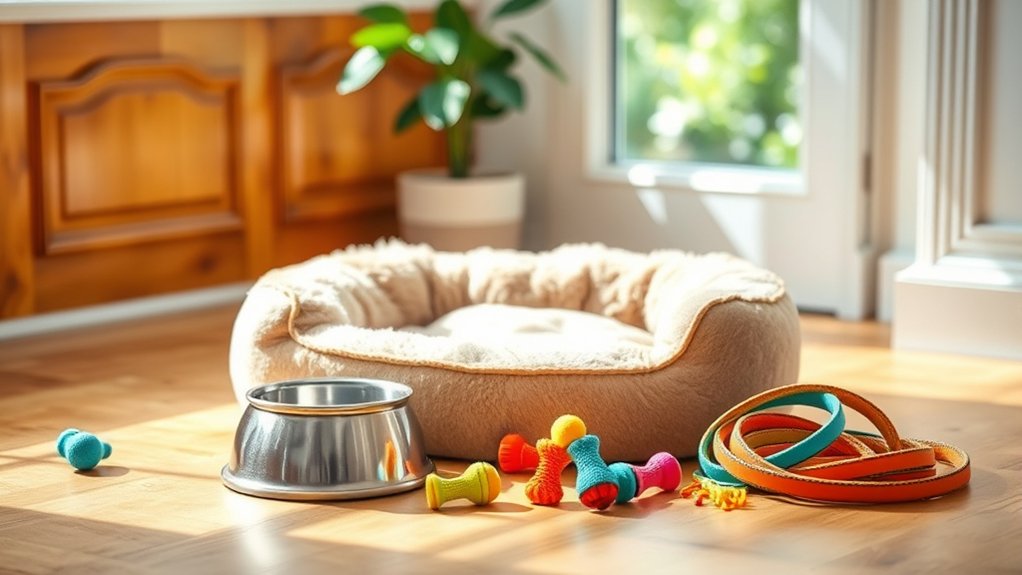
3 Essentials for a New Puppy Starter Kit
Bringing home a new puppy is exciting but can also feel overwhelming. You want to make sure your furry friend has everything they need from day one, but figuring out where to start isn’t always easy. You’re not alone—many new puppy owners struggle with choosing the right essentials to keep their pup safe, comfortable, and happy.
For a new puppy starter kit, you’ll want to set up bedding and safe play areas in a quiet spot with soft, washable materials and remove any hazards. Choose high-quality puppy food with non-slip bowls and portion control tools to guarantee proper nutrition.
Also, gather grooming essentials like a gentle brush, puppy-safe shampoo, and nail trimmers, alongside basic health care items such as dental chews and vet check-up plans. Keep going to investigate how to make your puppy’s first days smooth and happy.
Key Takeaways
- Provide a comfortable bed in a quiet, safe area with soft, washable bedding for restful sleep.
- Choose high-quality puppy food and use non-slip bowls with portion control for proper nutrition.
- Include grooming essentials like a gentle brush, puppy-safe shampoo, and nail clippers for regular care.
- Schedule veterinary visits for vaccinations, deworming, and health monitoring from the start.
- Create a safe play area free of hazards with durable toys and positive crate training methods.
Setting Up Bedding and Safe Play Areas
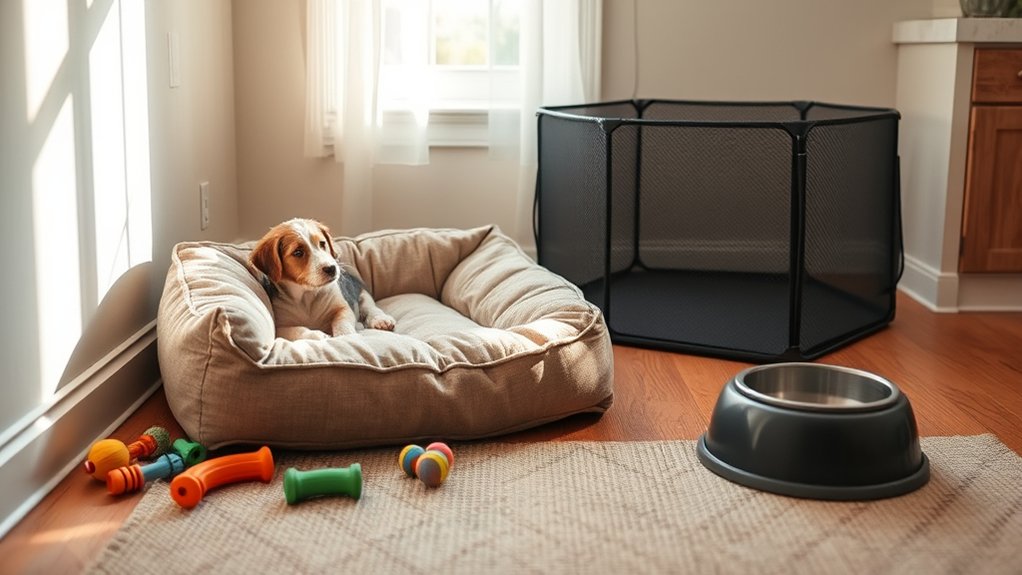
Before your new puppy arrives, make certain you create a comfortable bedding area and designate safe play spaces. Start by choosing a quiet corner for their bed, away from heavy foot traffic and loud noises. Use soft, washable bedding that offers warmth and comfort.
Incorporate crate training techniques by selecting an appropriately sized crate to become their cozy den. Introduce the crate gradually, associating it with positive experiences to help your puppy feel secure.
Next, focus on puppy proofing tips to guarantee their play area is safe. Remove hazardous items like electrical cords, toxic plants, and small objects they could swallow. Use baby gates or playpens to limit access to unsafe zones.
Provide durable toys that encourage healthy chewing and prevent boredom. By setting up these thoughtfully designed spaces, you’ll help your puppy adjust smoothly while keeping them safe and comfortable in their new home.
Puppy Food and Feeding Supplies for Your Starter Kit
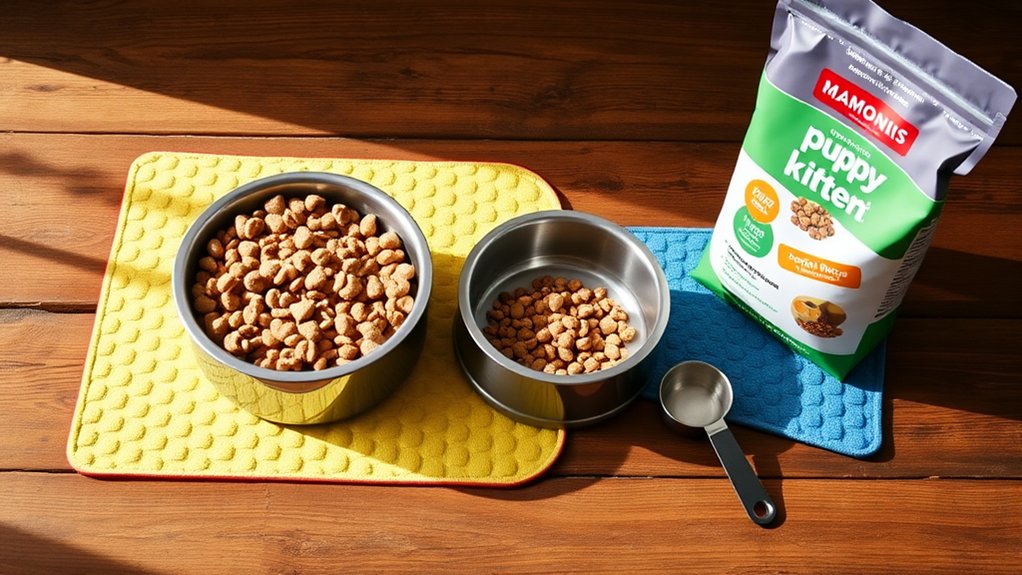
When you bring your puppy home, choosing the right food and feeding supplies plays a crucial role in their health and development. Proper puppy nutrition guarantees they grow strong and happy while avoiding digestive issues. You’ll want to select high-quality puppy food formulated to meet their specific dietary needs.
Choosing the right food and supplies is essential for your puppy’s health, growth, and happiness.
Along with the food, the right feeding accessories make mealtime easier and more enjoyable. Consider these essentials for your starter kit:
- Food and water bowls: Opt for non-slip, easy-to-clean bowls to keep feeding areas tidy.
- Measuring cup: Helps you control portions and maintain a balanced diet.
- Puppy-specific food: Look for formulas rich in protein and nutrients tailored for growth.
- Storage container: Keeps puppy food fresh and protected from pests.
Grooming and Basic Health Care Essentials

Although grooming might seem like a chore, it’s essential for keeping your puppy healthy and comfortable. Puppy grooming helps prevent mats, reduces shedding, and lets you check for skin issues or parasites early on.
Start with a gentle brush suited for your puppy’s coat type, and introduce bathing gradually with a mild, puppy-safe shampoo. Don’t forget to trim nails regularly to avoid discomfort or injury.
Basic health care goes hand in hand with grooming. Schedule vaccinations, deworming, and regular vet check-ups to keep your puppy protected from common illnesses.
Maintain oral hygiene by brushing your pup’s teeth or providing dental chews. Also, keep an eye on your puppy’s ears and clean them if needed to prevent infections.
Frequently Asked Questions
When Should I Start Training My New Puppy?
You should start training your new puppy as soon as you bring them home, usually around 8 weeks old. Early training helps with crate training, which creates a safe space and aids housebreaking.
Alongside training, focus on puppy nutrition to support their growth and energy levels. Consistent, positive reinforcement will make learning easier for your puppy.
Starting early sets a strong foundation for good behavior and a happy, healthy pup.
How Do I Socialize My Puppy With Other Dogs?
Birds of a feather flock together, so start socializing your puppy early by arranging puppy playdates with friendly, vaccinated dogs. Keep sessions short and positive, letting your puppy investigate at their own pace.
When visiting dog parks, remember dog park etiquette: supervise closely, avoid overcrowding, and step in if play gets too rough. This helps your puppy build confidence and good manners around other dogs, setting the stage for lifelong social skills.
What Vaccinations Does My Puppy Need?
Your puppy needs core vaccinations to protect their health, including distemper, parvovirus, adenovirus, and rabies. The vaccination schedule usually starts at 6-8 weeks old, with boosters every 3-4 weeks until about 16 weeks.
Your vet may recommend additional vaccines based on your puppy’s lifestyle, like bordetella or Lyme disease. Staying on this schedule guarantees your puppy stays healthy and safe from common, serious illnesses.
How Can I Prevent My Puppy From Chewing Furniture?
You can prevent your puppy from chewing furniture by using chewing deterrents like bitter sprays or pet-safe repellents on the surfaces. Providing plenty of chew toys redirects their need to bite.
Make sure you supervise your pup closely and use furniture protection like covers or barriers to block access. Consistent training and positive reinforcement when they chew appropriate items will help teach them good habits quickly.
When Is the Best Time to Spay or Neuter My Puppy?
Think of spaying or neutering your puppy as planting a seed at just the right season. It’s usually best between 6 to 9 months old. This timing supports healthy growth while complementing puppy nutrition and crate training habits you’re building.
Early surgery can prevent unwanted behaviors and health issues, but always chat with your vet to tailor the plan. You’ll give your puppy a healthier, happier future by choosing the right moment.
Conclusion
Getting your new puppy started right means setting up cozy bedding, safe play areas, nutritious food, and grooming essentials. Did you know that nearly 70% of puppy owners say having the right supplies made training easier and strengthened their bond?
By preparing a thoughtful starter kit, you’re not just meeting your puppy’s needs. You’re building a foundation for a happy, healthy life together. Your puppy will thank you with endless love and loyalty when you have the perfect puppy starter kit.