
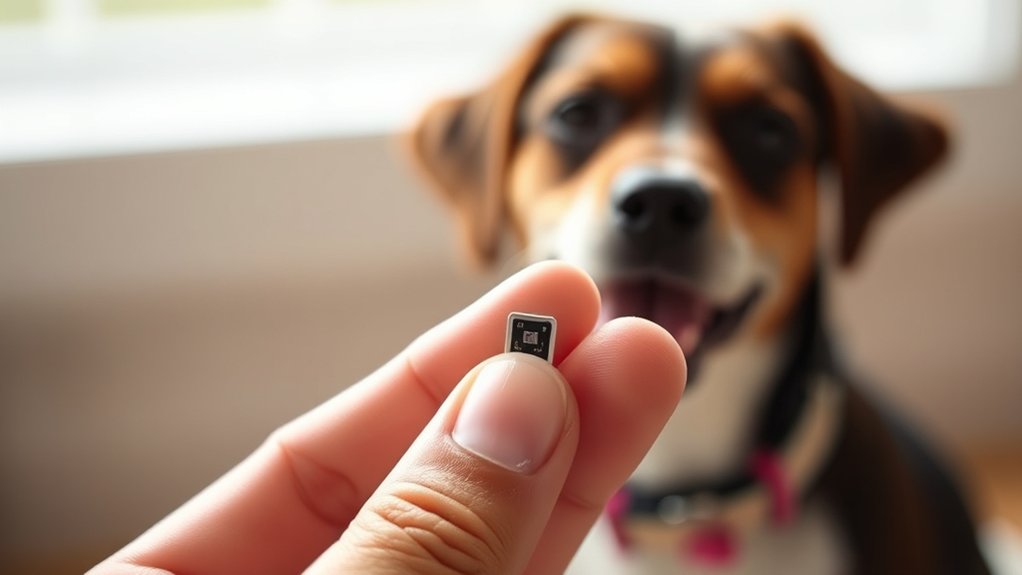
What Is Dog Tracking With a Chip?
Losing track of your dog can be one of the most stressful experiences for any pet owner. You’re not alone—many people struggle with keeping their furry friends safe during outdoor adventures or when they wander off. That’s why dog tracking with a chip has become a popular solution for peace of mind.
Dog tracking with a chip lets you pinpoint your dog’s location using GPS or radio signals while storing essential info like breed and medical history. You’ll get real-time updates through apps, making it easier to keep your pet safe during outdoor activities or if they wander off.
The chip is implanted quickly by a vet and linked to your contact details for fast reunions. There’s more to reflect on about costs, privacy, and how these chips keep your dog safe.
Key Takeaways
- Dog tracking chips use GPS or radio signals to provide real-time location tracking of dogs. They help you keep an eye on your pet’s whereabouts easily.
- These chips store essential data like breed, medical history, and owner contact information. So if your dog gets lost, this info can help get them back to you fast.
- Implantation is done by veterinarians, placing the chip between the dog’s shoulder blades. It’s a quick and simple procedure that doesn’t bother your dog.
- Tracking chips aid in quickly locating lost pets and reuniting them with their owners nationwide. This makes it easier to find your furry friend no matter where they go.
- Data security and privacy measures protect owner information and control access to the dog’s location. That way, your details stay safe while your dog is tracked.
What Is a Dog Tracking Chip and How Does It Work?
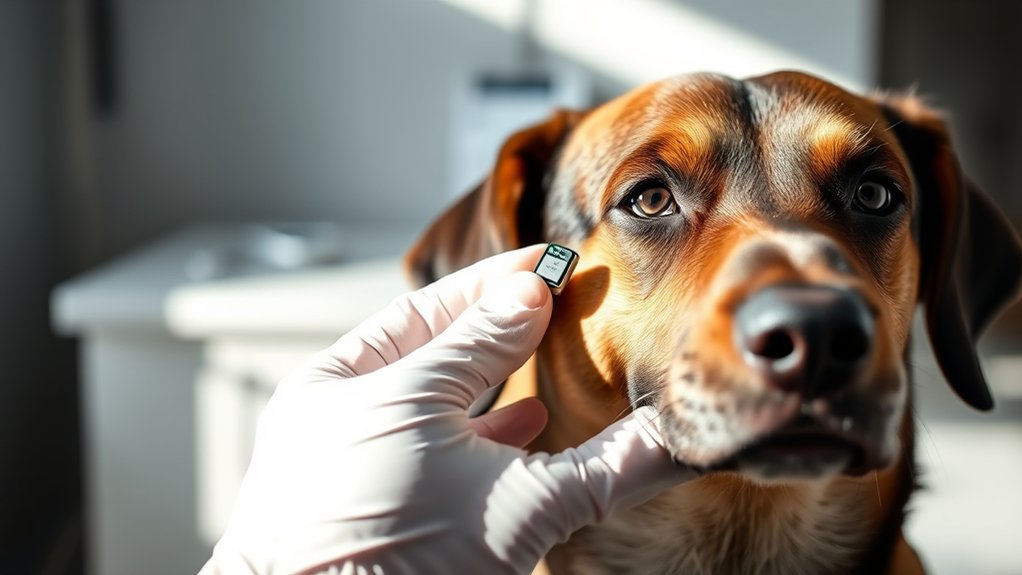
Although you might be familiar with microchips used for identification, a dog tracking chip does more than just store information. It actively helps you locate your pet. Unlike traditional ID chips, these tracking chips use GPS or radio signals to pinpoint your dog’s location in real time.
When you’re working on dog training, knowing exactly where your dog is can be a game changer, especially if your loyal companion tends to wander during outdoor sessions. The chip also stores essential data like breed identification, medical history, and contact details. So if your dog gets lost, rescuers can quickly access important information.
You don’t have to worry about your pet slipping away unnoticed because the tracking chip integrates seamlessly with apps or devices on your phone. This tech makes managing your dog’s safety easier, giving you peace of mind while focusing on training and bonding with your pal.
Key Benefits of Using a Dog Tracking Chip

When you use a dog tracking chip, you gain more than just peace of mind. You get real-time control over your pet’s safety. These chips are designed with exceptional durability, so they can withstand your dog’s active lifestyle and unpredictable adventures. No matter how rough your dog’s behavior gets, the chip remains reliable and functional.
With a tracking chip, you can monitor your dog’s location instantly. This is especially helpful if your pet has a tendency to roam or escape. It means less stress and faster recovery if your dog wanders off. The technology also helps you understand your dog’s behavior patterns over time, giving you insight into their favorite spots and habits.
Are There Any Health or Safety Risks to Dogs?
While tracking chips offer many benefits, you might wonder if they pose any health or safety risks to your dog. The good news is that these chips are generally safe and cause minimal discomfort. Rarely, some dogs experience mild swelling or irritation at the implant site, but it usually resolves quickly. Keeping an eye on the area after implantation helps you spot any issues early.
It’s important to keep in mind that a chip won’t prevent behavioral problems that might lead your dog to run off. Combining chip tracking with consistent behavioral training reduces the risk of your dog getting lost. Also, having pet insurance can cover unexpected medical costs if your dog has an adverse reaction or other health issues.
How Is a Dog Tracking Chip Implanted?
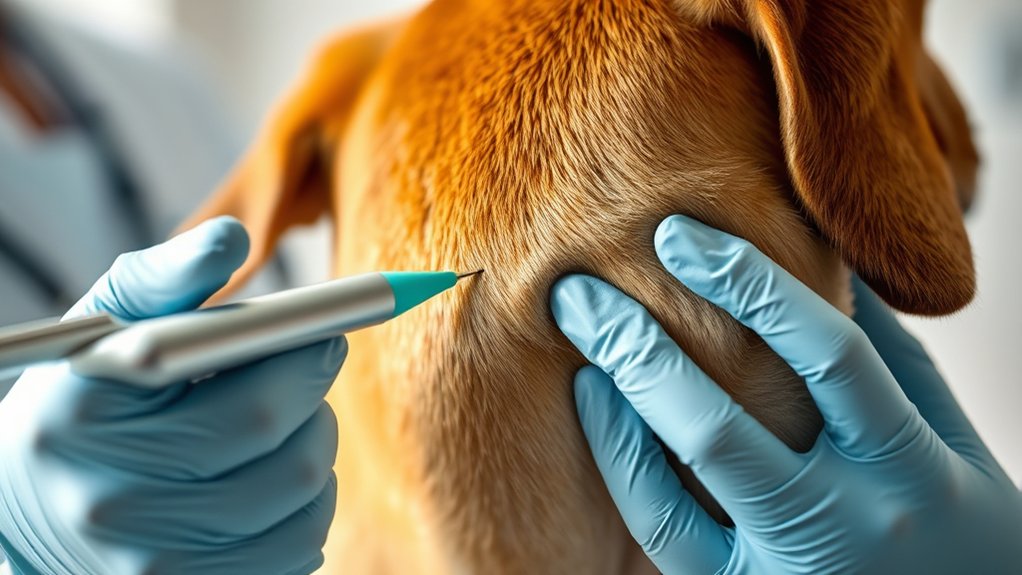
If you decide to get a tracking chip for your dog, a veterinarian will implant it quickly and with minimal discomfort. The process involves a simple injection, similar to a routine vaccination.
During the dog implant procedure, the vet uses a sterile needle to place the microchip under your dog’s skin, usually between the shoulder blades. This microchip placement is straightforward and takes only a few seconds.
The vet uses a sterile needle to quickly place the microchip under your dog’s skin between the shoulder blades.
Before implanting, the vet will clean the area to prevent infection. Once inserted, the microchip stays in place without causing harm or pain. You might notice a small lump for a short time, but it typically disappears as your dog heals.
After the implantation, the vet scans the chip to confirm proper placement and registers the unique ID number in a database linked to your contact information. This guarantees that if your dog ever gets lost, the chip can help reunite you quickly.
What Information Does a Dog Tracking Chip Store?
After your dog’s tracking chip is implanted and registered, the next step is understanding what kind of information it actually holds. These chips are designed to store crucial data that helps identify your pet quickly and accurately. Here’s what you can expect:
- Unique ID Number: Each chip contains a specific code that links directly to your dog’s profile in a database, ensuring tracking accuracy.
- Owner Contact Details: Your name, phone number, and address are stored so you can be reached if your dog is found.
- Genetic Markers: Some advanced chips include genetic marker data, which can assist in confirming your dog’s identity beyond the ID number.
This information is securely stored and accessible only through specialized scanners, making the system reliable for pet identification. Understanding what your dog’s chip holds helps you appreciate how it contributes to their safety.
How Vets and Shelters Use Dog Tracking Chips to Reunite Pets
When your dog is found and brought to a vet or shelter, staff quickly scan for a tracking chip to identify your pet. This chip holds essential information that connects your dog to you, speeding up the reunion process.
Vets and shelters rely on this technology to avoid lengthy searches and paperwork, ensuring your dog returns home safely.
If your dog is still in training or recently adopted, the chip helps confirm ownership and health records. This is important during dog training sessions or when updating care routines.
Shelters use the chip to verify pets available for adoption, preventing mix-ups and helping responsible pet adoption.
How to Register and Update Your Dog Tracking Chip Information
Registering your dog’s tracking chip promptly guarantees that your contact information is linked correctly, making it easier to reunite if your pet goes missing. To confirm your dog’s chip is fully effective, follow these simple steps:
Register your dog’s tracking chip promptly to ensure your contact details are linked for a quick and safe reunion.
- Register the chip online or by phone. Use the microchip manufacturer’s website or a national pet registry. Keep your dog’s ID number handy.
- Update your contact details regularly. Whenever you move, change phone numbers, or adjust emergency contacts, update the registry immediately to avoid delays.
- Verify registration during dog training or vet visits. Ask your trainer or vet to scan the chip and confirm your information. This also supports your pet insurance claims if needed.
Keeping your chip info current complements responsible dog training and guarantees your pet’s safety. Don’t overlook this critical step. It’s an easy way to protect your loyal companion and speed up their safe return should they ever wander off.
How Dog Tracking Chips Compare to GPS Collars
Although both dog tracking chips and GPS collars help keep your pet safe, they serve different purposes and offer distinct features. A dog tracking chip is a small microchip implanted under your dog’s skin that stores identification information. It doesn’t provide real-time location but helps reunite you with your pet if found.
GPS collars, on the other hand, actively track your dog’s location via satellite, offering real-time updates through your phone or computer.
When it comes to dog training and monitoring pet behavior, GPS collars give you more control. You can set safe zones and receive alerts if your dog wanders off, helping reinforce boundaries during training.
Dog training with GPS collars can integrate behavior insights, such as activity levels. Meanwhile, tracking chips are passive and don’t support behavior management or training but provide a permanent ID that never needs charging or replacing.
Understanding these differences helps you choose the best option for your pet’s safety and your training needs.
Questions to Ask Before Getting a Dog Tracking Chip
Before getting a dog tracking chip, you’ll want to think about the cost and any ongoing fees that might come with it. It’s also really important to ask how your dog’s location data is protected—after all, you want to make sure their privacy and security are guaranteed. Knowing these details will help you make the best choice for your pet’s safety.
Cost and Fees
When you’re considering a dog tracking chip, you’ll want to understand all the costs involved to avoid surprises. A thorough cost analysis helps you compare fee structures across different providers and choose what fits your budget best. Here are three key cost factors to keep in mind:
- Initial Purchase Price This covers the chip and often the implantation procedure.
- Subscription Fees Some tracking services charge monthly or annual fees for GPS tracking and app access.
- Additional Charges These might include activation fees, replacement costs, or premium features.
Knowing these fees upfront ensures you can plan accordingly and avoid unexpected expenses while keeping your dog safe. Always ask providers for a clear breakdown of all costs before making your decision.
Privacy and Security
Understanding the costs involved in dog tracking chips is just one part of choosing the right product. You also need to think about privacy and security. Ask if the chip uses data encryption to protect your information from unauthorized access.
Without strong encryption, hackers could potentially track your pet or access your personal details. Check how the company stores and manages data. Are there safeguards to prevent breaches?
You want a system that limits who can see your dog’s location and ensures your data isn’t sold or shared without consent. Taking these steps helps keep your pet safe and your information guaranteed. Don’t hesitate to demand transparency about privacy policies before getting a tracking chip for your dog.
How Dog Tracking Chips Help Reunite Lost Pets
Although losing a dog can be stressful, tracking chips give you a reliable way to bring your pet home quickly. These tiny devices store unique ID information that shelters and vets can scan to identify your dog instantly.
When combined with proper training techniques and understanding breed compatibility, you can reduce the risk of your dog running off in the first place.
Here’s how dog tracking chips help reunite lost pets:
- Instant Identification: Shelters scan your pet’s chip, accessing your contact info without delay.
- Wider Reach: Lost pets can be found far from home since chips are readable nationwide.
- Lower Stress: Quick reunions mean less time your dog spends scared or lost.
Frequently Asked Questions
Can Dog Tracking Chips Be Used for Purposes Other Than Pet Identification?
Yes, you can use dog tracking chips for more than just pet identification. They help with behavior monitoring by providing insights into your dog’s activity levels and habits.
Plus, vets often link these chips to veterinary records, making it easier to track your dog’s health history during checkups or emergencies. So, these chips serve as a handy tool for both keeping tabs on your dog’s behavior and managing their medical information efficiently.
How Long Do Dog Tracking Chips Typically Last Without Needing Replacement?
Think of dog tracking chips like tiny marathon runners; they’re built to last. Typically, chip durability means you won’t need a replacement for your dog’s lifetime, often 10 to 15 years.
Since these chips don’t have batteries, their replacement frequency is practically zero unless damaged or lost. So, you can relax knowing once implanted, the chip stays reliable, quietly working in the background without needing constant attention or swapping out.
Are There Any Privacy Concerns Related to Dog Tracking Chip Data?
Yes, you should consider privacy implications when using dog tracking chips. The data collected can include your location and pet’s movements, so it’s vital to guarantee data security.
If the information isn’t properly protected, unauthorized access could occur. Always choose companies with strong encryption and clear privacy policies. By doing this, you’ll better protect your personal information and your pet’s whereabouts from potential misuse or breaches.
Can Multiple Dogs Share the Same Tracking Chip Number?
You can’t put all your eggs in one basket, and the same goes for chip technology. Multiple dogs can’t share the same tracking chip number.
Each chip acts like a fingerprint, ensuring tracking accuracy and avoiding confusion. If two dogs had identical numbers, you’d be lost in a maze of mixed signals.
What Should I Do if My Dog’s Chip Fails to Scan Properly?
If your dog’s chip fails to scan properly, first check the scanner compatibility. Some scanners don’t read all microchips. Visit your vet to verify the chip is still functioning and hasn’t migrated.
Regular microchip maintenance is essential. Update your contact info and have the chip checked periodically. If issues persist, your vet might recommend reimplanting a new chip to keep your dog safely identifiable.
Conclusion
Imagine your dog wandering freely, yet always traceable with just a simple chip beneath their fur. While a GPS collar tracks every step in real time, a dog tracking chip quietly holds essential information, ready to reconnect you if they ever get lost.
It’s the invisible guardian that blends safety with peace of mind. Choosing a chip means embracing a small implant with a big role, keeping your beloved companion close even when they roam far. Dog tracking with a chip offers a reliable way to ensure your pet is never truly out of reach.