
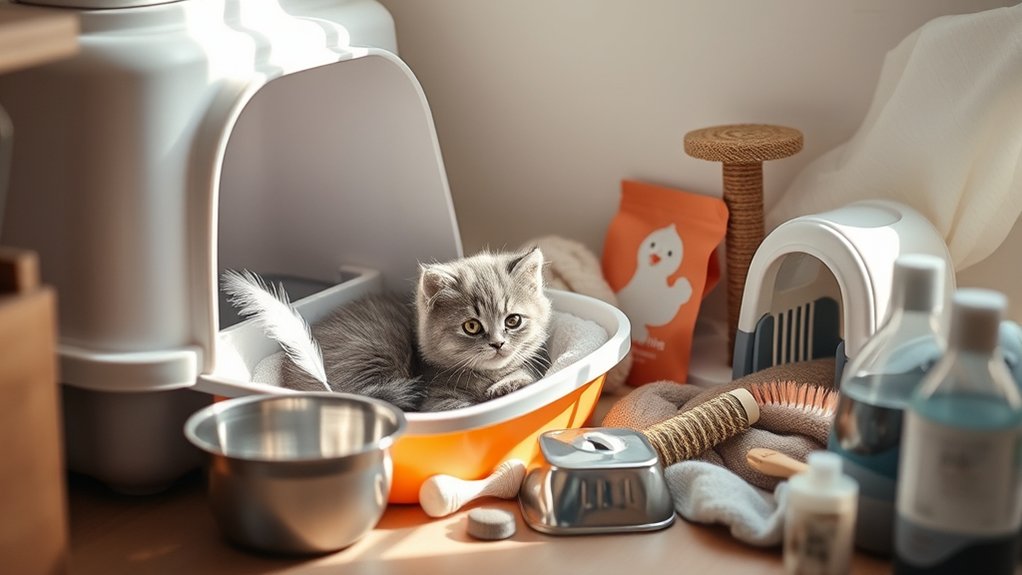
Kitten Care: 10 Items to Buy
Bringing home a new kitten is exciting, but figuring out exactly what you need can feel overwhelming. You’re not alone—many people struggle with choosing the right items to keep their furry friend happy and healthy. That’s why we’ve put together this handy guide to help you navigate the must-haves for kitten care.
You’ll want a cozy, safe kitten bed with soft but firm bedding, plus durable, non-slip food and water bowls. Choose high-quality, kitten-specific food to support growth and a litter box your kitten will use.
Grab toys that encourage play and exercise, gentle grooming tools, and a breakaway collar with an ID tag. Don’t forget kitten-safe cleaning supplies and a secure carrier for trips.
Keep going to find tips that make care easier and more enjoyable.
Key Takeaways
- Buy a cozy, supportive kitten bed and place it in a warm, draft-free spot for restful sleep.
- Choose durable, non-plastic food and water bowls with non-slip bases to make eating easy and prevent spills.
- Invest in interactive, safe toys along with a scratching post to keep your kitten entertained and protect your furniture.
- Get a secure, well-ventilated kitten carrier and a breakaway collar with ID tags to ensure safe travel.
- Stock up on pet-safe cleaning supplies like enzymatic cleaners and natural odor removers to keep things hygienic and smelling fresh.
Choose a Safe and Comfortable Kitten Bed
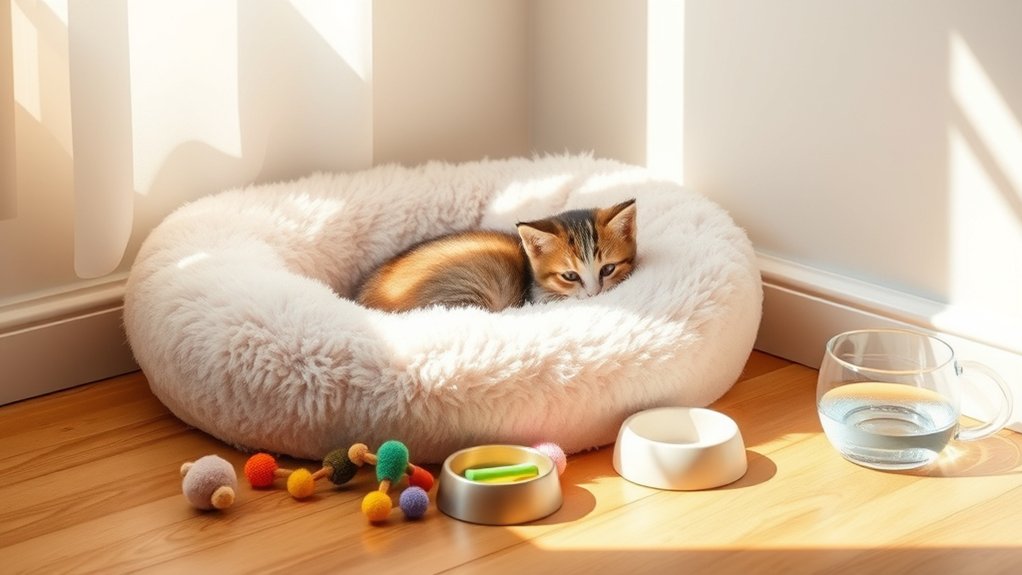
Where should your kitten rest after a long day of play? Providing a safe and comfortable kitten bed is essential for their health and happiness. You want to guarantee your little furball has a quiet spot with cozy bedding that supports kitten sleep.
A safe, cozy kitten bed ensures your furry friend rests well after a busy day of play.
Look for a bed that’s soft but firm enough to give proper support as your kitten grows. Avoid materials that can cause allergies or irritate your kitten’s sensitive skin. Place the bed in a warm, draft-free area where your kitten feels secure.
Remember, kittens love enclosed spaces, so beds with raised sides or a hood can make them feel safe. Clean the bedding regularly to keep it fresh and hygienic.
Investing in a quality kitten bed helps your pet get the restful sleep they need to stay energetic and healthy. After all, a well-rested kitten is a happy kitten.
Select Food and Water Bowls Your Kitten Will Love
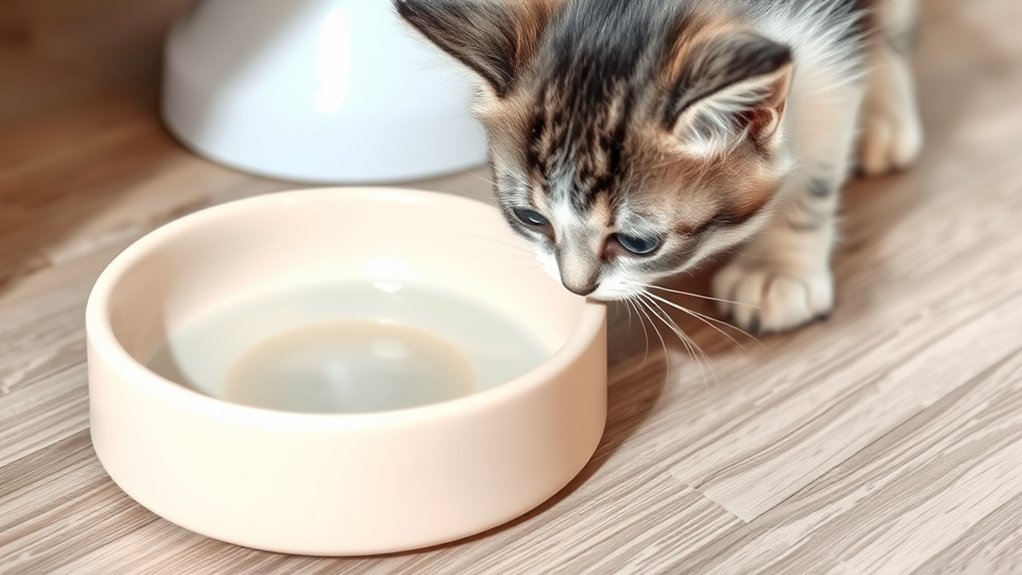
After setting up a cozy spot for your kitten to rest, it’s time to think about their food and water bowls. Choosing durable bowls is essential since kittens can be playful and prone to knocking things over. Look for materials like stainless steel or heavy-duty ceramic. They’re sturdy, easy to clean, and won’t harbor bacteria. Avoid plastic bowls, as they can scratch easily and cause irritation.
Selecting stylish designs doesn’t just make mealtime more appealing for you; it also helps create a designated feeding area your kitten can recognize. Opt for bowls with non-slip bases to prevent spills, and consider shallow dishes to make eating easier for tiny mouths. Matching food and water bowls can add a neat, attractive touch to your kitten’s space, combining function and aesthetics.
Find Nutritious Kitten Food to Support Healthy Growth
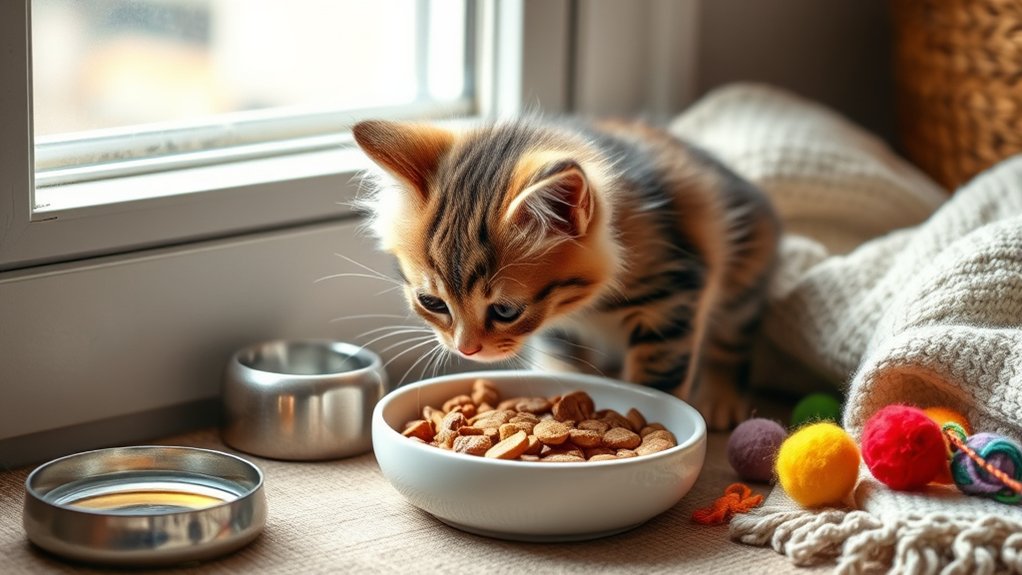
Because kittens grow rapidly during their first months, providing them with nutritious food is essential for their development. You’ll want to choose high-quality kitten food rich in proteins, fats, vitamins, and minerals that support healthy bones and a strong immune system. Look for options specifically labeled for kittens to guarantee the right balance of nutrients.
Establish consistent feeding schedules, typically offering small meals three to four times daily. This helps regulate their digestion and energy levels. If recommended by your vet, consider diet supplements to fill any nutritional gaps, especially for kittens with special health needs. Always introduce supplements gradually and consult your veterinarian before adding anything new.
Set Up a Litter Box Your Kitten Will Use
Good nutrition sets the foundation for your kitten’s overall health, and creating a comfortable environment helps reinforce positive habits. Setting up a litter box your kitten will actually use is key to a clean, happy home. Focus on these essentials:
- Litter box placement: Choose a quiet, accessible spot away from food and water. Avoid high-traffic or noisy areas to encourage use.
- Box size and type: Pick a box big enough for your kitten to turn around comfortably, with low sides for easy entry.
- Litter choice: Use unscented, clumping litter that’s gentle on tiny paws and effective for odor control.
- Regular cleaning: Scoop waste daily and wash the box weekly to prevent smells and keep your kitten returning reliably.
Pick Toys That Encourage Play and Exercise
You’ll want to pick toys that keep your kitten active and engaged. These kinds of toys boost their health and happiness.
Try to focus on interactive and safe options. Toys that encourage movement and mental stimulation are the best.
That way, you’ll help your kitten burn off energy while having a great time.
Benefits of Interactive Toys
Many kittens thrive on interactive toys that challenge their instincts and keep them moving. Choosing items like puzzle toys and feather wands can turn playtime into a fun workout, boosting both their physical and mental health. When you engage your kitten with these toys, you support their natural hunting behaviors and prevent boredom.
Here are four key benefits of interactive toys:
- Improve problem-solving skills with puzzle toys that stimulate your kitten’s mind.
- Promote exercise and agility through chasing feather wands.
- Strengthen the bond between you and your kitten during playtime.
- Reduce destructive behavior by keeping your kitten entertained and active.
Interactive toys aren’t just fun; they’re essential for a happy, healthy kitten.
Choosing Safe Play Items
How do you pick toys that keep your kitten both safe and entertained? Start by choosing safe toys made from non-toxic materials with no small parts that could be swallowed. Avoid strings, rubber bands, or anything that might cause choking or injury.
Focus on items designed specifically for kittens, like soft balls, feather wands, or interactive toys that stimulate their curiosity without risk. Set up designated play areas where your kitten can investigate and play freely without hazards.
Make certain these spaces are free from sharp objects or fragile items. Rotate toys regularly to maintain interest and encourage gentle play. By selecting safe toys and creating secure play areas, you’ll help your kitten develop healthy habits while preventing accidents or injuries during their playful adventures.
Encouraging Physical Activity
Although kittens naturally have bursts of energy, providing toys that encourage physical activity helps channel their enthusiasm in healthy ways. You want to focus on interactive play that keeps your kitten engaged and promotes agility exercises to build strength and coordination.
Here are four toys to contemplate:
- Feather wands. They’re great for interactive play that mimics prey movements.
- Laser pointers. These encourage quick reflexes and agility as your kitten chases the light.
- Tunnel toys. They promote exploration and jumping, perfect for agility exercises.
- Small balls or mice. These stimulate hunting instincts and keep your kitten active.
Get a Kitten Scratching Post to Protect Furniture
Why let your kitten’s natural scratching instincts ruin your furniture when you can easily redirect them? A scratching post is essential for furniture protection, providing your kitten with a designated spot to scratch and stretch.
When you bring home a scratching post, place it near their favorite resting area or close to furniture they usually target. This encourages them to use it instead of your sofa or curtains.
Choose a sturdy scratching post covered in materials like sisal, which satisfy your kitten’s urge to scratch. You can also use scratching deterrents on vulnerable furniture to discourage unwanted behavior.
Combining deterrents with a scratching post trains your kitten effectively, protecting your belongings without punishment.
Use Grooming Tools Every Kitten Needs
Since kittens need regular grooming to stay healthy and comfortable, having the right tools is essential. Establishing consistent grooming routines early helps your kitten adjust and prevents future issues. Here are four grooming tools you should have:
1. Soft-bristle brush
Perfect for gentle fur removal and keeping your kitten’s coat shiny without irritating their delicate skin.
2. Comb
Helps detangle fur and remove loose hair, especially useful for long-haired kittens.
3. Nail clippers
Regular trimming prevents overgrowth and scratching injuries. Use a small, kitten-sized clipper for precision.
4. Pet-safe wipes
Useful for quick cleanups and keeping paws and face clean between baths.
Using these grooming tools regularly will make your kitten feel comfortable and cared for. Consistent grooming routines not only support their health but also strengthen your bond. Make grooming a positive experience by being gentle and patient, turning it into a fun part of your daily care.
Prepare a Collar and ID Tag for Kitten Safety
Before your kitten starts investigating outdoors or even wandering around the house, you’ll want to prepare a collar and ID tag to keep them safe. Choose a lightweight collar designed specifically for kittens to guarantee collar safety. Look for breakaway or quick-release collars that prevent choking if the collar gets caught on something.
Attach identification tags with your contact information to the collar. These tags are essential because they increase the chances of your kitten being returned quickly if they get lost. Include your phone number and your kitten’s name for easy identification.
Introduce the collar gradually so your kitten gets used to wearing it without stress. Check the fit regularly; it should be snug but allow you to fit two fingers comfortably underneath. By taking these steps, you’re providing your curious kitten with a safe way to investigate while giving yourself peace of mind through proper collar safety and identification tags.
Stock Up on Kitten-Safe Cleaning Supplies for Accidents
You’ll want to choose cleaning supplies with non-toxic ingredients to keep your kitten safe during accidents. After all, their safety is the top priority.
It’s also important to pick products that effectively remove odors, so your kitten isn’t tempted to make a mess in the same spot again.
Non-Toxic Cleaning Ingredients
Although cleaning up after a playful kitten can be challenging, choosing non-toxic cleaning ingredients guarantees their safety during accidents. You want to avoid harsh chemicals that could harm your cuddly companion. Instead, opt for eco-friendly disinfectants and natural stain removers to keep your home safe and clean.
Here are four essential non-toxic ingredients to keep on hand:
- White vinegar, a natural disinfectant and stain remover
- Baking soda, great for scrubbing and deodorizing
- Hydrogen peroxide, effective for spot cleaning without harsh fumes
- Castile soap, a gentle, plant-based cleanser for various surfaces
Stocking up on these ensures you’re ready to handle messes safely, protecting your kitten and your home without compromising cleanliness.
Effective Odor Removal
How can you keep your home smelling fresh despite the inevitable kitten accidents? Start by stocking up on kitten-safe cleaning supplies designed to tackle litter odor effectively. Enzymatic cleaners work wonders by breaking down organic stains and neutralizing smells, preventing your kitten from returning to the same spot.
Avoid harsh chemicals that could harm your feline companion. After cleaning, use pet-safe air fresheners to maintain a pleasant scent without overwhelming your kitten’s sensitive nose.
Regularly cleaning the litter box with appropriate products also helps control litter odor at its source. By combining safe cleaning agents and gentle air fresheners, you’ll create a fresh, welcoming environment for both you and your kitten.
Being proactive with odor removal keeps your home comfortable and your kitten happy.
Invest in a Kitten Carrier for Vet Visits and Travel
When taking your kitten to the vet or traveling, a sturdy carrier keeps both of you safe and comfortable. Choosing the right carrier is vital for travel safety and stress-free trips. You want a carrier that’s secure, well-ventilated, and easy for you to handle.
Here are four key points to consider during carrier selection:
- Size and Comfort: Pick a carrier that’s roomy enough for your kitten to move but snug enough to feel secure.
- Durability and Safety: Look for a strong, escape-proof design with reliable locks and sturdy materials.
- Ventilation: Ensure the carrier has plenty of air holes or mesh panels to keep your kitten cool and calm.
- Portability: Choose a lightweight carrier with comfortable handles or straps, making vet visits and travel less stressful.
Investing in a quality kitten carrier helps protect your feline companion and makes every journey smoother.
Frequently Asked Questions
How Often Should I Schedule Vet Check-Ups for My Kitten?
You should schedule vet check-ups for your kitten every 3 to 4 weeks until they’re about 16 weeks old. These visits help keep vaccinations and health checks on track.
While you’re at it, ask your vet about grooming routines to keep your kitten clean and comfortable. Also, discuss litter box habits to guarantee your kitten is healthy and happy.
Regular vet visits set a great foundation for a thriving feline friend.
When Should I Start Kitten Training and Socialization?
You should start kitten training and socialization as soon as you bring your kitten home, usually around 8 weeks old. Begin litter training right away by showing them the litter box and keeping it clean.
Incorporate playtime routines daily to help them burn energy and build positive habits. Early socialization with gentle handling and exposure to new experiences will make your kitten confident and well-adjusted as they grow.
What Vaccinations Are Essential for Kittens?
Vaccinations are your kitten’s armor against invisible foes, starting with core shots like FVRCP and rabies. Just as you stick to feeding schedules and reinforce litter box etiquette, you need a vet’s timeline to keep your kitten safe and healthy.
These vaccines build a fortress inside your feline companion, protecting them from common diseases while you nurture their growth. Stay consistent, and your kitten will thrive with confidence and vigor.
How Do I Kitten-Proof My Home Effectively?
You can kitten-proof your home effectively by securing loose wires and removing small objects that kittens might swallow. Place scratching posts around to redirect their claws away from furniture.
Set up a clean litter box in a quiet, accessible spot to encourage good bathroom habits. Make sure harmful plants, chemicals, and breakables are out of reach.
When Is the Best Time to Spay or Neuter My Kitten?
The best time to spay or neuter your kitten is usually around 5 to 6 months old. Remember, “an ounce of prevention is worth a pound of cure.” This timing helps avoid unwanted litters and health issues.
While you’re caring for your kitten, keep up with grooming tips and watch dietary considerations closely to support recovery after surgery. Always consult your vet to tailor the timing and care for your kitten’s specific needs.
Conclusion
Caring for your kitten is a rewarding journey, and having the right items makes all the difference. Did you know kittens spend up to 16 hours a day sleeping? That’s why choosing a cozy bed is so important for their growth and comfort.
With the essentials on your list, from nutritious food to fun toys, you’re set to give your kitten a happy, healthy start. Your new cuddly companion will thank you with endless love and playfulness. Investing in these kitten care items ensures your little friend thrives in their new home.