3 Essential Stuff You Need for a Dog
Finding the right essentials for your dog can feel overwhelming, and you’re not alone. Many pet owners struggle with knowing what truly matters to keep their furry friends happy and healthy. That’s why we’ve put together a list of 3 essential stuff you need for a dog, to make your life easier and your pup’s life better.
You’ll need durable food and water bowls that won’t tip over, keeping your dog hydrated and fed properly.
Next, get safe, comfortable walking gear like an adjustable collar, a padded leash, and a harness to ensure secure and enjoyable outings.
Finally, basic health and grooming essentials—regular vet visits, brushing, nail trims, and gentle bathing—are vital to keep your dog healthy and happy.
Keep exploring to find out how to provide the best care tailored for your furry companion.
Key Takeaways
- Durable food and water bowls with continuous access to fresh water are essential for hydration and nutrition.
- Secure collar, leash, and ID tags ensure safety and easy identification during walks and outings.
- Regular veterinary care and vaccinations are critical for maintaining your dog’s health and preventing diseases.
- Basic grooming supplies like brushes, nail trimmers, and gentle shampoo support hygiene and comfort.
- Consistent training tools and routines promote good behavior and ease handling during grooming and vet visits.
Must-Have Dog Food and Water Supplies
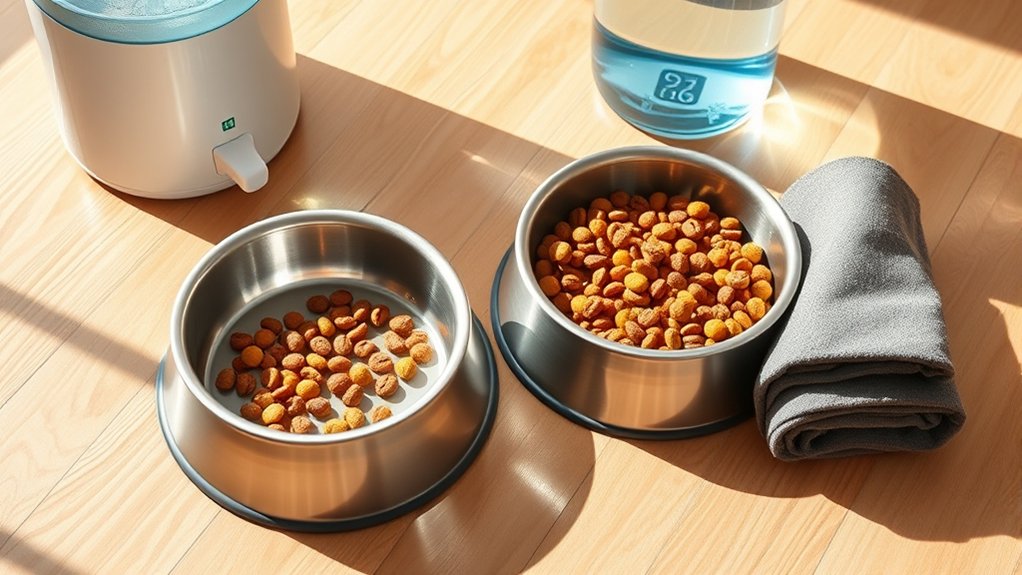
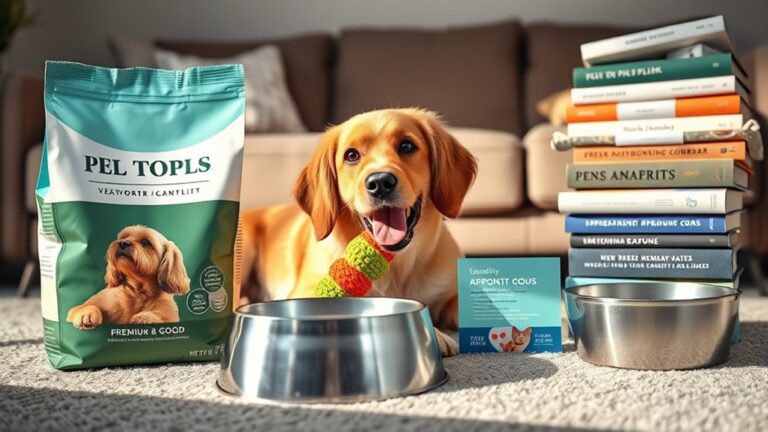
Before you bring your dog home, make sure you have the right food and water supplies ready. Choose durable bowls that won’t tip over during your dog’s exercise routines or playtime.
You’ll want separate bowls for food and fresh water, and keep water available at all times to keep your dog hydrated. When selecting dog food, consider your puppy’s age, breed, and dietary needs to support healthy growth.
Following puppy training tips, establish a consistent feeding schedule to create good habits and avoid overeating. Proper nutrition is just as important as physical activity, so balanced meals will fuel your dog for their exercise routines.
Don’t forget to clean the bowls daily to prevent bacteria buildup. Preparing these essentials ahead of time helps your puppy settle in comfortably and supports their overall well-being.
With the right food and water supplies, you’re setting the foundation for a healthy, happy dog.
Essential Safe and Comfortable Dog Gear
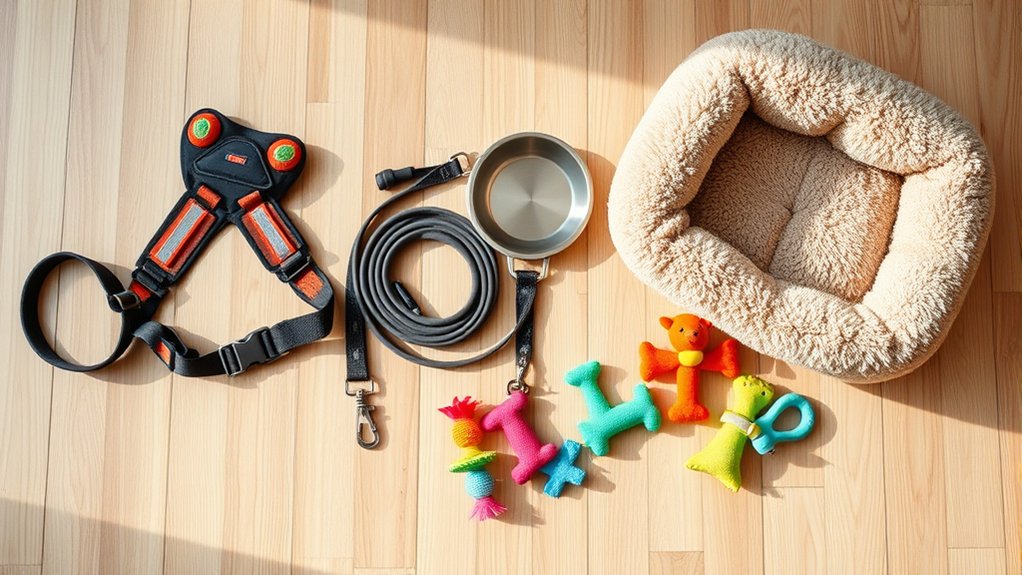
Two key pieces of gear you’ll need for your dog are a secure collar and a comfortable leash. These essentials keep your dog safe during walks and training sessions while enhancing your dog training techniques. Besides, comfortable gear supports your pup as they investigate canine enrichment activities, ensuring they stay engaged and happy.
Here’s a quick guide to essential dog gear:
| Gear Item | Purpose | Tips for Use |
|---|---|---|
| Secure Collar | Identification & control | Choose adjustable, breakaway style |
| Comfortable Leash | Safe walking & training | Opt for padded, non-slip handles |
| Harness | Support & reduce strain | Great for dogs prone to pulling |
| ID Tags | Quick identification | Include contact info, update regularly |
| Training Clicker | Reinforces commands | Use with positive dog training techniques |
Using the right gear helps your dog stay safe and comfortable, improving every walk and play session.
Basic Health and Grooming Essentials for Dogs
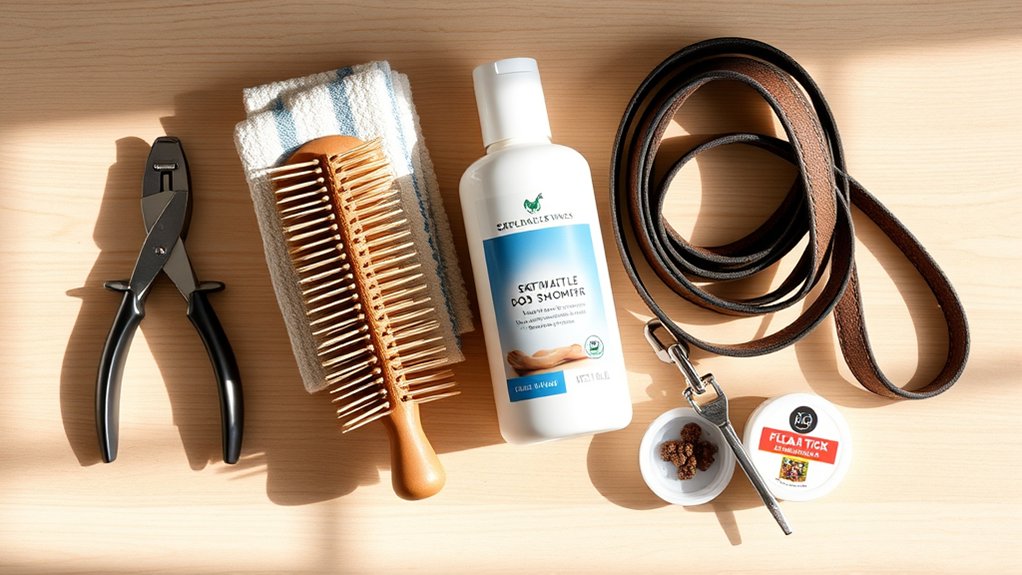
Keeping your dog safe and comfortable with the right gear is just one part of caring for your canine companion. You also need to focus on basic health and grooming essentials to keep your dog happy and healthy.
Regular veterinary care is essential. Schedule check-ups, vaccinations, and dental cleanings to prevent illnesses. Grooming isn’t just about looks; brushing your dog’s coat removes dirt and reduces shedding, while trimming nails prevents discomfort or injury.
Regular vet visits and grooming keep your dog healthy, comfortable, and free from preventable issues.
Bathing your dog with gentle shampoo keeps skin clean without stripping natural oils. Incorporate dog training into your routine to help your dog cooperate during grooming and vet visits. This makes these experiences less stressful for both of you.
Don’t forget to check and clean ears regularly to avoid infections. By combining proper grooming with consistent veterinary care and training, you’re ensuring your dog stays in top shape, both physically and mentally.
This foundation is key to a long, happy life together.
Frequently Asked Questions
How Do I Train My Dog to Behave Indoors?
To train your dog to behave indoors, start with crate training to create a safe, comfortable space. Use housebreaking techniques like consistent bathroom breaks and positive reinforcement when they go outside.
Set clear boundaries, redirect unwanted behavior gently, and reward good manners. Be patient and consistent with your commands and routines, and your dog will learn to behave properly indoors in no time.
What Are the Best Dog Breeds for Apartment Living?
You should consider breeds like French Bulldogs, Cavalier King Charles Spaniels, or Dachshunds for apartment living. They adapt well to smaller spaces but still need proper exercise and mental stimulation.
Keep in mind dog nutrition tailored to their size and activity level, and watch for breed health considerations like respiratory issues in French Bulldogs. Providing balanced meals and regular vet check-ups will help your pup thrive indoors without compromising their health.
How Can I Socialize My Dog With Other Pets?
Don’t worry if you think your dog might be shy or aggressive at first; you can ease them in with proper pet introduction techniques. Start slow. Use neutral territory and keep both pets on leashes.
Organize playdate ideas like short, supervised visits in a calm environment to build positive associations. Reward good behavior and watch their body language closely.
With patience, your dog will enjoy socializing with other pets in no time!
When Should I Start Obedience Training for My Puppy?
You should start obedience training as soon as you bring your puppy home, usually around 8 weeks old. Early training helps with puppy socialization, making it easier for your dog to interact confidently with other pets and people.
Incorporate crate training right away to create a safe space and support housebreaking. Consistency and positive reinforcement during these early weeks set the foundation for a well-behaved, happy dog.
What Are Common Signs of Anxiety in Dogs?
You might think dog separation always causes anxiety, but it’s just one common trigger among many. When your dog’s anxious, you’ll notice signs like pacing, whining, excessive barking, or destructive behavior.
They may also drool or pant more than usual. Anxiety triggers vary, so watch for trembling, hiding, or loss of appetite. Recognizing these early helps you address their stress before it worsens.
Conclusion
When caring for your dog, you’ll quickly see that having the right food, gear, and grooming supplies isn’t just helpful; it’s essential. Some believe dogs can thrive without proper care, but the truth is, meeting these basic needs boosts their health and happiness.
By investing in quality food, safe gear, and regular grooming, you’re not just taking care of your dog. You’re building a strong, loving bond that lasts a lifetime. These 3 essential stuff you need for a dog truly make all the difference.