
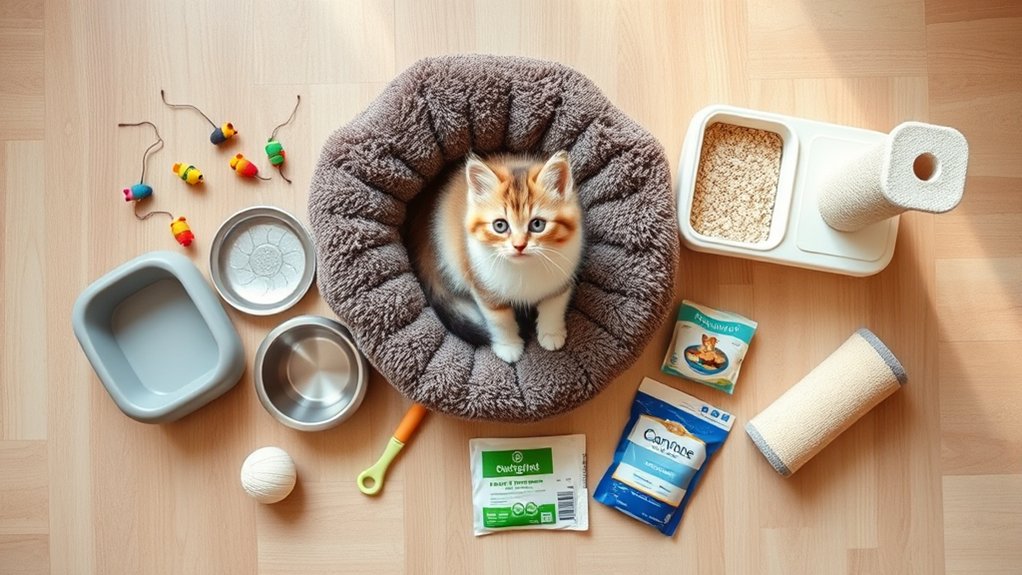
10 Essentials You Need for a Kitten
Bringing home a new kitten is exciting but can also feel overwhelming. If you’ve ever wondered what essentials you truly need to keep your furry friend happy and healthy, you’re not alone. Many new kitten owners struggle with knowing where to start and what items are must-haves for a smooth transition.
You’ll need a safe, quiet space with cozy bedding to make your kitten feel secure and comfortable. Stock up on high-quality food, shallow bowls, and a properly sized litter box with scooping supplies for hygiene.
Grooming tools, nail clippers, and a breakaway collar with ID keep them healthy and identifiable. Don’t forget flea prevention, vet visits, and a sturdy carrier for travel.
Plus, training toys and scratching posts will encourage good behavior. There’s plenty more to help you create the perfect kitten setup.
Key Takeaways
- Create a safe, quiet space with cozy bedding to ensure your kitten feels secure and comfortable.
- Provide high-quality kitten food, shallow bowls, and a clean, appropriately sized litter box for proper nutrition and hygiene.
- Use grooming tools like brushes and nail clippers regularly, and fit a breakaway collar with an ID tag for identification.
- Schedule vet visits for vaccinations, flea prevention, and health checks to maintain your kitten’s wellbeing.
- Use a sturdy, well-ventilated carrier for travel and provide training supplies like scratching posts and interactive toys.
Setting Up a Safe and Secure Space for Your Kitten
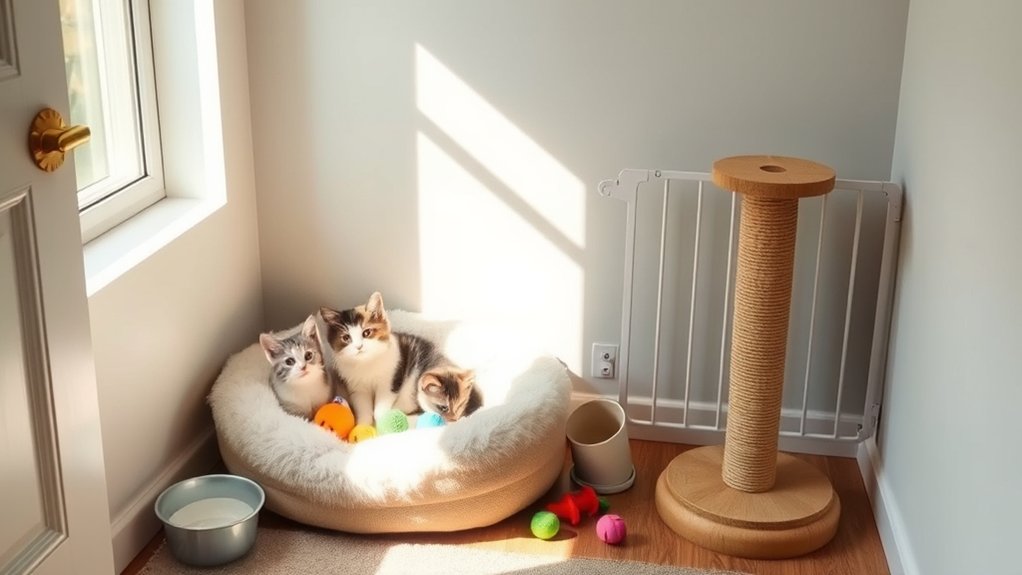
Creating a safe and secure space for your kitten is the first step to helping them feel comfortable in their new home. You want to choose a quiet, enclosed area where they can investigate without feeling overwhelmed. Make sure the space is free from hazards like loose wires or small objects that could be swallowed.
Providing interactive play toys will keep your kitten engaged and help burn off energy, preventing destructive habits. Scratching posts are essential. They satisfy your kitten’s natural urge to scratch and protect your furniture. Position these posts near favorite resting or play spots to encourage use.
Keep the area tidy and well-lit, allowing your kitten to navigate easily. Remember, your presence and interaction contribute to their sense of security, so spend time playing and bonding. By thoughtfully setting up this safe zone, you lay the foundation for a happy, healthy, and confident kitten.
Cozy Bedding to Keep Your Kitten Comfortable
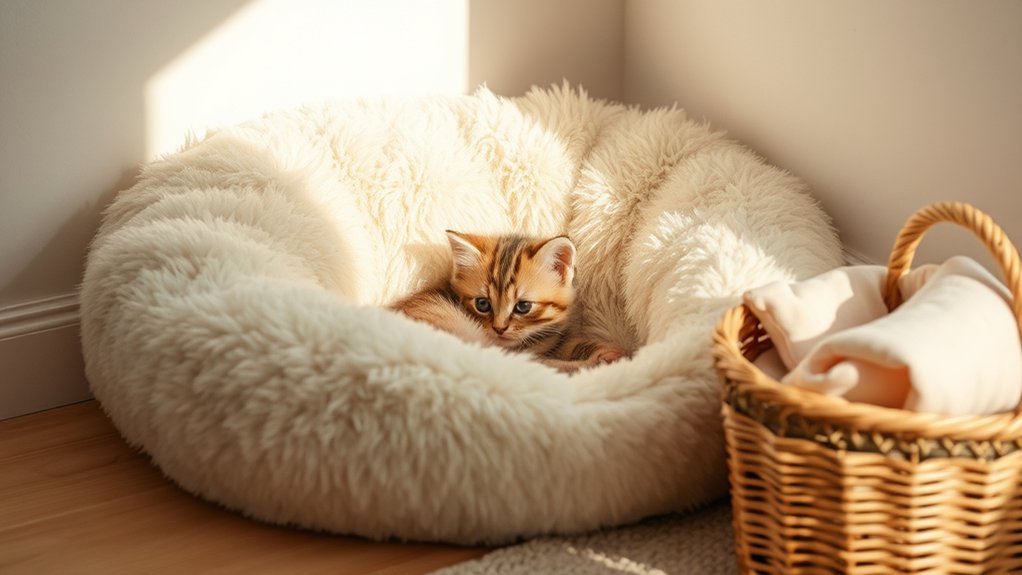
You’ll want to choose soft bedding materials that keep your kitten warm and cozy. Then, find a quiet, draft-free spot to place the bed—somewhere your kitten feels safe. This kind of setup really helps your kitten relax and rest comfortably.
Soft Materials for Warmth
Although kittens can curl up just about anywhere, providing soft materials for warmth guarantees they stay cozy and secure. You’ll want to include plush blankets and fleece pads in their bedding setup to create a soothing environment.
Plush blankets offer gentle cushioning, making your kitten feel safe and pampered. Fleece pads add an extra layer of insulation, trapping heat and keeping your kitten snug during cooler days or nights.
Both materials are easy to clean and maintain, which helps keep your kitten’s space hygienic. When choosing these soft materials, pick ones that are durable and washable so they stay fresh and comfortable.
Ideal Bed Placement
Providing soft, warm bedding is only part of making your kitten comfortable; where you place that bedding matters just as much. When choosing bed placement, look for a quiet, draft-free corner where your kitten can feel safe and relaxed.
Avoid high-traffic areas or spots near loud appliances that might startle them. Ideal positioning often means placing the bed off the floor, like on a low shelf or inside a cozy nook, to give a sense of security.
Also, consider a sunny spot during the day, as kittens love warmth from natural light. Keep the bed away from direct airflow from vents or windows to maintain consistent temperature.
The Right Food and Feeding Supplies for Your Kitten
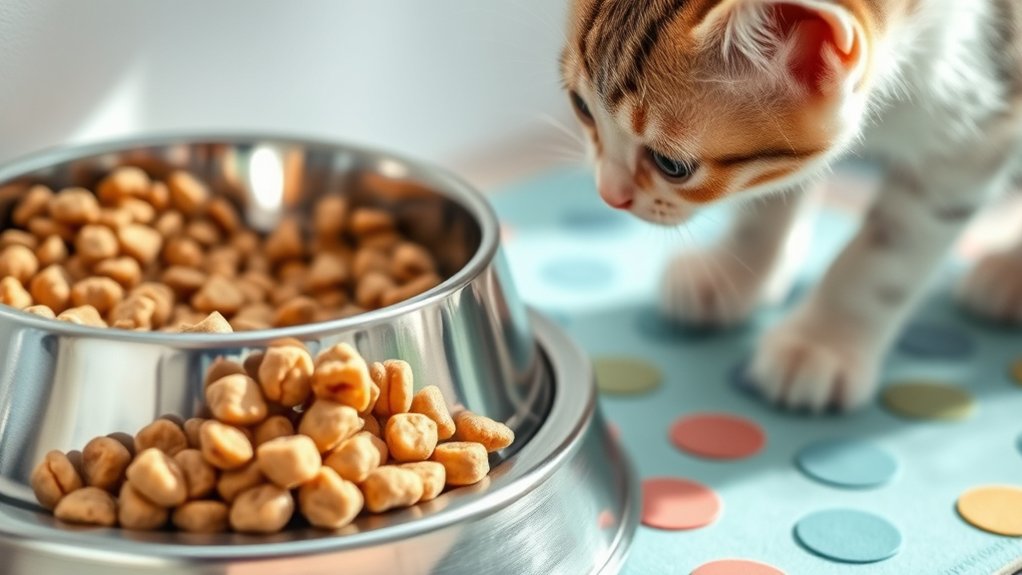
Choosing the right food and feeding supplies sets the foundation for your kitten’s health and growth. Proper diet planning guarantees your kitten gets essential nutrients during this critical stage. You’ll also want to establish consistent feeding schedules to support digestion and routine.
Here’s what you need to focus on:
- High-quality kitten food: Choose a balanced diet formulated specifically for kittens, rich in protein and nutrients.
- Portion control: Use a measuring cup to avoid overfeeding and maintain a healthy weight.
- Feeding schedule: Feed your kitten 3-4 small meals daily, gradually adjusting as they grow.
- Appropriate bowls: Select shallow, stable food and water dishes that are easy for your kitten to access.
The Best Litter Boxes and Scoops for Kitten Hygiene
You’ll want to pick a litter box that’s the right size for your kitten to make sure they’re comfortable and can get in and out easily. There are different types of litter boxes, and each one has its own perks, so think about what works best for your space and how you like to clean. And don’t forget a good scoop—having the right tools makes daily cleanup quick and helps keep your kitten’s area nice and fresh.
Choosing The Right Size
How do you pick the perfect litter box size for your kitten? Size considerations are crucial because your kitten will grow quickly. Start with a smaller box that fits their current size but plan for upgrades.
Use growth tracking to know when it’s time to switch to a larger box to keep them comfortable.
Here’s how to choose the right size:
- Measure your kitten’s length and height to find a box that allows easy entry and movement.
- Pick a box with low sides for young kittens to climb in easily.
- Choose a box large enough for your kitten to turn around comfortably.
- Upgrade the box as your kitten grows to ensure continued comfort and hygiene.
This keeps your kitten happy and maintains proper hygiene.
Types Of Litter Boxes
Several types of litter boxes cater specifically to kittens’ needs, each offering unique benefits for hygiene and ease of use. You can choose from open litter boxes, which provide easy access and help your kitten feel less confined, or covered litter boxes that offer privacy and reduce odor.
There are also self-cleaning litter boxes that save you time, though they might be overwhelming for very young kittens. When selecting litter box types, consider your kitten’s comfort and your cleaning routine.
Don’t forget litter box accessories like liners, mats, and scoops, which improve cleanliness and make maintenance simpler. Picking the right combination ensures your kitten stays clean and comfortable while keeping your home fresh and odor-free.
Effective Scooping Tools
Choosing the right litter box is just one part of keeping your kitten’s space clean. Effective scooping tools play an essential role in litter box maintenance. To keep things hygienic and odor-free, you’ll want to pick the best scoops for easy, thorough cleaning.
Here are four tips to help you choose and maintain your scooping tools:
- Opt for a scoop with sturdy, slotted tines to sift clumps efficiently.
- Choose a scoop size that fits comfortably in your hand for easy handling.
- Clean your scoop regularly using gentle disinfectants to avoid buildup.
- Store your scoop separately to prevent cross-contamination and maintain hygiene.
Mastering scoop cleaning techniques ensures your kitten’s litter box stays fresh and inviting every day.
Toys That Stimulate and Entertain Your Kitten
Because kittens have boundless energy and curiosity, providing toys that engage their minds and bodies is essential. Interactive play keeps your kitten mentally sharp and physically active, preventing boredom and destructive behavior. Toys like feather wands, laser pointers, and puzzle feeders encourage your kitten to chase, pounce, and problem-solve, which mimics natural hunting instincts.
Sensory stimulation is just as vital. Toys with varied textures, sounds, and movements attract your kitten’s senses, promoting healthy development. Crinkly balls, soft plush mice, and toys that squeak or rattle will grab their attention and keep them entertained for hours.
Rotate toys regularly to maintain your kitten’s interest and observe which ones they prefer. This way, you provide a stimulating environment that supports their growth and happiness. Remember, spending time playing with your kitten strengthens your bond and sets the foundation for a well-adjusted adult cat.
Grooming Tools to Keep Your Kitten Clean and Healthy
You’ll want to have the right brushing tools to keep your kitten’s coat shiny and tangle-free. And don’t forget about nail care basics—they help prevent scratches and keep those little paws healthy. Plus, having the proper bathing supplies on hand will make bath time easier and less stressful for both of you.
Essential Brushing Tools
Three essential brushing tools can make a big difference in keeping your kitten’s coat clean and healthy. Using the right tools and proper grooming techniques guarantees you remove dirt, loose fur, and prevent matting effectively.
Pay attention to brushing frequency. Most kittens benefit from daily to every-other-day brushing.
Here are four must-have brushing tools:
- Slicker Brush – Great for removing loose hair and preventing tangles.
- Bristle Brush – Helps smooth the coat and distribute natural oils.
- Comb – Perfect for spotting mats and working through finer fur.
- Rubber Grooming Mitt – Gently massages your kitten while loosening dirt.
Nail Care Basics
Brushing your kitten regularly helps maintain a healthy coat, but keeping their nails in check is just as important for their overall grooming. Nail trimming prevents overgrowth, which can cause discomfort or damage to your kitten’s paws and furniture.
Start by choosing a proper nail clipper designed for small pets, ensuring a clean cut without splintering. When clipping, focus on the white part of the nail, avoiding the pink quick where nerves and blood vessels reside.
Use gentle clipping techniques. Trim small sections gradually rather than cutting too much at once. If your kitten resists, try calming them with soft strokes or a treat.
Regular nail care not only keeps your kitten healthy but also makes playtime safer for both of you.
Bathing Supplies Guide
Although kittens generally groom themselves, occasional baths are necessary to keep their fur clean and skin healthy. To make bathing easier and stress-free, you’ll want the right supplies. Proper grooming routines include gentle bathing techniques to protect your kitten’s sensitive skin.
Here are four essential bathing supplies:
- Kitten-safe shampoo Choose a mild, tear-free formula.
- Soft washcloth or sponge Helps apply shampoo delicately.
- Non-slip mat Prevents slipping in the sink or tub.
- Towels Use soft, absorbent towels for drying.
With these tools, you’ll handle grooming routines confidently and keep your kitten clean and comfortable during baths. Remember to keep water lukewarm and avoid over-bathing to maintain natural oils.
Collars and ID Tags to Keep Your Kitten Safe
When you bring a kitten home, fitting them with a collar and ID tag is one of the simplest ways to keep them safe. Collar safety should be your top priority. Choose a breakaway collar designed to release if it gets caught, preventing choking or injury. Make sure it fits snugly but comfortably, allowing room for two fingers between the collar and your kitten’s neck.
The ID tag importance can’t be overstated. Include your phone number and your kitten’s name on the tag so if they ever wander off, a kind stranger can quickly contact you. Even indoor kittens benefit from wearing an ID tag since accidents or escapes can happen unexpectedly.
Health Essentials: Vitamins, Flea Control & Vet Visits
How can you guarantee your kitten stays healthy and happy? Focus on these health essentials to give your furry friend the best start. First, consult your vet about vitamin supplements; they’re vital for growth and immune support.
Next, flea prevention is a must. Use vet-recommended treatments to keep pesky parasites away. Regular vet visits ensure your kitten stays up-to-date on vaccinations and screenings, catching any issues early.
Lastly, maintain a clean environment to reduce illness risks.
Here’s a quick checklist to keep your kitten in top shape:
- Discuss vitamin supplements tailored for kittens with your vet.
- Apply flea prevention regularly to avoid infestations.
- Schedule and keep up with vet visits for vaccinations and health checks.
- Keep your kitten’s living space clean and sanitary.
Kitten Carrier and Travel Gear for Vet Trips
To make vet trips less stressful for both you and your kitten, invest in a sturdy, comfortable carrier designed for small pets. Prioritize carrier comfort by choosing one with ample ventilation, soft padding, and secure latches to keep your kitten calm and safe during travel. A well-ventilated carrier helps regulate temperature, preventing overheating or discomfort.
Travel safety is essential, so look for carriers with strong handles or shoulder straps for easy carrying, plus escape-proof closures. Using a familiar blanket or toy inside can ease your kitten’s anxiety. Moreover, consider a carrier that fits easily in your vehicle’s seat or footwell to keep your kitten secure while driving.
Having the right travel gear ensures that vet visits are smoother and safer, reducing stress for both of you. With the right carrier, you’ll feel confident that your kitten is protected and comfortable from start to finish.
Kitten Training Supplies to Encourage Good Behavior
Although kittens are naturally curious and playful, providing the right training supplies can help you guide their behavior early on. Setting clear boundaries and encouraging positive habits will make life easier for both of you.
Here are four essentials to get started:
- Litter box Choose a suitable size and place it in a quiet area. This helps your kitten learn proper bathroom habits quickly.
- Scratching post Offer a sturdy scratching post to redirect their natural scratching instinct away from furniture.
- Clicker Use a clicker to reinforce good behavior with treats, making training more effective and fun.
- Interactive toys Engage your kitten’s attention and energy, reducing unwanted behaviors born from boredom.
Frequently Asked Questions
When Should I Start Socializing My Kitten With Other Pets?
You should start socializing your kitten with other pets as early as possible, ideally around 7 to 9 weeks old. Begin by handling introductions slowly and calmly, allowing them to get used to each other’s scent first.
Introducing play is a great way to create positive associations and reduce tension. Always supervise interactions and keep initial meetings short to prevent stress. This helps your kitten build confidence and form healthy relationships with your other pets.
How Often Should I Schedule Vet Check-Ups for My Kitten?
You’ll want to invite your vet for a friendly chat every few weeks during your kitten’s first months, aligning with feeding schedules and vaccination timelines. After those initial visits, a check-up every six months keeps things running smoothly.
These regular moments help catch any hidden surprises early, ensuring your kitten stays vibrant and healthy. Staying consistent with vet visits is as important as sticking to their feeding routine.
What Signs Indicate My Kitten Is Feeling Stressed or Anxious?
You’ll notice your kitten’s body language changes when they’re stressed or anxious, like crouching low, flattened ears, wide eyes, or excessive grooming. They might hide or become unusually vocal, too.
To help, use stress relief techniques like providing a cozy safe space, gentle play, and calming pheromone diffusers. Watching their body language closely helps you respond quickly and keep your kitten feeling secure and relaxed.
Can I Train My Kitten to Use a Scratching Post?
You can think of training your kitten to use a scratching post like teaching a young knight to wield their sword properly. Start by placing the post near their favorite lounging spot.
Just as litter training helps them understand where to go, guiding their claws to the post redirects natural scratching instincts. Pair this with regular claw trimming to keep their weapons sharp but safe.
With patience, your kitten will master this skill in no time.
How Do I Introduce a New Kitten to My Home Gradually?
You can introduce a new kitten to your home gradually by setting up a small, quiet room with their essentials first. Focus on kitten nutrition by offering proper food and fresh water there, and place their litter box nearby to encourage litter box training.
Spend time bonding gently, letting them navigate at their own pace. Slowly expand their space as they get comfortable, ensuring they feel safe and secure throughout the process.
Conclusion
You might think a tiny ball of fluff needs just a nap spot and some food but oh no, your kitten demands a full starter kit worthy of a royal suite! From cozy beds to flea control, each essential keeps your little ruler happy and healthy.
So get ready to spoil, train, and entertain because raising a kitten is less about survival and more about mastering the art of adorable chaos. Good luck, you’ll need it to give your kitten the best start possible!